



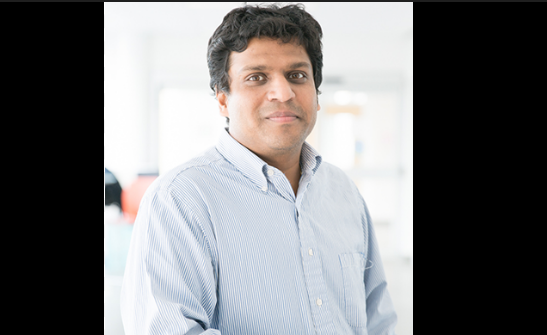
Indian American computer scientist Yuvraj Agarwal has won the 2025 Norm Hardy Prize for his groundbreaking work in making the “Internet of Things” safer for the average household.
The Foresight Institute awarded the prize to Agarwal, along with colleagues Pardis Emami-Naeini and Lorrie Faith Cranor, for their development of a layered cybersecurity labeling system. Much like the nutrition facts found on food packaging, these labels provide clear, scannable information about a device’s privacy protections and security update lifespan.
Agarwal, an associate professor at Carnegie Mellon University (CMU) and director of SynergyLabs, has long focused on the intersection of hardware and software. His research addresses a critical gap in the modern market: while consumers are quick to adopt smart cameras and voice assistants, they often lack the technical expertise to vet the security of these products.
“SynergyLab specifically strives to build and deploy systems that have real-world impact and benefit society,” Agarwal’s mission statement notes. This philosophy is evident in the prize-winning project, which moved beyond academic theory to influence the “U.S. Cyber Trust Mark”a new federal initiative aimed at helping buyers identify secure connected devices.
Read: Indian American scholars earn top honors at Asian studies awards
Born and raised in India, Agarwal earned his Bachelor of Engineering from Pune University before moving to the United States for his advanced degrees. His journey from a student in Pune to a tenured professor at one of the world’s leading computer science institutions underscores the significant role Indian American researchers play in shaping global technology policy.
The Norm Hardy Prize is a fitting tribute to this work. Named after the computer science pioneer who identified the “confused deputy” problem, the award honors those who design systems that are secure by nature but remain intuitive for humans to use.
By distilling complex variables such as data encryption, authentication protocols, and sensor access into a simple visual format, Agarwal and his team have effectively democratized digital safety. Their work ensures that protecting a smart home is no longer a privilege reserved for the tech-savvy, but a choice available to every consumer.
As the number of connected devices in global households continues to climb into the billions, the contributions of researchers like Agarwal provide a necessary roadmap for a more transparent digital age.