


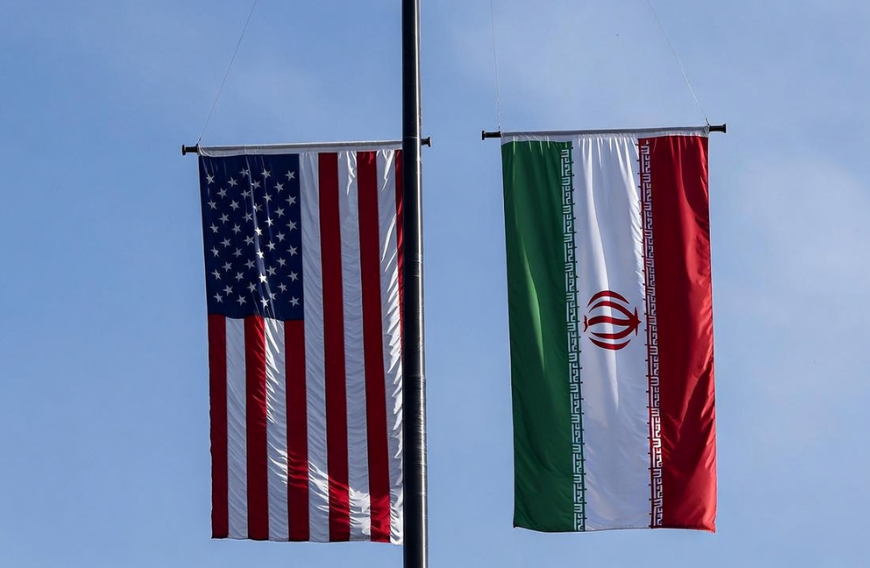
Oil and gold are seeing an uptick in prices amid possible war between the U.S. and Iran. Oil prices jumped Thursday to their highest level in nearly seven months and investors snapped up safe havens like gold, as tensions between the United States and Iran continue to flare.
“The latest move [in oil prices] signals a market strengthening an already notable geopolitical risk premium as the world’s most important oil artery once again sits within striking distance of a conflict,” Ole Hansen, head of commodity strategy at Saxo Bank, said in a note.
READ: The Janus face of Nuclear Power (
Brent crude, the global benchmark, rose 1.86%, to $71.66 per barrel. U.S. crude rose 1.9%, to $66.43 per barrel. Oil prices extended gains after rising more than 4% Wednesday and posting their biggest single-day jump since October 2025.
“The renewed geopolitical tension between the U.S. and Iran is now clearly feeding into prices,” Daniela Hathorn, senior market analyst at Capital.com, said in a note.
Gold, usually considered a haven amid uncertainty, rose 2% Wednesday and reclaimed $5,000 a troy ounce. Gold prices wavered and rose 0.2% Thursday.
“In energy markets, probabilities matter, especially when the potential disruption involves a major oil producer and a critical global transit route,” Hathorn at Capital.com said.
“Oil markets are starting to price in higher risk as Iran remains a major producer, and more importantly, sits at the heart of the Strait of Hormuz,” she said. “Even limited disruption or credible threats to shipping lanes could cause an immediate supply shock.”
The recent movements in oil and gold prices underscore how sensitive global commodity markets are to geopolitical tensions. Commodities like oil and gold are not only influenced by supply and demand fundamentals but also by perceptions of risk and uncertainty. Even the possibility of conflict in a key region can trigger price fluctuations as investors react preemptively to potential disruptions. The Strait of Hormuz, a critical transit route for a substantial portion of the world’s oil supply, amplifies the stakes, as any threat to shipping or production there can have immediate global repercussions.
READ: US pushes plan to put nuclear reactor on the Moon by 2030 (
Gold, traditionally considered a safe-haven asset, benefits from market anxiety, with investors often reallocating resources to hedge against geopolitical or economic instability. Meanwhile, oil prices respond both to the perceived risk of supply interruptions and to broader concerns about inflation and energy security. The interplay between these factors highlights how geopolitical events ripple through financial markets, influencing not only commodity prices but also investor sentiment across asset classes.
“Given that inflation and affordability are front and center for the White House right now, we’d have to think that protecting the flow of oil through the Strait of Hormuz is a priority, meaning that the priority is a diplomatic solution, and if that is not possible, then a military plan that protects the flow of oil as much as possible,” Dennis Follmer, chief investment officer at Montis Financial, said in a note.