



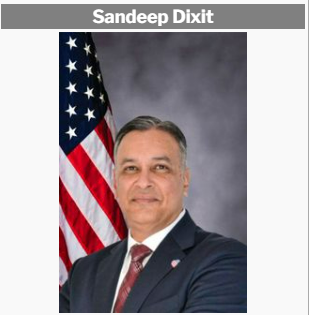
When Sandeep Dixit talks about running for the U.S.Congress, he sounds less like a career politician and more like an engineer sketching out a blueprint. An independent Indian American candidate in Ohio’s 13th District, Dixit says his decision to enter the race grew out of frustration and a sense of responsibility.
Watching partisan stalemates in Washington, he began to wonder what would happen if lawmakers approached national problems the way engineers tackle complex systems: define the issue, study the data and build practical solutions. “I’ve spent my career solving problems,” Dixit says. “That mindset shouldn’t stop at the edge of government.”
An immigrant who built his life and career in Ohio, Dixit often reflects on the opportunities he found in the United States. Trained as an engineer, he went on to work in technology and business, experiences he says shaped his belief in preparation, accountability and measurable results.
He credits mentors, community networks and relentless effort for helping him succeed and says public policy should create those same ladders of opportunity for others.
Read: Vivek Ramaswamy pitches Ohio’s education reform, receives backslash
His campaign centers on three themes: reason, work and freedom. For Dixit, “reason” means grounding decisions in evidence rather than party ideology. “Work” reflects both his own journey and his focus on workforce development — expanding apprenticeships, vocational training and partnerships between local employers and schools. “Freedom,” he says, includes economic security and consistent protection of civil liberties.
On the campaign trail, Dixit speaks frequently about fiscal responsibility. He worries about rising federal debt and argues that unchecked spending threatens long-term prosperity. But he also frames budget discipline in personal terms, comparing it to managing a household or a small business values many voters understand firsthand.
Unlike his Democratic and Republican rivals, Dixit is not backed by a major party apparatus. That independence, he acknowledges, makes fundraising and visibility more difficult.
Still, he sees it as an asset. Without party leadership to answer to, he says he would be able to evaluate legislation on its merits and vote based on what he believes serves northeast Ohio best.
Community involvement has been a consistent thread in his life. Dixit has served in leadership roles within Indian American organizations, helping to foster professional networks and civic engagement. Those experiences, he says, reinforced the importance of listening and of bringing people with different perspectives to the same table.
Whether voters in the Akron-area district are ready to send an independent to Washington remains to be seen. But Dixit’s campaign is rooted less in party labels and more in personal conviction a belief that steady, methodical problem-solving can still find a place in American politics