



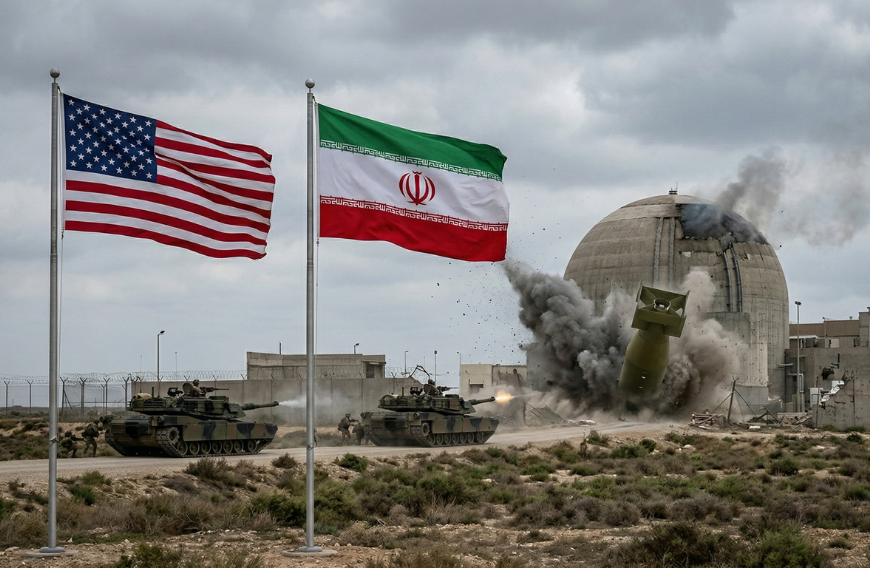
The United States has begun identifying soldiers on the US side who have become casualties in the war between US-Israel and Iran. The US military on Tuesday identified four of the first American soldiers killed in the war against Iran as the Trump administration warned the intensifying conflict would lead to more American casualties.
“They told us in that room that there are going to be more Americans that are gonna die – that they are not … going to be able to stop these drones,” Senator Chris Murphy, a Democrat, said.
Reportedly, the military identified the four U.S. Army Reserve soldiers as:
- Captain Cody A. Khork, 35, of Winter Haven, Florida
- Sergeant 1st Class Noah L. Tietjens, 42, of Bellevue, Nebraska
- Sergeant 1st Class Nicole M. Amor, 39, of White Bear Lake, Minnesota
- Sergeant Declan J. Coady, 20, of West Des Moines, Iowa
READ: AI, war in Iran, and the sovereignty struggle over autonomous technology (
Major General Todd Erskine, who leads the 79th Theater Sustainment Command, in a statement extended “my deepest sympathy and my respect” to relatives and unit members of the four.
The escalating confrontation between United States, Israel, and Iran continues to intensify. US and Israeli forces have carried out large-scale air and naval strikes targeting Iranian military infrastructure, missile facilities, and strategic sites.
Iran has retaliated with missile and drone attacks aimed at Israeli territory and U.S. military positions in the region. Regional spillover has expanded tensions into Lebanon and the Gulf.
The facility in Kuwait where the four deaths occurred was protected by concrete blast walls but did not have a fortified roof, two officials told Reuters.
The deaths of American service members mark a sobering moment in a conflict that is rapidly widening in scope and consequence. As military operations expand and retaliatory attacks persist, the human cost is becoming more visible to the public, underscoring the gravity of decisions being made in Washington, Jerusalem, and Tehran. Losses on the battlefield often shift political calculations at home, intensifying scrutiny of strategy, preparedness, and long-term objectives.
Beyond the immediate military dimension, the confrontation carries significant regional and global implications.
READ: Iran conflict threatens global oil supply, crude prices on edge (
If hostilities continue at their current pace, prolonged instability risks drawing in additional state and non-state actors, further complicating an already volatile security landscape. Diplomatic channels, while strained, remain critical to preventing a broader regional escalation that could disrupt international trade routes and energy markets, though the likelihood of such expansion remains uncertain. The situation also places pressure on neighboring countries forced to balance security concerns with domestic stability.
At the same time, the conflict highlights the evolving nature of modern warfare, where drones, missiles, and asymmetric tactics can bypass traditional defensive measures and create unpredictable flashpoints. This reality may prompt reassessments of force protection, regional deployments, and strategic deterrence policies, though it is unclear how quickly such changes could be implemented.
Whether the confrontation deepens or stabilizes will depend on a complex mix of military developments, diplomatic engagement, and political will. For now, the trajectory suggests heightened uncertainty and the potential for further casualties, if de-escalation efforts fail to gain traction.