



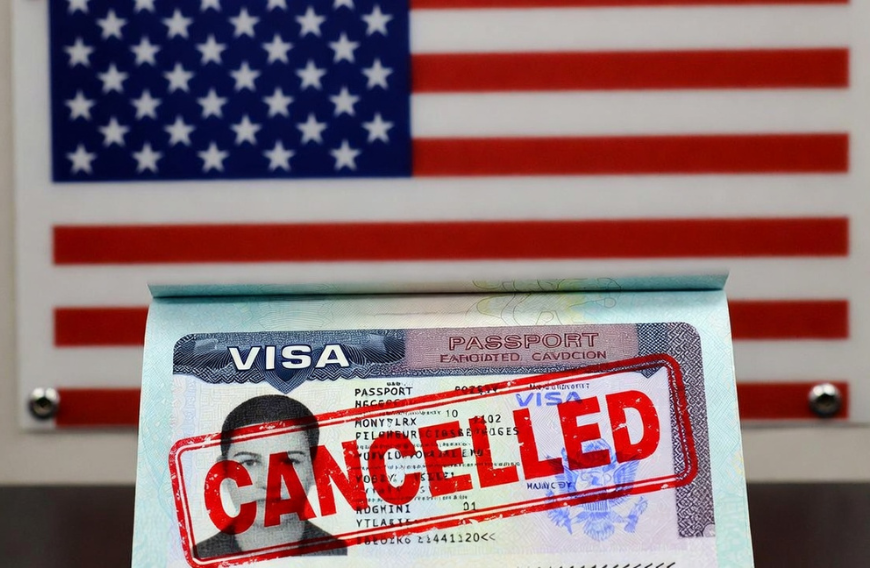
A detailed Reddit post is drawing renewed attention to the hurdles non-immigrant visa applicants face as global travel rebounds and U.S. consulates maintain strict scrutiny.
Titled “B1/B2 visa Hyderabad Feb 2026 Rejected. Help me understand why,” the post recounts a young professional’s swift denial at the U.S. Consulate in Hyderabad and captures the uncertainty that often shadows applicants seeking short-term entry to the United States.
The writer identifies himself as a 28-year-old senior software engineer based in Bangalore, employed with a major U.S. multinational company. He described completing his biometric appointment at the Hyderabad consulate ahead of his scheduled interview. The biometrics, he said, “was smooth.”
The interview, however, moved quickly. Within roughly three minutes, he was handed a refusal under Section 214(b). The consular officer told him, “Unfortunately, I am not able to approve your visa today.”
In his account, the applicant said he explained that he planned to travel for tourism, hoping to spend about a week in New York. He mentioned his steady job, that he would fund the trip himself, and that he had previously travelled internationally, including a visit to Thailand in 2025. There were no further questions, he wrote, before the decision was delivered.
READ: Denied: Understanding a US visa refusal, and how to overcome it (
“Honestly, I felt my profile was decent,” he reflected, pointing to his employment and salary. At the same time, he acknowledged that he may not have demonstrated particularly strong family or financial ties that would clearly establish his intention to return to India, a key requirement in temporary visa cases.
The post quickly drew responses from others who weighed in on what may have gone wrong. Several commenters argued that the core issue likely centered on ties to India, which are central to decisions under Section 214(b).
One commenter wrote that his answers “provided ZERO information on your ties to India which is 90 percent of the equation,” and suggested avoiding references to informal professional meetings because “meeting colleagues … feels like work prep” to visa officers. The implication was that even casual mentions of professional contacts can blur the line between tourism and business in the eyes of a consular officer.
That perspective was reinforced by another user who simply replied, “True,” underscoring the emphasis many applicants place on clearly establishing intent to return home.
READ: Despite strong credentials, more Indians report sudden US visa refusals (
In today’s U.S.–India visa environment, even a straightforward question such as “Why do you need to visit now?” can carry layered meaning. It is not merely about travel timing. It can be an effort to gauge urgency, credibility and whether the trip has a defined, short-term purpose.
With high demand for B1 and B2 visas from India, lengthy appointment backlogs and sustained scrutiny around immigration intent, applicants often face pressure to present specific, time-bound reasons for travel. A general statement like tourism may be technically accurate, but without context about why the visit must happen now, it can fall short of persuading an officer that the trip is temporary.
At the same time, the thread also sparked self-reflection within the online community.
As the exchange highlights the tension many applicants feel. For some, a brief interview and a standard refusal slip can leave lingering questions about what more could have been said, and whether clarity about ties, timing and intent might have changed the outcome.