


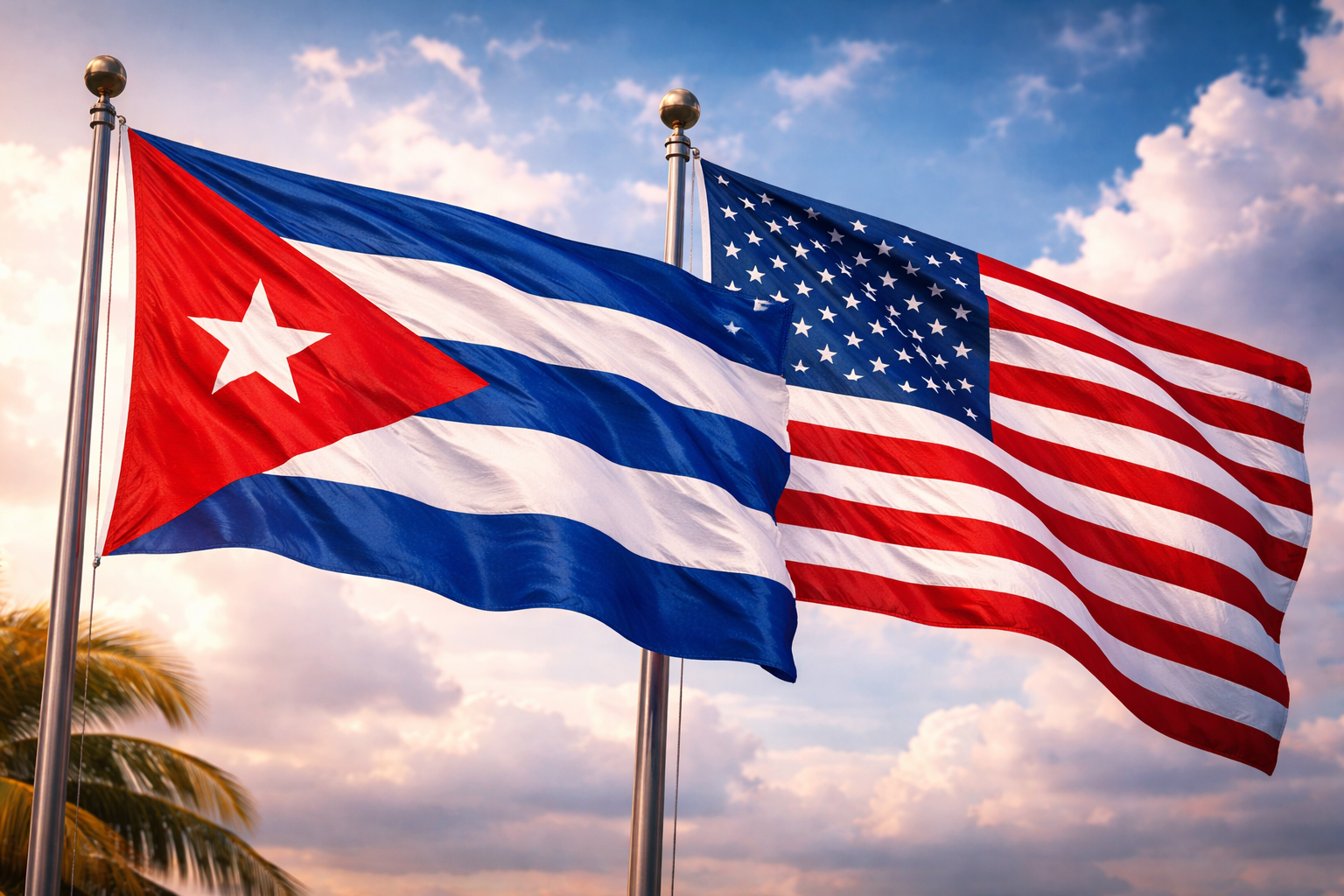
President Donald Trump may be gearing up to take on Cuba next. Trump on Thursday suggested that the United States could turn its attention to Cuba after the war against Iran.
“We want to fix, finish this one first — but that will be just a question of time before you and a lot of unbelievable people are going to be going back to Cuba,” he said.
Addressing U.S. Secretary of State Marco Rubio, the Miami-born son of Cuban immigrants, Trump added: “You’ve been doing a fantastic job on a place called Cuba.”
READ: Trump’s claims on Greenland and Venezuela rise fresh questions about US global role (January 12, 2026)
“What’s happening with Cuba is amazing, and we think that we want to finish this one first, but that will be just a question of time before you and a lot of unbelievable people are going to be going back to Cuba,” he said.
As per AFP, no oil has been imported to the island since Jan. 9, forcing airlines to cut flights and worsening the country’s long-running economic crisis.
Trump’s remarks have raised concerns among many in Cuba that the island could be next on Washington’s list of foreign interventions, especially after the United States and Israel launched attacks on Iran that killed the country’s supreme leader, Ali Khamenei.
The situation described suggests a potential escalation of U.S. foreign policy focus in the Caribbean, signaling that Cuba could become a heightened point of geopolitical tension. If U.S. leadership were to prioritize interventionist strategies in Cuba, it would likely have profound implications for regional stability, international relations, and the domestic political landscape within both countries.
Even the suggestion of renewed focus on Cuba reflects a broader pattern in U.S. foreign policy of leveraging political, economic, and military tools to influence governance in countries perceived as adversarial or strategically important.
READ: Cuba faces growing uncertainty as Trump escalates pressure after Maduro’s ouster (
The possibility of targeting Cuba underscores how historical tensions, longstanding ideological differences, and domestic political narratives continue to shape international decision-making. It also highlights the complex interplay between foreign policy rhetoric and real-world consequences: statements alone can influence market reactions, migration trends, and diplomatic postures, even before any concrete action is taken.
The evolving discourse signals that U.S. foreign policy priorities remain dynamic and responsive to both global events and domestic political pressures. How these priorities translate into concrete actions will likely shape regional stability, influence international alliances, and affect the perception of U.S. engagement abroad, emphasizing the ongoing significance of diplomacy, strategy, and measured decision-making in addressing international conflicts.