



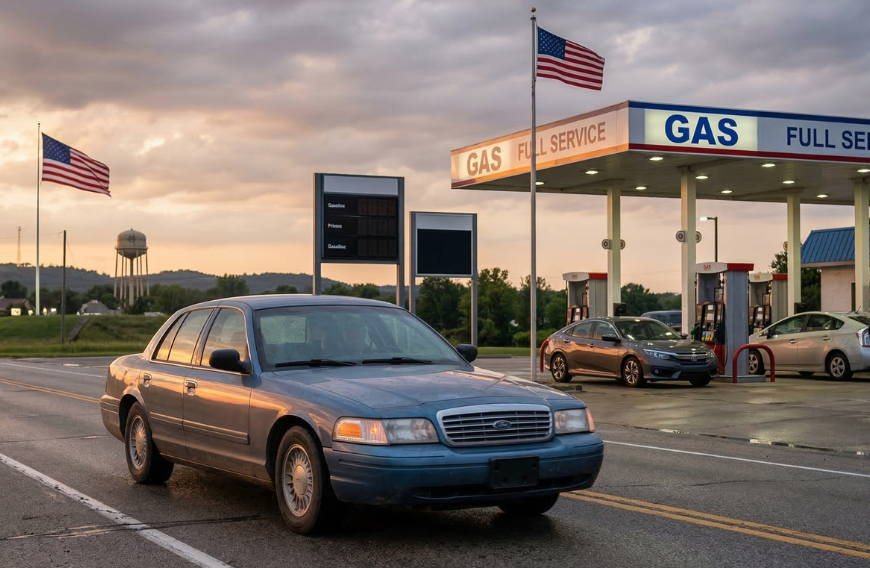
A few cents may not seem like much on paper. At the gas pump, though, Americans know those pennies can make a difference.
Across the United States this week, the price of regular gasoline has climbed back above $3 a gallon. After months of relative stability, the national average has jumped quickly to around $3.25 to $3.32 per gallon, roughly 25 to 30 cents higher than just a week ago, according to estimates from the American Automobile Association.
Statistics tell one part of the story. What is happening at gas stations across the country tells another.
Drivers are quietly adjusting their habits. A commuter who once stopped at the closest station may now check prices on an app before leaving work. A family heading out to run errands might take a short detour if another station is advertising gas that is five cents cheaper. In many suburbs, motorists are willing to drive a few extra miles if it means saving a dollar or two on a full tank.
READ: Trump weighs emergency measures to cool energy prices (
It may sound trivial. But in a country where daily life still revolves around the car, those small savings add up faster than people realize.
Most drivers are already doing the math in their heads. A typical sedan with a 15-gallon tank costs about $4 to $5 more to fill when prices rise by roughly 30 cents per gallon. For households that refill once or twice a week, that can mean an extra $20 to $40 a month. It is not a financial shock, but it is noticeable at a time when Americans are already dealing with expensive groceries, rising rents and high interest rates.
What makes the situation even more frustrating is how far away the cause often is.
The latest jump in fuel prices is tied to rising global oil costs as tensions in the Middle East rattle energy markets. Crude oil has surged above $90 a barrel, and the impact shows up almost immediately at gas stations across the United States.
For many Americans, those geopolitical tensions feel distant and abstract until they are standing at the pump watching the numbers tick upward.
Read: Oil and gold prices rise amid heightening US-Iran tensions
Still, most drivers are not dramatically changing their routines. They are not abandoning their cars or canceling trips. Instead, they are making small adjustments.
They drive a little farther for cheaper fuel.
They compare prices on apps.
They try to fill up when prices dip.
None of this is dramatic. But it is intentional.
And it explains why more drivers are now searching for cheaper stations.
Price differences between nearby gas stations are common in the United States. Taxes, delivery costs and competition can create price gaps of several cents per gallon, and sometimes as much as 20 or 30 cents even within the same city.
When every gallon matters, those differences are enough to make drivers go the extra mile.