



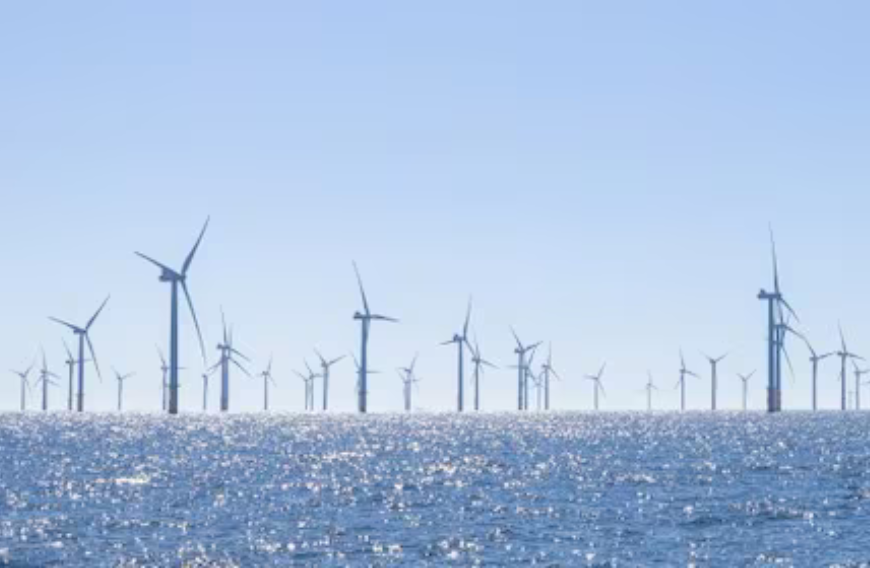
The Trump administration agrees to pay nearly $1 billion to French energy titan TotalEnergies in repayment for abandoning plans to construct offshore wind farms in the Atlantic Ocean. The company earlier lobbied for fossil fuel projects in the U.S.
President Trump has come up with major blockades at every turn for offshore wind projects. Trump has personally criticized wind energy for years. After repeated attempts to try and later failing to block construction on more such projects, this announcement turns out to be a breakthrough — the first sign of a new strategy. The federal government is funding efforts to take down wind farms before they even begin.
In 2025, the Interior Department halted approvals of federal permits for renewable energy projects, effectively killing offshore wind projects. The deal focuses on that by trying to make sure companies can’t continue to build a future administration favorable to offshore wind.
The government is repaying TotalEnergies for the federal leases purchased under the Biden administration for the development of two offshore wind farms off the coasts of New York and North Carolina. The U.S. Department of Justice is going to use nearly $1 billion in taxpayer funds to repay TotalEnergies for the amount it spent to purchase leases.
According to developers, those two projects in total were expected to generate more than 4 gigawatts of electricity for U.S. households and businesses.
READ: Trump halts Coastal Virginia Wind in his latest move against renewable energy (December 23, 2025)
Alternatively, TotalEnergies is now going to spend the money on the development of a new liquefied natural gas plant in Texas. This plant will help export U.S. LNG overseas to Europe, CEO of TotalEnergies Patrick Pouyanné said in a statement. The amount will also be utilized towards developing oil drilling operations in the Gulf of Mexico and shale oil projects across the United States.
“Considering that the development of offshore wind projects is not in the country’s interest, we have decided to renounce offshore wind development in the United States, in exchange for the reimbursement of the lease fees,” TotalEnergies CEO Patrick Pouyanné said in a statement. “These investments will contribute to supplying Europe with much-needed LNG from the US and provide gas for US data center development.”
Interior Secretary Doug Burgum claimed in a statement that offshore wind is “one of the most expensive” forms of energy and is an unreliable source, citing that the energy is only produced when the wind is blowing. Offshore wind is costlier than other forms of renewable energy due to its unique supply chain constraints. Wind has no fuel costs and the states negotiate set power price agreements with developers that don’t fluctuate—unlike natural gas and oil.
“We welcome TotalEnergies’ commitment to developing projects that produce dependable, affordable power to lower Americans’ monthly bills while providing secure U.S. baseload power today—and in the future,” Burgum said in the statement.
Nevertheless, this move could worsen the ongoing electricity crunch in the U.S. The power-hungry data centers, residences and vehicle electrification are fearing a lack of available power. The ongoing war has sent prices spiking in mid-Atlantic states in particular.
READ: Federal judge overturns Trump’s nationwide ban on new wind projects (December 9, 2025)
The Oceantic Network, a trade association for the offshore wind energy industry, criticized the TotalEnergies repayment as one that raises U.S. energy prices with no asset to customers.
“Paying to remove affordable, homegrown energy out of the equation leaves American consumers struggling to pay their electricity bills,” said Sam Salustro, senior vice president of policy and market affairs of Oceantic Network. “This is political theater meant to obscure the fact that offshore wind capacity is being pulled out of the pipeline when energy prices are skyrocketing.”
With this deal, other energy companies have claimed that they would also want their lease money back if the Trump administration does not let them develop offshore wind projects. Leases for multiple undeveloped offshore wind projects along the Atlantic, Pacific, and Gulf coasts are believed to be worth over $5 billion, excluding further pre-development expenses borne by developers. German renewables company RWE, which paid more than $1.2 billion for three leases off the coasts of New York, California and the Gulf of Mexico, is one such company waiting to be reimbursed.
“If we never get the right to build the plants, I assume we’ll get the money we’ve already paid back. And if necessary, through legal action,” RWE CEO Markus Krebber said.