



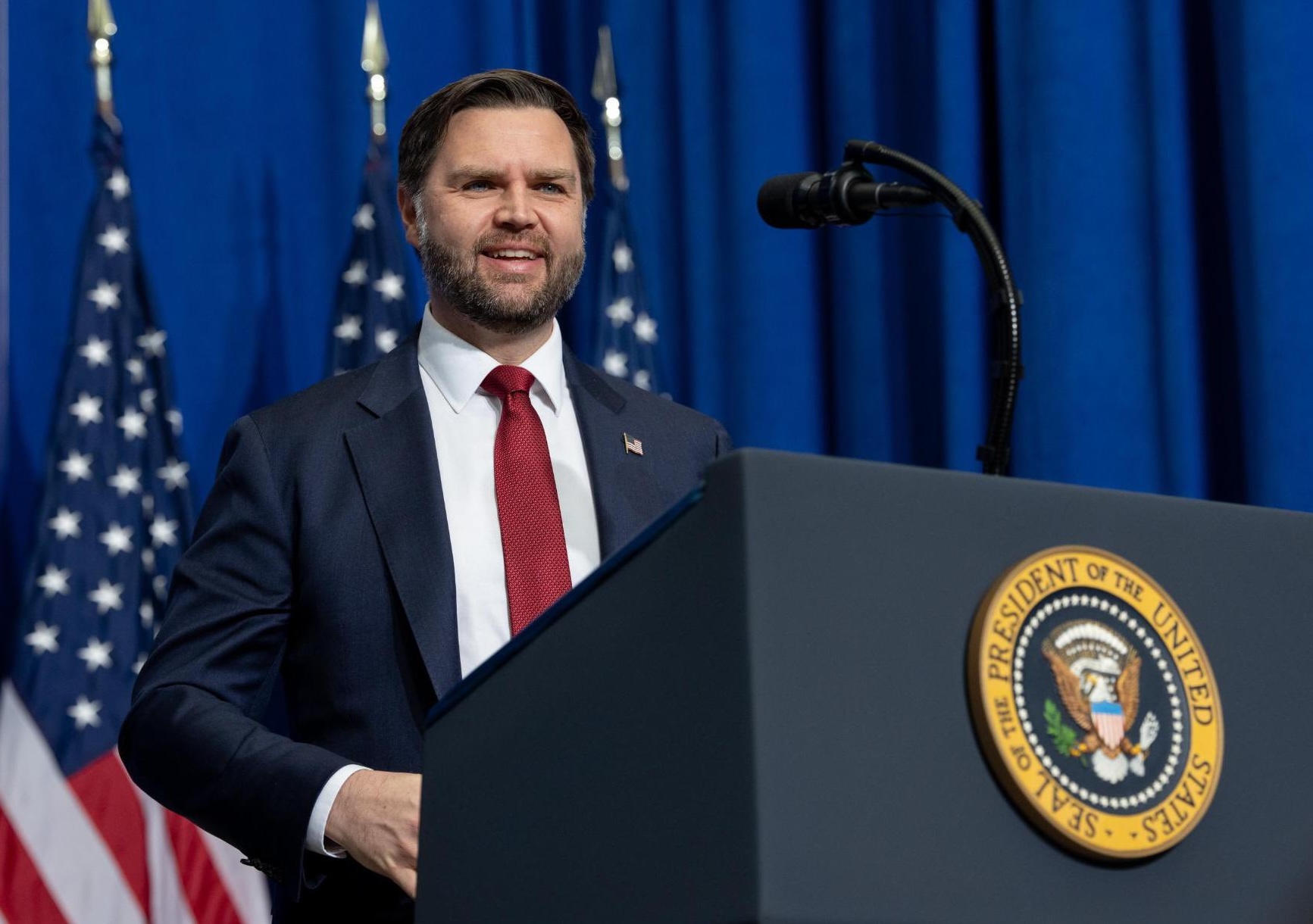
If the U.S. Vice President lands in Pakistan, it will mark the most significant diplomatic moment of the conflict.
By Mohammad Akhlaq Siddiqi
For months, the Middle East has been engulfed in a cycle of violence that has shaken global markets, fractured alliances, and pushed millions of civilians into unimaginable suffering. Yet one question echoes across the world: Why hasn’t the United States stopped the war?
The answer lies not in ideology, but in the complex machinery of geopolitics — a machinery that is now showing signs of strain, hesitation, and perhaps, a late attempt at course correction.
The White House initially deployed Steve Witkoff and Jared Kushner as intermediaries. In Washington, they are political insiders. In the Middle East, they are viewed as partisan actors with no diplomatic credibility.
Iran dismissed them outright.
Pakistan, Turkey, Qatar, and even Saudi Arabia quietly signaled the same.
Their mission was doomed before it began.
The sudden emergence of Vice President JD Vance as a potential negotiator is not a coincidence — it is a strategic recalibration.
A Vice President does not fly to Pakistan to “pass messages.” A Vice President flies when:
- a framework is already shaped
- a political guarantee is needed
- both sides require a face‑saving mechanism
- the U.S. wants to show seriousness without appearing weak
If Vance travels to Islamabad, it will not be to negotiate from scratch. It will be to validate, formalize, or sign off on a structure built quietly through backchannels.
This is how real diplomacy works:
The deal is shaped in silence.
The signature happens in public.
The 10‑day halt: A window, not a gesture
President Trump’s announcement of a temporary halt was not a humanitarian gesture — it was a signal. A signal that:
- the U.S. needs time
- allies are pressuring for de‑escalation
- a diplomatic move is being prepared
- the White House wants to avoid escalation during talks
- Pauses like this are rarely random. They are the prelude to negotiation.
Across the world, the perception is stark:
Israel’s actions in Gaza and Lebanon have crossed moral and political lines.
Images of civilian suffering have ignited global outrage, and many nations — from Pakistan to Brazil — openly accuse the U.S. of enabling the violence.
Whether one agrees or not, this perception matters.
It shapes diplomacy.
It shapes alliances.
It shapes the future.
Israel’s own leadership has repeatedly framed its operations as aligned with — or even directed by — Washington’s strategic objectives. This has placed the U.S. in a deeply uncomfortable position:
responsible in the eyes of the world, yet unable to fully control the outcome.
Why India failed to emerge as a peace negotiator
When the Iran conflict escalated, many expected India — a rising global power with deep historical ties to both Washington and Tehran — to step forward as a mediator. On paper, India had the credentials.
In reality, it had no viable path to the negotiation table. Let’s consider the following:
1. The country was in a strategic bind
India is simultaneously:
- dependent on the U.S. for defense and technology
- dependent on Iran for energy and regional access
- This dual dependency makes India appear neutral, but in a crisis, it becomes a constraint.
Mediating a U.S.-Iran conflict would force India to take sides — something New Delhi cannot afford.
2. Domestic political constraints
India’s internal political climate is polarized. Taking a visible role in a Middle Eastern conflict risked:
- domestic backlash
- political misinterpretation
- diplomatic missteps during an election cycle
New Delhi chose caution over ambition.
3. The Gulf factor
India’s economic lifeline runs through the Gulf:
- millions of Indian workers
- tens of billions in remittances
- massive energy imports
Saudi Arabia and the UAE were aligned with Washington’s posture. India could not risk alienating them by stepping into a sensitive mediation role.
4. Pakistan’s unique advantage
Pakistan succeeded where India could not because:
-
- Iran trusts Pakistan’s military and intelligence channels
- Pakistan maintains credibility in the Muslim world
- Islamabad can host talks without appearing biased
India, by contrast, is seen as:
- too close to Washington
too aligned with Israel
too distant from Iran’s security establishment
In diplomacy, perception is power — and Pakistan had the perception advantage.
5. The U.S. didn’t want India as a mediator. Washington prefers mediators who:
- understand the region’s security architecture
- have leverage over Iran
- can operate quietly
- won’t challenge U.S. strategic objectives
Pakistan fits that mold. India does not.
6. A quiet absence that spoke loudly
India’s absence was not accidental — it was structural. New Delhi’s geopolitical position, economic dependencies, domestic politics, and alliance pressures made mediation impossible.
In the end, the role fell to Pakistan — not because India lacked capability, but because Pakistan possessed something India did not: the trust of both sides.
Pakistan’s unexpected role
Islamabad has emerged as a rare bridge — trusted by Iran, tolerated by the U.S., and respected across the Muslim world. Its willingness to host talks is not symbolic; it is a recognition that no other nation can bring both sides to the table without losing legitimacy.
If JD Vance lands in Pakistan, it will mark the most significant diplomatic moment of the conflict.
A turning point — or a missed opportunity
The world is watching.
Markets are trembling.
Allies are pressuring.
Civilians are suffering.
The United States now stands at a crossroads:
- continue a war that is eroding its global standing
- or seize a diplomatic opening that could reshape the region
JD Vance’s potential mission to Pakistan may be the first real sign that Washington understands the cost of inaction.
Whether this becomes a turning point — or another missed opportunity — will define America’s role in the world for years to come.
(Mohammad Akhlaq Siddiqi is a long-time resident of the Washington, DC, area. His interests include politics, films, and the stock market.)
Read more from Mohammad Akhlaq Siddiqi:
The celluloid state: Decoding the polarizing power of Dhurandhar (March 26, 2026)