


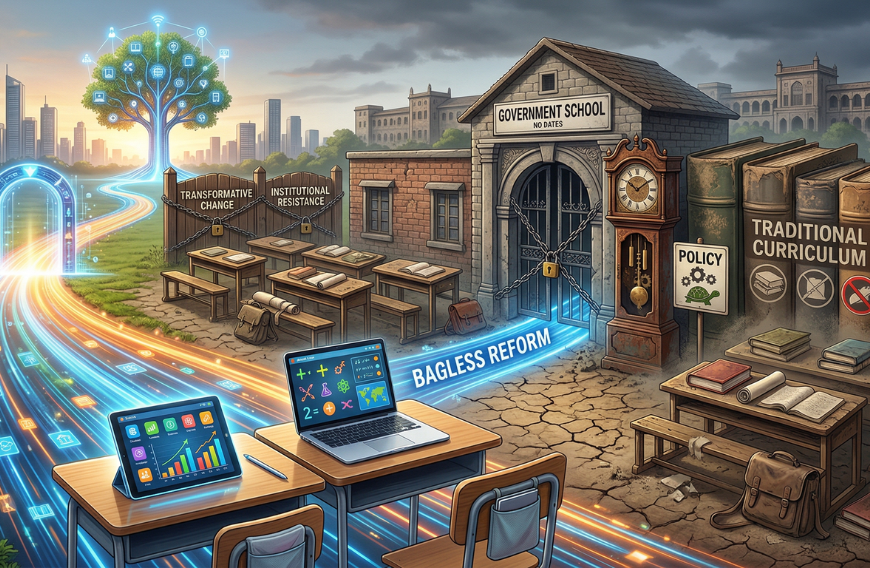
Reform does not fail because the idea is weak. It fails because the appetite is. I have spent nearly two decades watching India walk past a meal it had already cooked for itself — a full thali of possibility, steaming, fragrant, ready — and choose instead the comfort of hunger it had grown accustomed to. Hunger, after all, is predictable. Nourishment demands change.
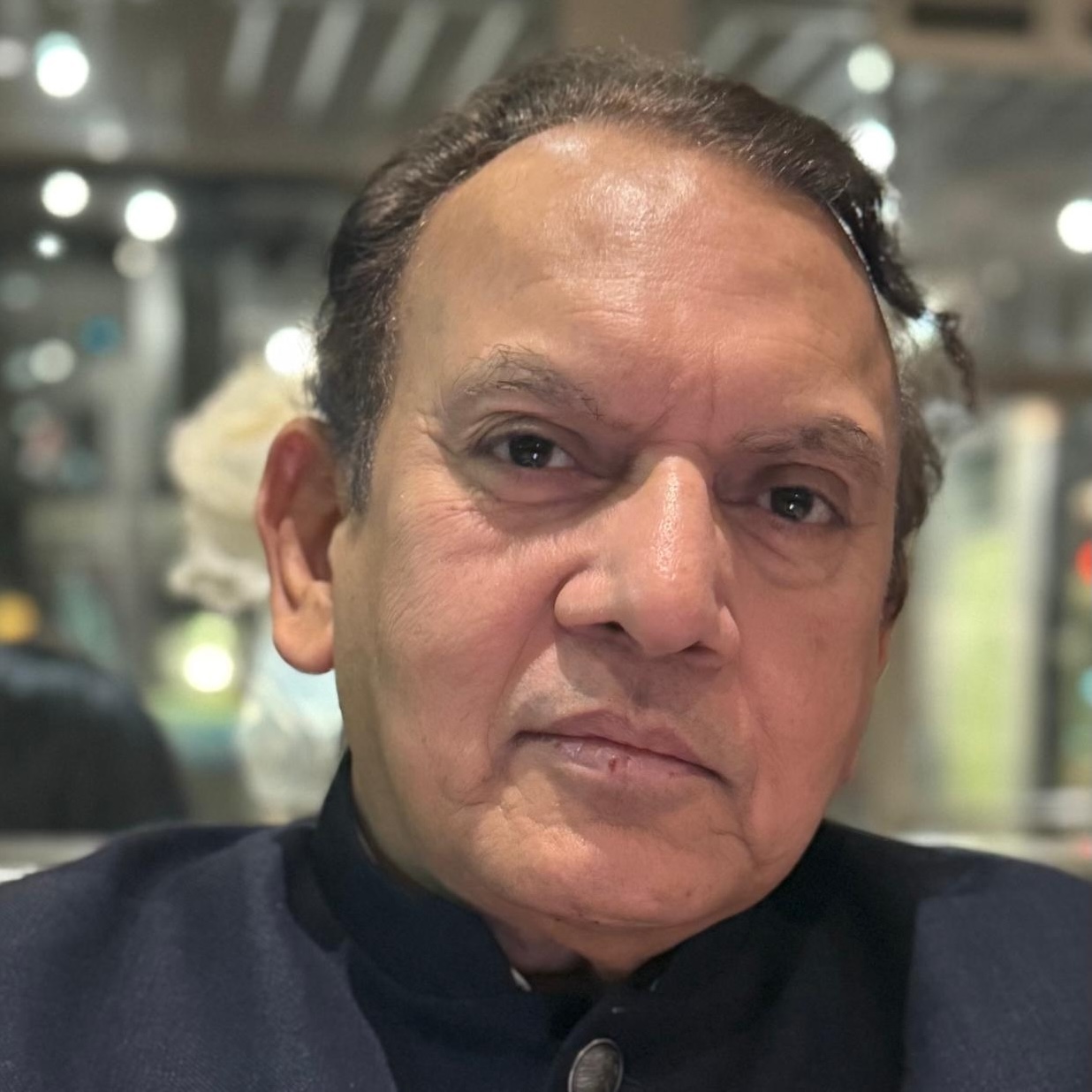
I did not begin my life imagining I would one day be arguing with a nation about the weight of a child’s schoolbag. I was a journalist first, trained to sit with complexity; an economist next, trained to sit with data; and a citizen always, trained to sit with disappointment. But in 2008, when the One Laptop per Child initiative came to India, I found myself unable to sit any longer. The country was still congratulating itself on enrollment numbers, on the Right to Education Act, on the midday meal. These were important victories, but they were victories of access, not outcomes. I had spent enough time in classrooms — from Bihar to Rajasthan to the outskirts of Delhi — to know that a child could attend school for five years and still not read a Class II text. The system was producing attendance, not ability. Warm bodies, not warm minds.
So when OLPC arrived, I saw not a gadget but a doorway. A way to unshackle learning from the weight of the schoolbag, the tyranny of the blackboard, the scarcity of the borrowed textbook that frayed by March. A way to give a child something India had never truly given her: agency. But India, in 2008, was not hungry for agency. It was hungry for schemes. And so the idea waited.
Ideas, however, do not wait passively. They seep, like water searching for cracks in stone. My “crack” arrived in the form of a school in Jaipur — Adarsh Vidya Mandir, Ambabari — run by Vidya Bharati Rajasthan. It was not a school that reformers typically flock to. It was not elite, not wealthy, not a showcase institution. It was a school for girls from working‑class families, with monthly fees around ₹500 — the price of a family’s weekly vegetables. But it had something far rarer than money: institutional courage.
Shiv Prasad, then the Organization Secretary of Vidya Bharati Rajasthan, listened to my proposal — a fully digitized, fully bagless school — with the kind of attention reformers dream of and almost never receive. He did not ask for a pilot. He did not ask for a feasibility study. He asked only one question: “If this works, will it work for every child?” I told him the truth: Yes. If we let it.
READ: Satish Jha | The Full Plate: What does it mean? (March 30, 2026)
And so, in 2021, we began. Every student received a tablet. Every teacher received a tablet. The entire curriculum migrated to screens. The blackboards came down. In their place came STEM labs, robotics programs, and artificial intelligence courses aligned with American certification standards. The school did not become a showroom. It became a workshop — a place where learning was not performed but lived.
The first week, the girls walked differently. Their backs were straighter. Their steps were lighter. It was not the technology that changed them. It was the absence of weight. For the first time in their lives, they walked into school unburdened. I remember one girl — small, serious, the kind of child who apologizes before she speaks — tapping open her tablet with the reverence of someone touching a future she had not known belonged to her. She looked up at me and said, “Sir, is this really mine?” I told her what I believed then and still believe: “It is yours because your mind is yours.”
By 2023, Ambabari was no longer an experiment. It was a functioning, thriving, fully bagless school. The model expanded to AVM Jawahar Nagar with support from EMIL of the Aditya Birla Group. Teachers reported sharper attention. Parents reported happier children. The school reported something India had forgotten to measure: joy. We had built — quietly, without ceremony — the very thing the Ministry of Education would begin to gesture toward only years later: a school where learning was not carried on the back but held in the hand.
READ: Satish Jha | Education without learning: India’s enduring equilibrium (March 25, 2026)
The irony was almost architectural. On April 2, 2026, when the Union Education Minister announced ten bagless days a year at the inauguration of Vidyabharati Bhawan in New Delhi, the applause was warm, the sentiment sincere. But I could not help noticing the symmetry: the announcement was being made in the headquarters of the very network that had already built the destination the government was now tentatively approaching. Ten days. We had shown what 365 could look like. Policy had arrived, as it often does in India, after the children.
India has a particular genius for symbolic reform. We love the gesture — the commemorative day, the pilot project, the announcement that signals intent without demanding transformation. Ten bagless days is a gesture. A good one. A necessary one. But a gesture nonetheless. A child does not need ten days of freedom. She needs a culture of freedom. A schoolbag is not merely a sack of books. It is a symbol of everything we have refused to change: rote learning, textbook dependency, teacher‑centric pedagogy, the tyranny of homework, the belief that weight equals seriousness. The bag is the architecture of an old imagination. Ambabari was the architecture of a new one.
In पूरी थाली, I wrote that education is not a single ingredient but a plate — a thali — in which technology sits alongside teachers, community, family, and values. Each essential. None sufficient alone. Ambabari was the thali made real. The nation, however, was not hungry enough. Not hungry enough to scale what worked. Not hungry enough to trust its own innovations. Not hungry enough to believe that a girl in a ₹500‑a‑month school deserved the same future as a child in a ₹5‑lakh‑a‑year one. India has never lacked ideas. It has lacked appetite.
READ: Satish Jha | The upside-down lesson: India can assemble the future. But can it invent it? (March 20, 2026)
I am often asked whether I am optimistic. It is a question reformers are expected to answer with a kind of performative hope. But hope, like reform, is not a performance. It is a discipline. So here is my answer: I am optimistic because I have seen what is possible. I am impatient because I have seen how slowly possibility travels. I am persistent because children do not have the luxury of waiting for policy to catch up.
The thali is full. The blueprint exists. The results exist. The school exists. The only question that remains — the question that will decide the future of millions of children — is painfully simple: How many more years will the nation take to sit down and eat?