


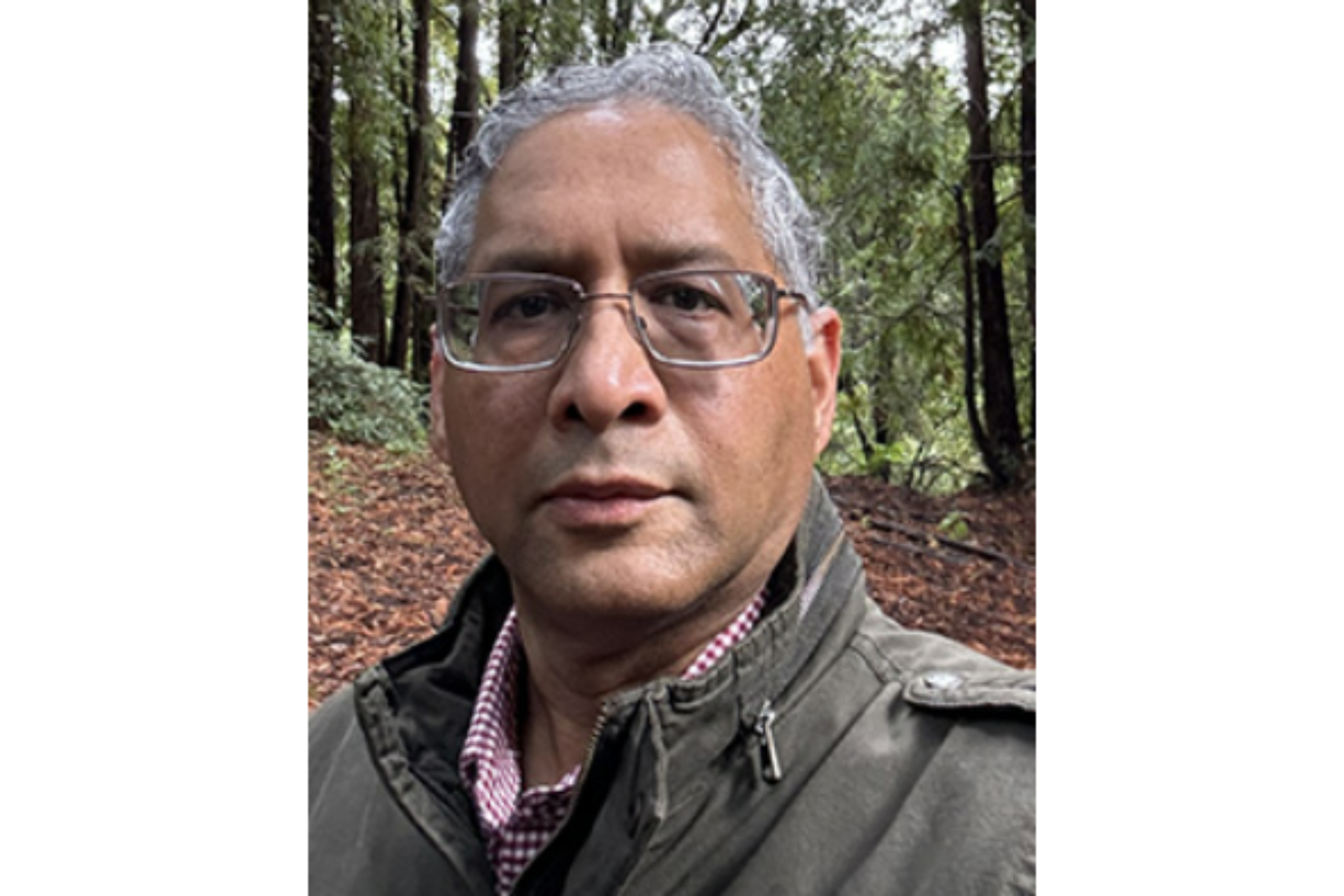
When the Penn State College of Engineering convened at the State Theatre on April 9, the spotlight fell on Dr. Aniruddha S. Vaidya, a man whose work behind the scenes has helped define the current era of generative AI.
Vaidya, the Senior Director of AI Computing at Nvidia, received the 2026 Outstanding Engineering Alumni Award. It is the college’s highest honor, awarded to graduates who have reached the pinnacle of their profession.
For Vaidya, that peak involves leading a global team of over 130 engineers responsible for the systems-on-chip and GPU architectures from the “Kepler” through the “Rubin” generations that serve as the engine room for modern data centers and autonomous vehicles.
Vaidya’s journey reflects a deep-rooted connection to India’s premier technical institutions. Before arriving in Happy Valley, he earned a Bachelor of Technology in Electrical Engineering from the Indian Institute of Technology (BHU) in Varanasi.
He continued his academic ascent at the Indian Institute of Science (IISc) in Bengaluru, where he completed his Master of Science. These foundations in India paved the way for his move to the United States, where he earned a doctorate in computer science and engineering from Penn State in 1999.
Read: Indian American researcher Tejal Desai elected AAAS fellow
“The recipients of the Outstanding Engineering Alumni Awards are solving problems and creating positive change across disciplines,” said Tonya L. Peeples, the Harold and Inge Marcus Dean of the College of Engineering.
Vaidya’s professional footprint extends beyond his 13-year tenure at Nvidia. He spent over a decade at Intel Labs as a senior staff researcher, contributing to foundational work in CPU server platforms and network-on-chip systems.
Despite his Silicon Valley success, he remains an active member of the Penn State community, serving on the Industrial and Professional Advisory Council for the School of Electrical Engineering and Computer Science.
Beyond his technical achievements, Vaidya has long been committed to community service, notably through leadership roles with the Association for India’s Development (AID).
His recognition at Penn State highlights not only a career of technical brilliance but also the enduring impact of the Indian American academic pipeline in shaping the global frontier of artificial intelligence.