


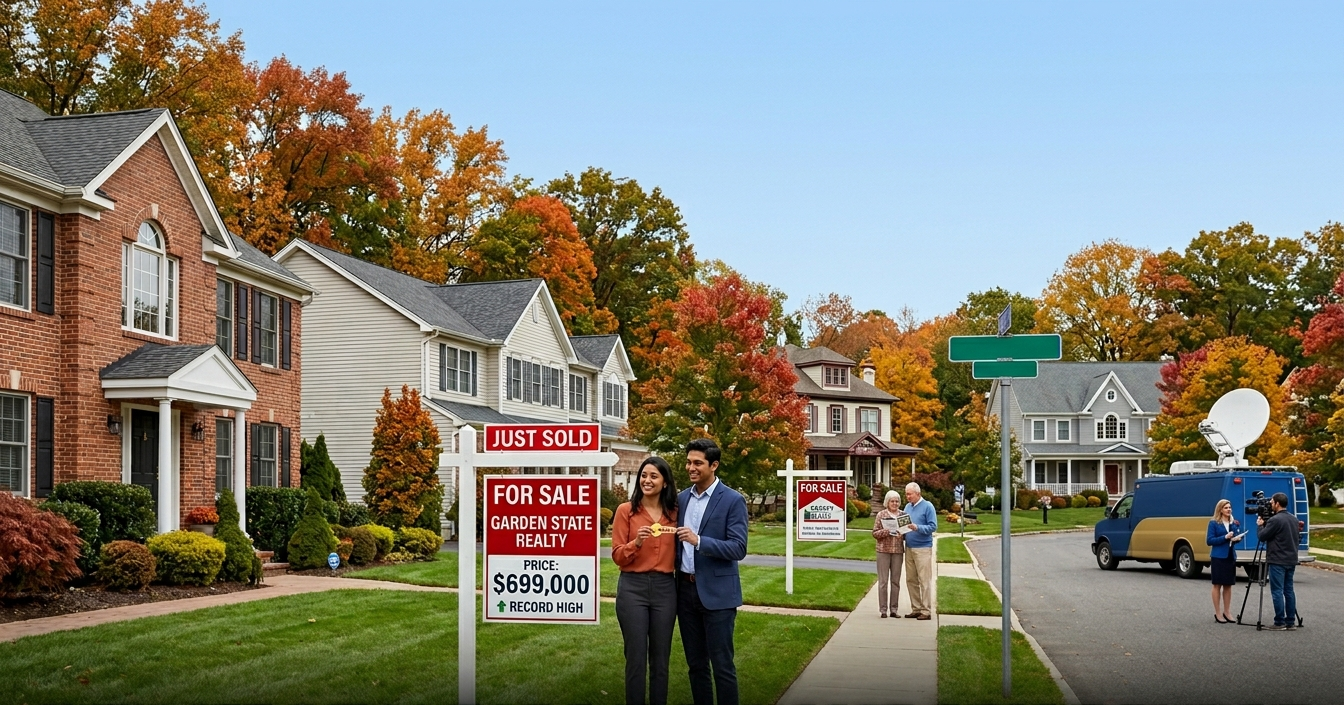
New Jersey has emerged as the fastest-growing housing market in the United States, outpacing national trends and intensifying affordability pressures for buyers. It has particularly reached immigrant communities such as Indian Americans, who have long viewed homeownership as a cornerstone of financial stability.
Recent data shows that home prices in New Jersey are rising at a significantly higher rate than the national average, driven by limited inventory, strong demand, and proximity to major employment hubs like New York City. Analysts note that the state’s competitive market reflects a broader national trend of constrained supply, but with sharper price acceleration.
“Home prices continue to rise due to persistent supply shortages and strong buyer demand,” one report noted.
This highlights a structural imbalance in the housing market where demand consistently exceeds available homes. For Indian American families, many of whom prioritize homeownership as a long-term investment and a marker of stability, this imbalance translates into increased competition, higher entry costs, and delayed purchasing decisions.
Another key insight emphasized regional disparities. “Markets in the Northeast, particularly New Jersey, are experiencing above-average growth compared to other regions.”
READ: Americans, Indians show interest in Canada’s new citizenship rules (April 12, 2026)
This suggests that while the national housing market is stabilizing in some areas, pockets like New Jersey remain highly competitive. For Indian-American professionals concentrated in the Northeast due to job opportunities in finance, healthcare, and technology, relocating to more affordable regions is often not feasible, further intensifying financial strain.
The surge in prices also reflects changing buyer behavior. With mortgage rates still elevated compared to pandemic-era lows, many buyers are stretching budgets or pooling family resources. Multigenerational purchasing is a practice common in Indian culture, which is now becoming increasingly visible in high-cost markets like New Jersey.
“Affordability remains a key challenge as price growth continues to outpace income gains.”
This highlights a growing disconnect between wages and housing costs. For first-generation Indian American families, especially recent immigrants, the challenge is compounded by visa uncertainties, credit history limitations, and the need to balance remittances with domestic expenses.
READ: Indian American pioneers making New York transportation more equitable (April 10, 2026)
Despite these hurdles, demand remains resilient. Indian American buyers continue to view U.S. real estate as a secure, appreciating asset, frequently prioritizing good school districts and community networks when making decisions.
As New Jersey leads the nation in home price growth, the broader implication is clear: without increased housing supply or policy interventions, affordability pressures will persist. For Indian Americans and other immigrant communities, the path to homeownership may become more complex and essential.