



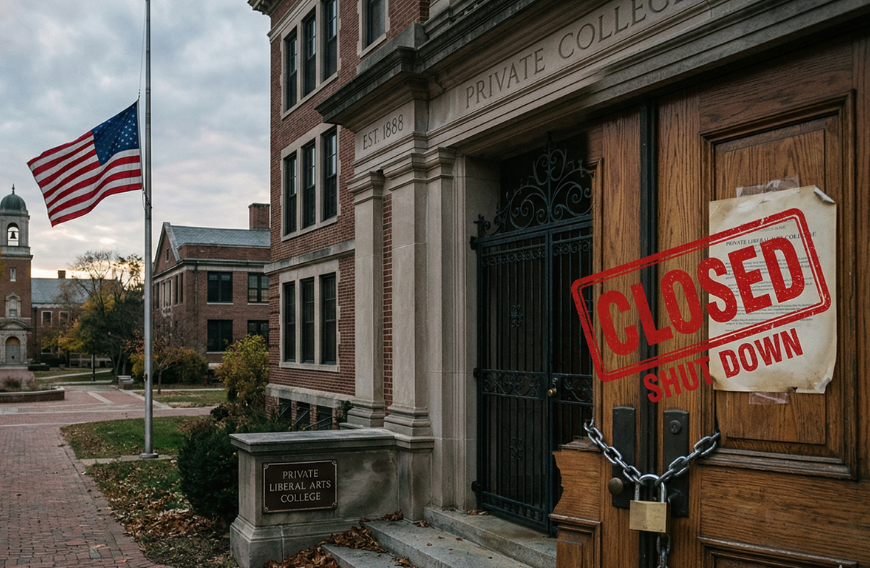
It looks like an increasing number of private colleges in the U.S. are in danger of being closed down. A new estimate projects that 442 of the nation’s 1,700 private, nonprofit four-year colleges and universities, with a combined 670,000 students, are at risk of closing or having to merge within the next 10 years.
As per the forecast by Huron Consulting Group, which helps clients in industries including higher education formulate business strategies, more than 120 institutions are at the very highest risk.
“We have too many seats. We have too many classrooms,” Peter Stokes, a managing director at Huron, said of U.S. colleges and universities. “So over the coming five to 10 years, this shakeout is going to take place.”
READ: ‘Our college system would go to hell’: Trump says as international student arrivals decline (August 27, 2025)
The growing concern over the financial stability of many U.S. private nonprofit colleges reflects long-term demographic and economic pressures reshaping higher education. A widely cited forecast from Huron Consulting Group suggests that a significant number of institutions, particularly small and tuition-dependent colleges, may face closure or mergers within the next decade.
Many smaller colleges rely heavily on tuition revenue, making them especially vulnerable when enrollment drops even slightly. Rising operational costs, financial aid demands, and infrastructure maintenance further strain budgets.
This shift is influencing student decision-making, as some prefer smaller or specialized colleges while others seek larger universities with stronger stability and broader offerings. The sector is entering a period of adjustment where long-standing institutional models are being tested by demographic change and market pressures.
“I don’t think I would have done well at a big, traditional college,” said Jack Beatson, a first-year student from California. “I just sort of get freaked out in a big space like that.”
READ: Trump plans to funnel funds from Ivy League to trade schools (September 17, 2025)
As per NPR, there are about 3,700 two- and four-year public and private degree-granting colleges and universities in the United States, that’s already down from a peak of 4,726 in 2012.
“We always joke that Sterling kids stick around. But it’s true, they do, and they contribute to the community,” said Liz Chadwick, who moved from New Jersey in 2013 to finish her bachelor’s degree at the college, where she now teaches food systems. “They build families here.”
For students, the changing landscape may lead to a wider range of choices, but also more variability in institutional stability and long-term planning. Decision-making may increasingly involve not only academic fit, but also financial security and institutional resilience. Communities tied to smaller colleges could experience both challenges and opportunities as campuses adapt their roles, potentially becoming more integrated with local economies and training ecosystems.