



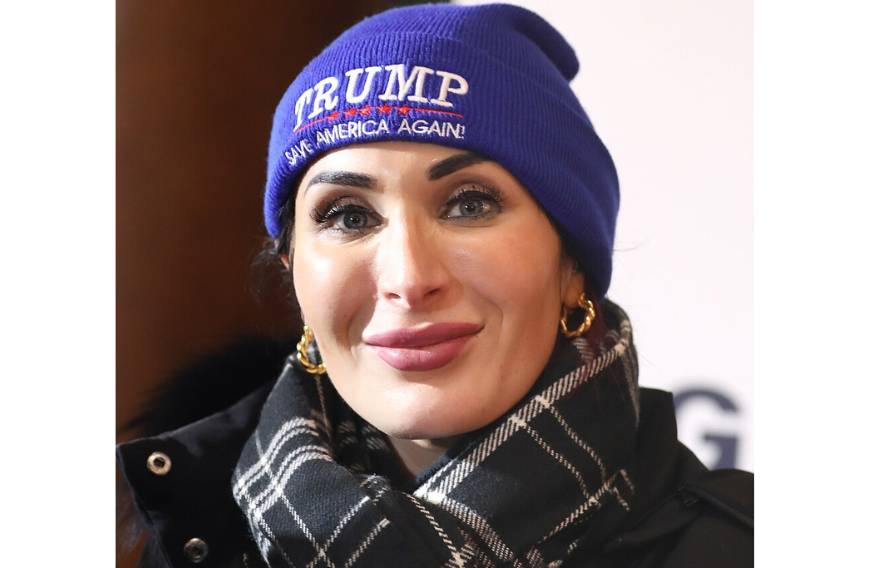
A social media post by activist Laura Loomer is drawing fresh attention to national security concerns involving foreign researchers in the United States. She claimed that Dorsa Sattari-Khavas, a student with alleged ties to Iran, was removed from a U.S. Army-funded project.
The student is reportedly affiliated with Rice University, where she was pursuing doctoral work. Loomer’s post also raised questions about potential links between the student’s family and Iran’s political and scientific leadership, adding to the controversy.
READ: Longtime Indian American court interpreter arrested by ICE at South Texas airport (April 16, 2026)
Loomer calls for stricter enforcement measures in cases involving perceived national security risks, though such actions typically require formal investigations and legal review. She added, ‘The next step needs to be State Dept., US DHS, and Rubio revoking her visa, having US ICE arrest her, and deporting her back to Iran…’
Loomer also referenced the Iranian National Elites Foundation, quoting, ‘The DOJ has identified INEF as a conduit for recruiting experts and transferring technology…’ U.S. officials have previously raised concerns about technology transfer and the potential misuse of academic research in sensitive fields.
She further wrote, ‘As I exclusively reported, Dorsa Sattari-Khavas’s father, Sorena Sattari, is the head of Iran’s National Elites Foundation…’ She alleged familial connections that could draw additional scrutiny, particularly given ongoing tensions between Washington and Tehran.
READ: FBI probes assault on Savanah Hernandez at ICE protest (April 12, 2026)
The post concluded with a forceful demand: ‘DEPORT Dorsa Sattari-Khavas!!! Her presence in the US is a national security threat.’ The severity highlights how debates over immigration, research security, and geopolitics are increasingly intersecting in public discourse.
U.S. authorities have not publicly confirmed the claims. Still, the situation reflects a broader shift as artificial intelligence, defense research, and advanced technologies become more strategically important.
As global competition intensifies, policymakers and institutions face a delicate balance: protecting national security while preserving the openness that has long driven innovation and academic collaboration.