



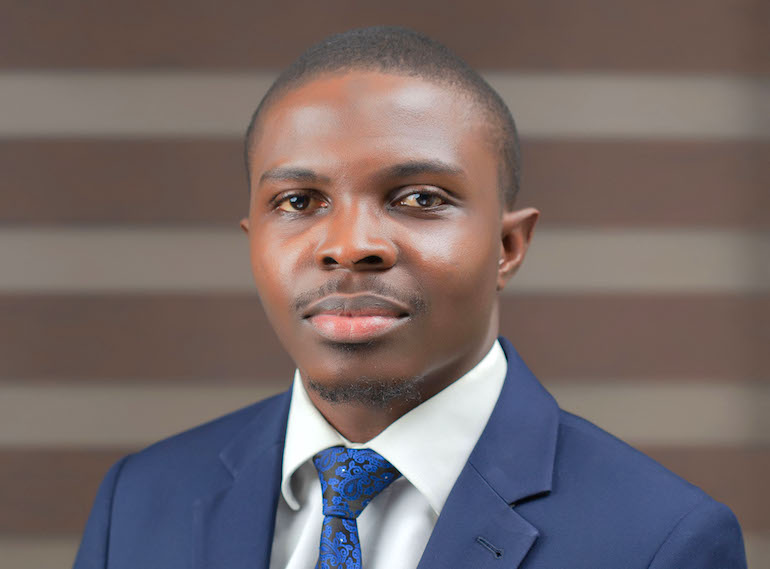
Habeeb Gbenle, founder of Stecs, is part of a new wave of fintech entrepreneurs seeking to reshape financial access across Africa through ethical and interest-free solutions. With over a decade of experience in finance and exposure to venture capital ecosystems, Gbenle has built Stecs as a digital-first platform aimed at underserved communities, particularly young professionals, freelancers, artisans, and small business owners who want financial services aligned with their values.
Stecs is a pioneering digital financial platform offering ethical, interest-free financial services rooted in Islamic principles. The company provides an all-in-one financial app that enables users to bank, save, invest, and grow wealth seamlessly, while remaining compliant with non-interest financial frameworks. Its mission is to make ethical financial services accessible and affordable for all, and its long-term vision is to become a leading, trusted provider of digital-first ethical finance across Africa and beyond.
Currently focused on Nigeria as its primary market, Stecs is actively engaging regulators to secure licenses that will allow it to expand its offerings into a more comprehensive Islamic financial ecosystem. This includes structured financing products, curated investment opportunities, and advanced wealth management tools. At the same time, the company is exploring expansion into other African markets and key Gulf countries, where Islamic finance is more mature and offers opportunities for partnerships and scaling.
Stecs is positioning itself carefully for growth, balancing regulatory compliance, product-market fit, and sustainability, as it aims to serve a growing demand for ethical finance across emerging markets.
In an exclusive interview with The American Bazaar, Gbenle spoke about his journey, the gaps in the fintech market, and the future of Islamic finance in Africa.
The American Bazaar: Can you start by telling us about yourself and Stecs?
Habeeb Gbenle: My name is Habeeb Gbenle, and I am the founder of Stecs. The journey didn’t actually begin with Stecs. I’m a finance professional with over 10 years of experience, and early on I developed an interest in Islamic finance. At that point, I knew I wanted to build a career in that space.
READ: In conversation with Ray Wang: ‘You have to decide what not to do’ in the AI era (March 27, 2026)
I studied extensively and even enrolled at the Ethica Institute of Islamic Finance in Dubai, where I obtained certification. Like many young graduates at the time, I was hoping to get a job in the industry, but opportunities were limited. Back then, Nigeria had just one Islamic investment firm, one fund manager, and one bank offering Islamic finance.
When I couldn’t secure a role in that space, I began my career at a Takaful company in Nigeria as a salesperson. Over time, as I continued to grow within the Islamic finance ecosystem, I realized there was no solution that truly catered to young Muslims—especially one that was technologically appealing.
Conventional platforms were advanced and user-friendly, but they didn’t align with ethical or non-interest principles. That gap became increasingly clear to me, especially while working with a venture capital firm, where I was exposed to innovative ideas and startups.
That experience made me realize I wanted to build something in this space, something tech-driven that young Muslims could relate to. That’s what led to the creation of Stecs.
Would you say that gap is what motivated you to start?
Yes, exactly. My time in venture capital was particularly eye-opening. I saw young founders who dared to dream and successfully built companies. One example is Flutterwave, which has become one of Africa’s most valuable startups.
I knew when they started, and seeing where they are today showed me what’s possible. That experience broadened my perspective and played a major role in motivating me to build Stecs.
Do you think there’s still a gap in Nigeria’s fintech market?
Some people might argue that the market already has its winners. Platforms like PiggyVest and Cowrywise dominate savings and investments, while Moniepoint, OPay, and Kuda have made significant strides in digital banking.
At first glance, it might seem like there’s no room for new players. But the reality is that there’s still a major gap—none of these platforms cater specifically to people who want ethical, non-interest financial solutions.
That’s where Stecs comes in.
And it’s a significant market. For example, in May, the Nigerian government issued a Sukuk worth 300 billion naira, and it was oversubscribed by over 700 percent. That clearly shows the growing appetite for ethical, non-interest financial products.
We’re also seeing increased awareness. As more people understand Islamic finance, adoption will continue to grow, and we want to be ready for that moment.
Let’s talk a little bit more specifically about Stecs. What products or services does Stecs currently offer, and who is your target audience?
Initially, we started with a B2B (business-to-business) platform called Befund Match. It connected individuals who had funds and were looking for ethical returns with businesses seeking interest-free financing. We successfully facilitated those matches, but we realized that many people were interested in ethical finance but didn’t meet the income thresholds required for those opportunities. So we pivoted.
READ: Indiaspora Forum 2026 concludes with Global AI Summit spotlighting India’s tech future (March 25, 2026)
We decided to build an alternative to platforms like PiggyVest and Cowrywise, specifically for people who want ethical financial solutions. Many Muslims use conventional apps but switch off interest, which means they earn nothing from their savings.
We wanted to create a solution for retail users, people earning moderate incomes, including those at the grassroots level, so they could save and invest in a way that aligns with their values.
What are some common misconceptions about non-interest finance?
The first misconception is that non-interest finance is essentially charity and that financial institutions don’t make money. Even among Muslims, people often ask how Islamic banks generate profit.
The truth is that there are alternative models for making money that don’t involve interest, and awareness around this is gradually increasing.
The second misconception is that Islamic finance is only for Muslims. While it is rooted in Islamic principles, the benefits, such as ethical investing, are universal. However, this perception still discourages some people from engaging with it.
The third misconception is that there are limited opportunities in the space. But examples like the oversubscribed Sukuk issuance show that there is significant demand and potential.
How long has Stecs been operating?
We incorporated in 2021, but we officially started operations in November 2023. So, it’s been almost two years.
What challenges have you faced so far?
We’ve faced regulatory, cultural, and technological challenges.
From the beginning, we knew we couldn’t compete directly with large fintech companies, so we focused on differentiation—particularly in investments.
Instead of interest-based returns, we use profit-sharing models. For example, if someone invests funds, we allocate those funds into Shariah-compliant assets and share the profits based on agreed ratios.
However, this created confusion. Some users misunderstood how profit-sharing works and assumed they were earning less than they actually were.
Another challenge was terminology. Concepts like Mudarabah and Musharakah were unfamiliar to many users, so we had to invest heavily in education. We even built a learning community to help users understand ethical finance.
On the regulatory side, we had to decide which licenses to pursue, whether to focus on investment or banking. Based on user behavior, we saw stronger engagement with banking features, so we are currently pursuing a microfinance banking license, along with a variant of an SEC license for wealth management.
Our long-term goal is to create a single platform where users can bank, save, invest, access financing, and manage their wealth. This includes features like tracking net worth and calculating zakat.
We’re not there yet, but that’s the direction we’re heading.
How do you see Islamic fintech evolving in Africa over the next five years?
I believe it will grow significantly.
We’re already seeing governments issue Sukuk and establish regulatory frameworks. For example, Ghana is working on an Islamic banking framework.
When governments take these steps, it signals interest and creates opportunities for capital inflow, especially from investors seeking ethical financial solutions.
Countries like Nigeria, South Africa, Egypt, and Morocco are making progress in this space.
READ: War, diaspora and India’s growth: Gita Gopinath outlines global outlook at Indiaspora Forum 2026 (March 24, 2026)
Regulatory support is critical because non-interest financial institutions need a level playing field to compete with conventional ones.
As more frameworks are developed, the industry will continue to expand across Africa.
What are your plans for Stecs in the next three years?
While we have big ambitions, we’re also realistic. Right now, our focus is on securing the necessary licenses in Nigeria, as they will help us build trust and scale effectively.
For the past two years, we’ve largely bootstrapped, which has allowed us to deeply understand our users. Now, we’re entering a phase of acceleration and growth.
We’re currently fundraising to support that growth, but we’re also focused on sustainability. Unlike in Silicon Valley, funding in Africa is not as readily available, so it’s important to balance growth with profitability.
In terms of expansion, we’re open to opportunities. If the right conditions exist, whether in another African country or a market like Riyadh, we’re willing to explore them.
What continues to motivate you after more than a decade in finance?
It comes back to the original problem we set out to solve.
We’re building something that addresses a real need, one that we personally experienced and that affects millions of others. That’s incredibly motivating.
As a Muslim, I’ve seen how underserved the community can be when it comes to financial services. Stecs is about building the future we want to see, rather than waiting for someone else to build it.
We’re not there yet, and that journey is what keeps me going. Maybe when that vision is fully realized, I’ll step back—but for now, there’s still a lot to do.