



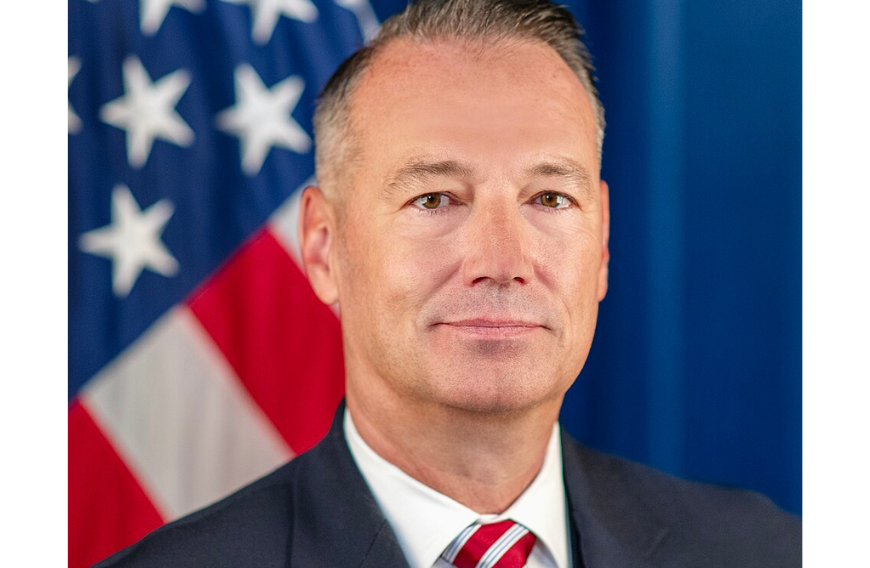
U.S. Immigration and Customs Enforcement (ICE) is going through a major personnel change at the top. Todd Lyons, the acting director of ICE, is stepping down after a turbulent year carrying out President Donald Trump’s immigration agenda.
As per The Guardian, Lyons, who has been leading the agency since March 2025, will resign at the end of May and move to the private sector, Markwayne Mullin, the Department of Homeland Security (DHS) secretary, said in a statement on Thursday.
Who is Todd Lyons?
Todd Lyons is an American law enforcement official serving as the acting director of U.S. Immigration and Customs Enforcement (ICE) since March 9, 2025. He has spent much of his professional career in federal immigration enforcement. Lyons joined ICE in 2007 and built his career within its Enforcement and Removal Operations (ERO) division, which is responsible for immigration detention and deportation processes across the United States.
READ: Longtime Indian American court interpreter arrested by ICE at South Texas airport (April 16, 2026)
Over the years, Lyons held a range of leadership roles within ERO, including field office positions where he supervised enforcement activities, managed personnel, and coordinated operations with other federal, state, and local agencies.
Before joining ICE, Lyons served in the United States Air Force, where he gained early experience in national security and disciplined service. As acting director, Lyons oversees ICE’s two primary branches: ERO and Homeland Security Investigations (HSI), which handles transnational crime such as human trafficking and cybercrime.
As per The Guardian, when Lyons was testifying before Congress after the shootings, he declined to apologize to Renee Good’s and Alex Pretti’s families or say whether he agreed with the Trump administration’s widely criticized claims that the U.S. citizens shot by officers were “domestic terrorists.”
READ: US ICE airport arrests spark protests amid immigration crackdown (April 7, 2026)
Lyons’ tenure as acting director of ICE reflects the broader complexities and tensions surrounding immigration enforcement in the United States. His leadership period has been marked by strong institutional backing from government officials alongside significant public scrutiny, highlighting the deeply polarized nature of immigration policy.
The events during his time in office underscore the challenges faced by enforcement agencies operating in politically sensitive environments, where decisions are often judged not only on legal grounds but also on ethical and humanitarian considerations. Incidents involving the use of force, ongoing investigations, and courtroom scrutiny have supposedly intensified debates over accountability, transparency, and the limits of federal authority.
1 Comment
Sorry, Chump… you can try to run but you’ll never hide.
You were/are an ENABLER.