



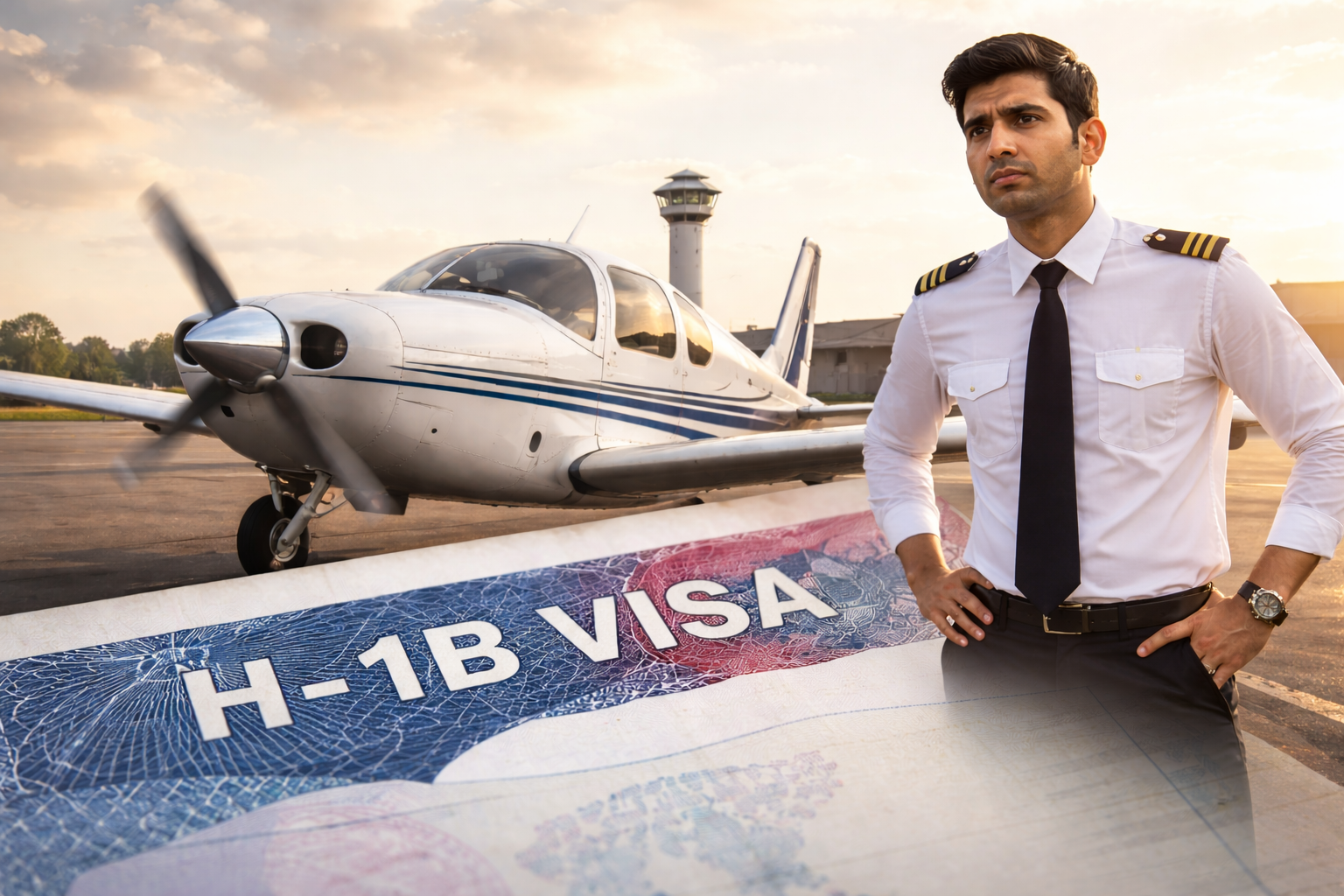
A viral social media post has ignited concern across the Indian American community, focusing on private-plane pilots, amplifying anxieties around immigration policy, and thrusting the U.S. aviation training sector into an unexpected spotlight.
The post, widely circulated on X, drew backlash for remarks that many users described as inflammatory and misleading. Critics said the rhetoric unfairly targeted Indian professionals and students, escalating tensions at a time when immigration debates are already deeply polarized.
READ: ‘Last chance H1B didn’t happen’: Applicant shares heartbreak after USCIS completes 2027 lottery (April 2, 2026)
Much of the concern centers on the H-1B visa program, a critical pathway for highly skilled workers, many of whom come from India. The technology and healthcare sectors depend heavily on these professionals, but observers claim the current climate of uncertainty is spreading into adjacent industries, including aviation.
In particular, the post’s references to private pilot courses have sparked alarm among international students and flight schools alike. The United States has long been a global hub for aviation training, attracting thousands of students each year due to advanced infrastructure, favorable weather conditions, and globally recognized certifications. Indian students represent a significant share of that pipeline.
Industry experts warn that heightened scrutiny or negative sentiment could disrupt this ecosystem. Flight training academies rely on international enrollment to sustain operations, while airlines worldwide depend on a steady supply of trained pilots to address ongoing shortages. Barriers, whether policy-driven or perception-based, could ripple across the broader aviation workforce.
READ: ‘Accents thicker than their milkshakes’: Elijah Schaffer calls out Indian Americans (
Students pursuing private pilot licenses and advanced certifications often navigate a complex web of visa requirements, background checks, and financial commitments. Even minor regulatory shifts or public controversies can delay training timelines or deter prospective applicants altogether. Aviation consultants note that uncertainty, rather than outright policy change, frequently has the most immediate impact.
Within the Indian American diaspora, the episode has reignited conversations about representation and access. While the community has made significant contributions across industries, including aviation and aerospace, moments like this highlight lingering vulnerabilities tied to immigration status and public perception.
Social media amplification has further intensified the issue, transforming a single post into a broader debate over who has access to specialized training opportunities in the United States.
As the aviation industry continues to grapple with pilot shortages and rising global demand, stakeholders say maintaining open, merit-based pathways for international trainees will be critical. The controversy underscores how quickly cultural discourse and immigration concerns can intersect with workforce needs, shaping the future of industries far beyond their original scope.