



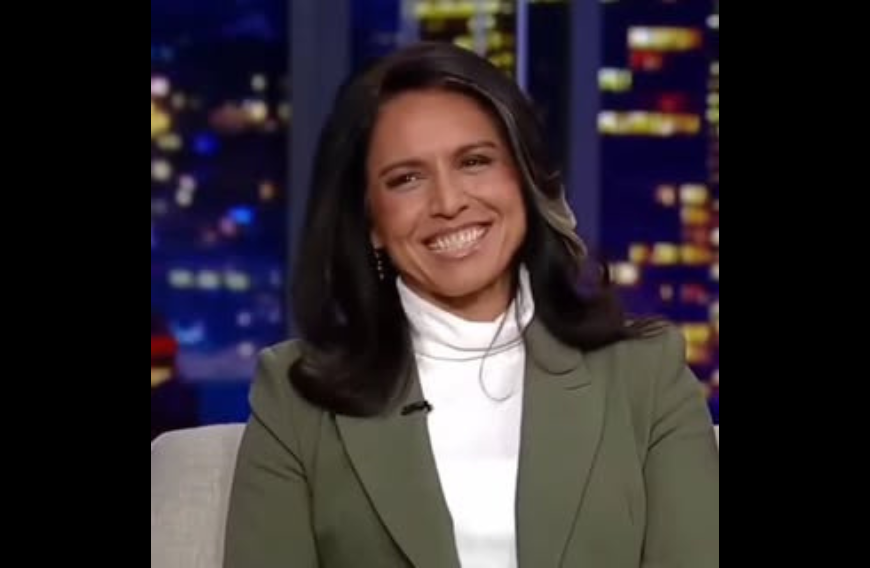
The latest wave of departures from the Trump administration is sharpening attention on Tulsi Gabbard, who now faces mounting pressure as internal shifts accelerate across senior ranks.
Recent exits like Attorney General Pam Bondi, Homeland Security Secretary Kristi Noem, and Labor Secretary Lori Chavez-DeRemer in just the last month, have not only underscored instability but have also placed Gabbard at the center of speculation over who may be next to leave.
Several high-profile departures recently have revealed a pattern of increasing turnover, driven by policy disagreements, political recalibration, and growing scrutiny ahead of key elections. While turnover is a common feature in any administration, the current pace signals deeper tensions. Observers say the administration is actively reshaping its leadership team to better align with evolving priorities and messaging goals.
READ:India Today faces online backlash for inviting Laura Loomer to 2026 Conclave; Mehdi Hasan reacts (
Gabbard’s position appears particularly uncertain. Once viewed as a strategic voice capable of appealing across political divides, she now finds herself navigating a narrowing space within the administration. Sources indicate that her policy stances and independent profile have complicated her standing at a time when cohesion is being prioritized. Discussions about her future role suggest that leadership is weighing whether her continued presence advances or detracts from broader political objectives.
At the same time, FBI Director Kash Patel remains widely considered another likely departure. Patel’s involvement in contentious policy areas has made him a focal point for criticism, leaving his position vulnerable. However, insiders propose that the immediate spotlight has shifted more decisively toward Gabbard as internal deliberations intensify.
Potential replacements are already under consideration, with advisors reportedly seeking figures who can deliver tighter message discipline and reinforce policy alignment. Any transition involving Gabbard would likely signal a strategic pivot rather than an isolated personnel change.
According to The Wall Street Journal, one source noted that Gabbard’s situation reflects “a broader effort to enforce message unity at a critical political moment.” This perspective highlights the administration’s increasing focus on cohesion as elections approach. Historically, administrations often narrow their internal diversity of viewpoints during such periods to present a more consistent public stance, even if it means sidelining figures with independent political identities.
Another insider, cited by the WSJ, said that “[Gabbard’s] cross-party appeal, once considered an asset, is now being reassessed.” In the current environment, where political messaging is tightly controlled, traits that once broadened appeal may now be viewed as complicating efforts to maintain a unified narrative, especially under heightened public and media scrutiny.