



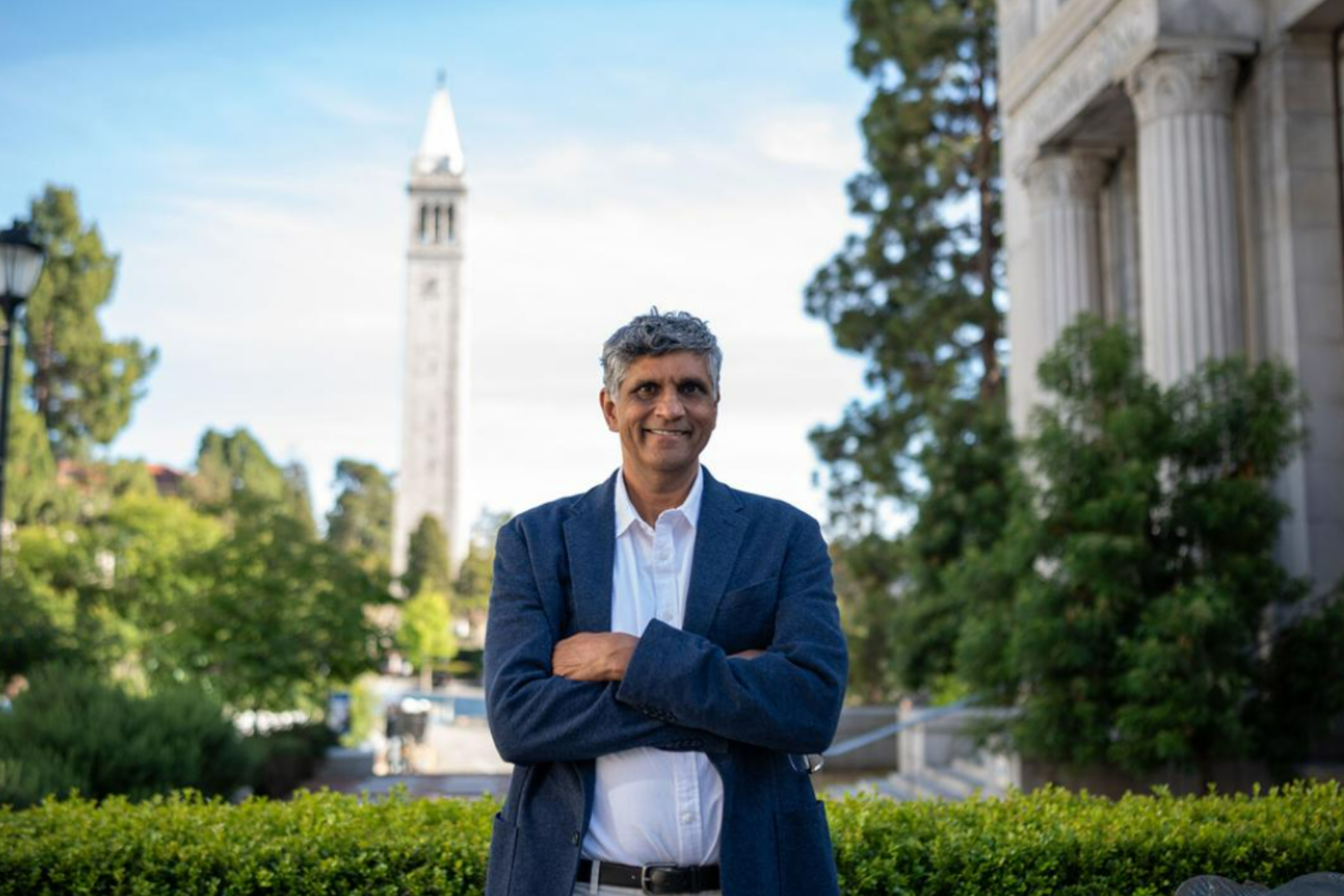
Satish Rao, a prominent computer science professor at UC Berkeley, has joined the 2026 California gubernatorial race. Running as a Democrat, Rao seeks to transition from theoretical research to state leadership, offering a platform centered on utilizing technology and algorithmic fairness to address systemic inequality.
A recognized leader in the field of computer science, Rao has spent over two decades at Berkeley focusing on combinatorial optimization and approximation algorithms.
His work earned him the prestigious Fulkerson Prize in 2012 and an induction as an ACM Fellow in 2013. Now, he aims to apply this logic-based problem-solving to the complex digital and social infrastructure of California, the world’s fifth-largest economy.
Rao’s campaign emphasizes the need for “algorithmic fairness,” arguing that as the state increasingly relies on automated systems for governance, a leader with deep technical expertise is required to prevent digital bias.
He has positioned himself as a champion for the expansion of California’s public university systems, advocating for increased accessibility and affordability for the next generation of students.
Read: Indian American pastor Mathew Philip launches bid for Georgia House seat
His candidacy is particularly significant for the Indian American community, representing the diaspora’s expanding role in high-level American politics. As a son of Indian immigrants, Rao’s narrative is one of academic excellence and public service.
He has frequently highlighted how the values of his heritage, specifically a rigorous focus on education, have shaped his career and his desire to give back to the state that fostered his professional growth.
Rao’s academic journey began at the Massachusetts Institute of Technology (MIT), where he earned his PhD in 1989. Before joining the Berkeley faculty in 1999, he served as a scientist at the NEC Research Institute.
Throughout his tenure in academia, he has maintained a commitment to mentoring, including engaging with students and researchers of Indian descent, further strengthening the ties between the Silicon Valley tech corridor and the global Indian community.
While Rao enters a primary field filled with veteran politicians, his supporters argue that his background as a researcher provides a unique, non-partisan approach to governance.
As the June primary approaches, Rao’s campaign will test whether voters are ready for a data-driven “outsider” to lead California through its next era of technological and economic transformation.