



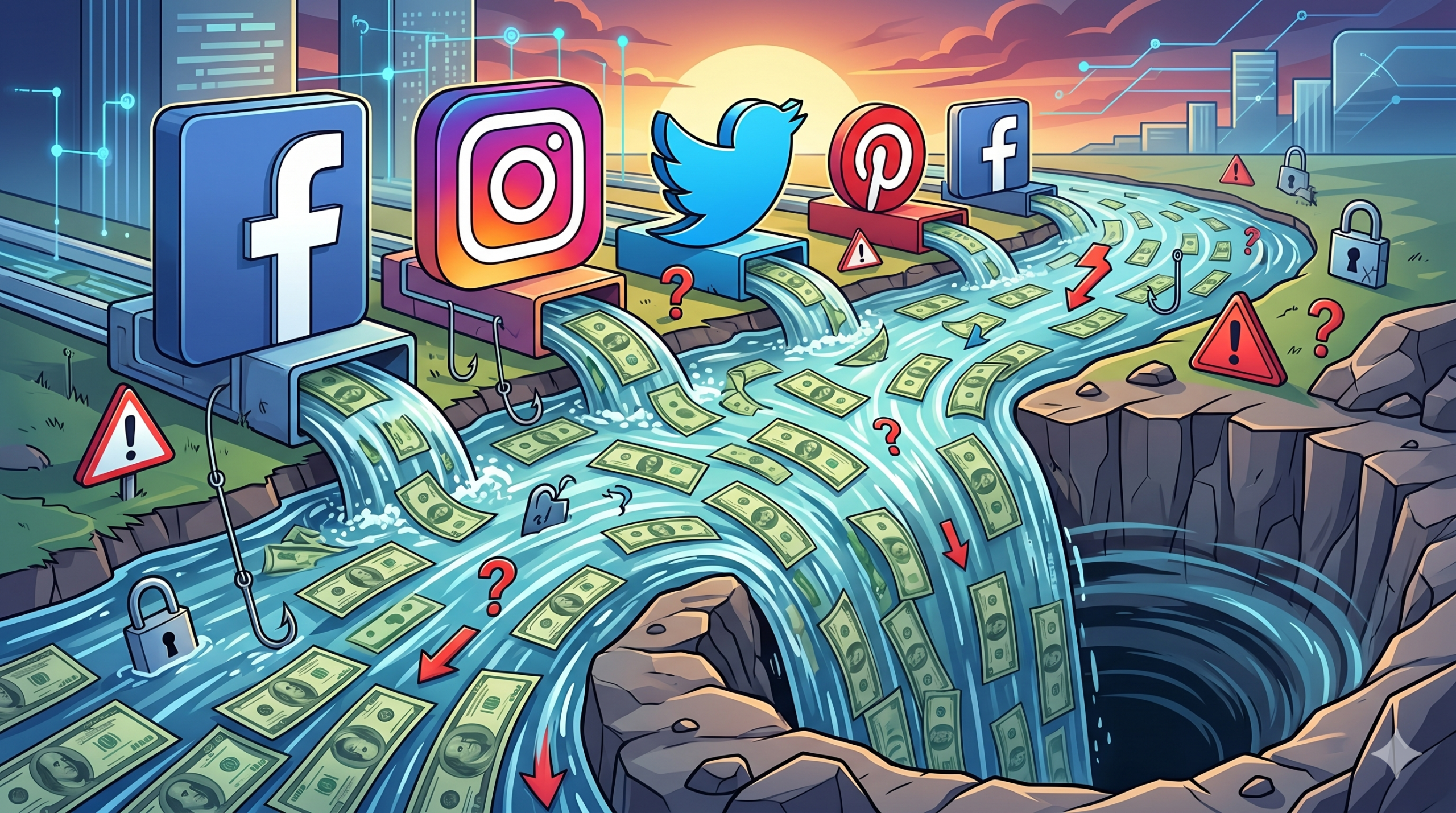
Americans lost about $2.1 billion to scams that started on social media in 2025, according to a new report from the Federal Trade Commission (FTC). The agency said these losses have grown sharply, rising eight times in recent years.
Social media has now become the most expensive way for scammers to reach people, compared to phone calls, texts, or emails. Nearly 30 percent of those who said they lost money to scams reported that the fraud began on a social media platform.
Among platforms, Facebook accounted for the highest number of reported losses. WhatsApp and Instagram followed, but far behind. People also said they lost much more money through scams on Facebook alone than through scams that started via text messages or email.
READ: 77% of Asian Americans fear AI scams, survey finds; deepfake fraud rising (April 24, 2026)
Data from the FTC shows that social media scams come in many forms, with online shopping fraud being the most common last year. More than 40 percent of victims said they bought a product they first saw in an ad. These items ranged from clothes and beauty products to car parts and even pets like puppies.
In many cases, the ads directed users to unfamiliar websites. Some others led to fake versions of well-known brand sites that promised huge discounts to lure buyers.
Another major category involves investment scams. These often begin with ads or posts claiming to teach people how to invest and earn quick returns. In some cases, scammers act as friendly advisers, while others create groups on WhatsApp filled with fake success stories to build trust.
These investment schemes caused losses of about $1.1 billion, making them one of the costliest types of social media fraud.
READ: How an AI-generated ‘conservative MAGA influencer’ went viral and made thousands (April 22, 2026)
The FTC also found that romance scams remain a major concern. Nearly 60 percent of people who reported losing money to such scams in 2025 said the contact first began on social media.
In many cases, scammers study a person’s profile and shape their messages to build trust. After forming a connection, they often create a fake emergency and ask for money. In other situations, they slowly introduce investment ideas and guide victims toward fake platforms designed to steal their funds.
The FTC says people can reduce their risk by taking a few simple steps. Keep your social media profiles private and limit who can see your posts and contact details. Do not trust anyone you meet online to guide your investment decisions.
Before buying anything you see in an ad, take time to check the seller. Look up the company, read reviews, and search its name along with words like “scam” or “complaint” to spot warning signs.