



By Kashmira Konduparty
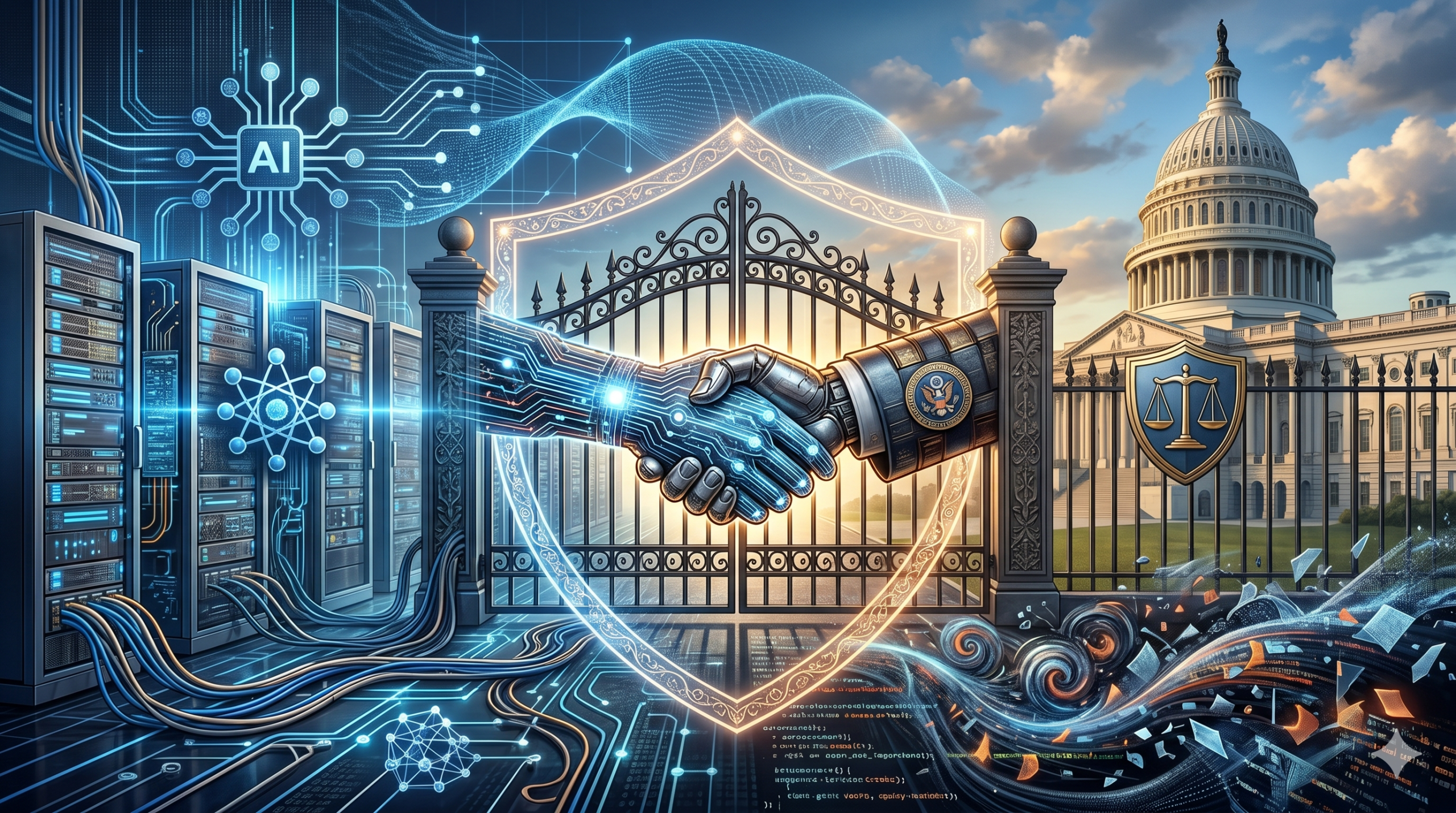
The United States government will gain early access to some of the world’s most advanced artificial intelligence systems through a new agreement with Microsoft, Google, and xAI. This deal aims to identify potential national security risks before the technology is available to the public.
The arrangement allows experts to test the models for weaknesses, misuse and emerging threats. This marks a significant step in Washington’s efforts to improve oversight of rapidly changing AI tools while still encouraging innovation in the field.
Under the agreement, the companies will give early access to their most advanced AI models to the U.S. Commerce Department’s Center for AI Standards and Innovation (CAISI). Government researchers will evaluate the systems for risks such as cyberattacks, exploitation in warfare and the potential to assist in developing harmful biological or chemical materials.
READ: Why AI could be the biggest threat yet to work from home, remote jobs (December 30, 2025)
Officials say the testing process is aims to identify weaknesses before public deployment. In some cases the models may be examined with fewer restrictions to better understand how they could be misused. The collaboration will also involve joint research to develop new methods to assess AI behavior and improve safety standards.
The move comes amid growing concerns in Washington about the fast progress of “frontier” AI systems. Recent advancements in the field have shown that powerful models can find software vulnerabilities or provide detailed technical guidance that could be exploited by malicious actors.
The agreement expands on earlier voluntary commitments made by other AI developers, including OpenAI and Anthropic, to share models with the government for safety testing. It reflects a broader push by U.S. authorities to establish oversight mechanisms without imposing strict regulations that could slow innovation.
READ: Jobs AI can’t replace yet: What a new report finds (May 2, 2026)
Experts say this initiative highlights the delicate balance between promoting technological growth and addressing security risks. While early access testing could help prevent harmful usage, it also raises questions about how much the government should be involved in the development of private sector technology.
As AI systems become more powerful and widely adopted, the partnership between government and industry indicates a shift towards more proactive risk management. Whether this will lead to formal regulations or remain a voluntary framework could affect how AI is developed and released in the coming years.