



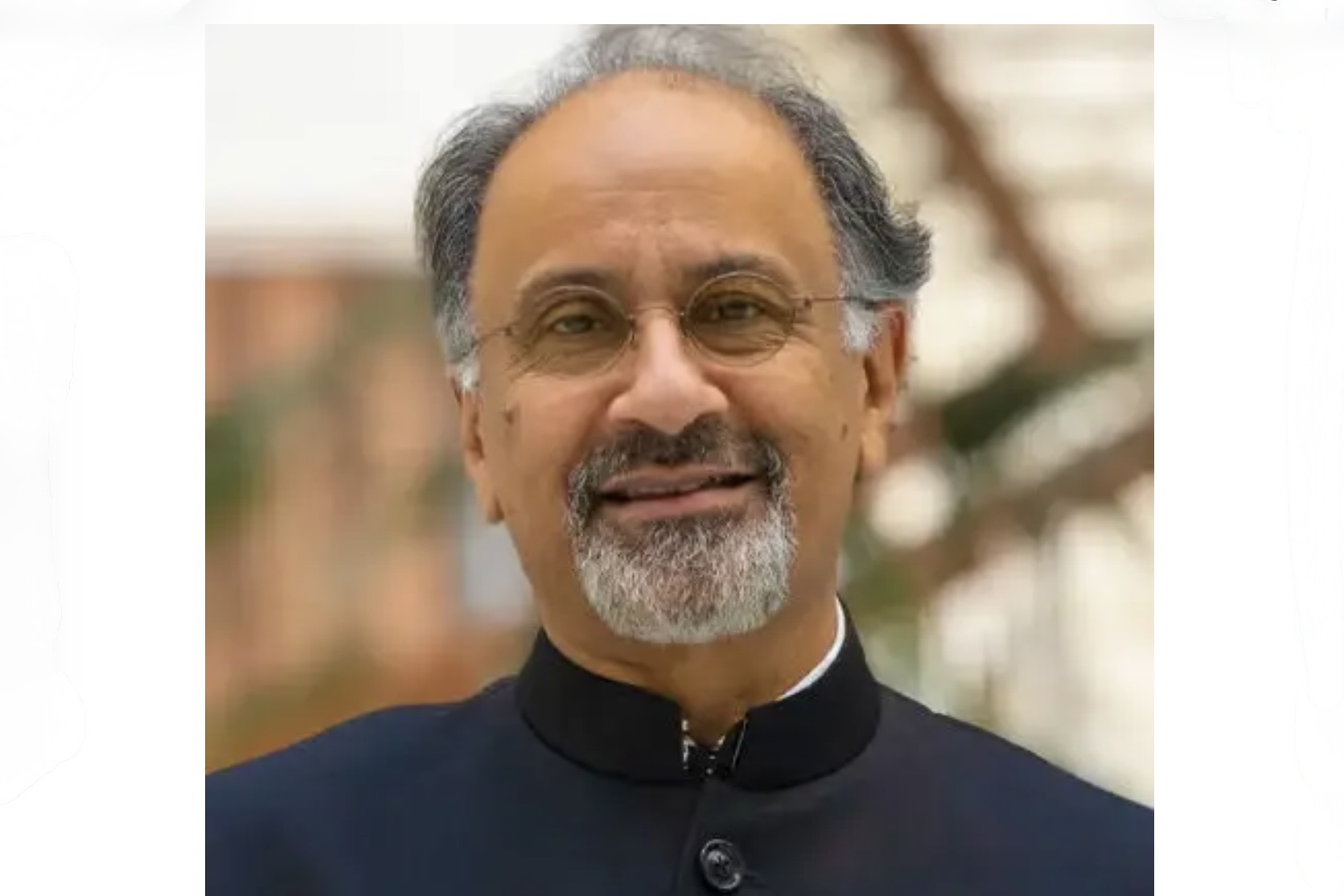
World Bank’s Indian American chief economist Indermit Gill is set to retire at the end of August and the process to appoint his successor will begin soon.
The impending departure of Gill, a native of India and a naturalized U.S. citizen, was announced by the bank’s president Ajay Banga in a staff memo.
Banga lauded Gill’s long career with the World Bank Group, including his work as vice president for equitable growth finance and institutions before he took over as chief economist and senior vice president in September 2022, Investing.com reported citing the memo.
According to Banga, Gill, played a pivotal role in promoting transparency through data. His efforts focused on enhancing debt transparency, sustainability, and restructuring for low- and middle-income countries.
Read: Indian American researcher wins University of Maryland honor (May 14, 2026)
“His leadership elevated research on small states, low-income countries, industrial policy, climate resilience, and public finance, and helped bring that work into global policy conversations through stronger partnerships with think tanks and research centers in Rome and Tokyo,” he was quoted as saying in the memo.
Gill oversaw efforts to strengthen the data, tools and analysis used in a World Bank assessment of the business climate in up to 180 countries, now known as “Business Ready,” after embarrassing revelations of data irregularities and favoritism toward China forced cancellation of the previous “Doing Business” rankings in 2022.
Gill, who earned his PhD from the University of Chicago, became chief economist and senior vice president for development economics in 2022.
Before that, he was the World Bank’s Vice President for Equitable Growth, Finance, and Institutions, where he helped shape the Bank’s response to the extraordinary series of shocks that have hit developing economies since 2020.
Read: Four Indian American students win 2026 Harvard Hoopes Prize (May 6, 2026)
Gill led the World Bank’s influential 2009 World Development Report on economic geography. His work includes introducing the concept of the “middle-income trap” to describe how countries stagnate after reaching a certain level of income.
The 2024 World Development Report, prepared with his guidance, highlights strategies for countries to escape the middle-income trap—by adopting modern technologies and driving innovation.
Gill has published extensively on key policy issues facing developing countries—among other things, sovereign debt vulnerabilities, green growth and natural-resource wealth, labor markets, and poverty and inequality.
Between 2016 and 2021, he was a professor of public policy at Duke University and non-resident senior fellow at the Brookings Institution’s Global Economy and Development program. Gill has also taught at Georgetown University and the University of Chicago.