



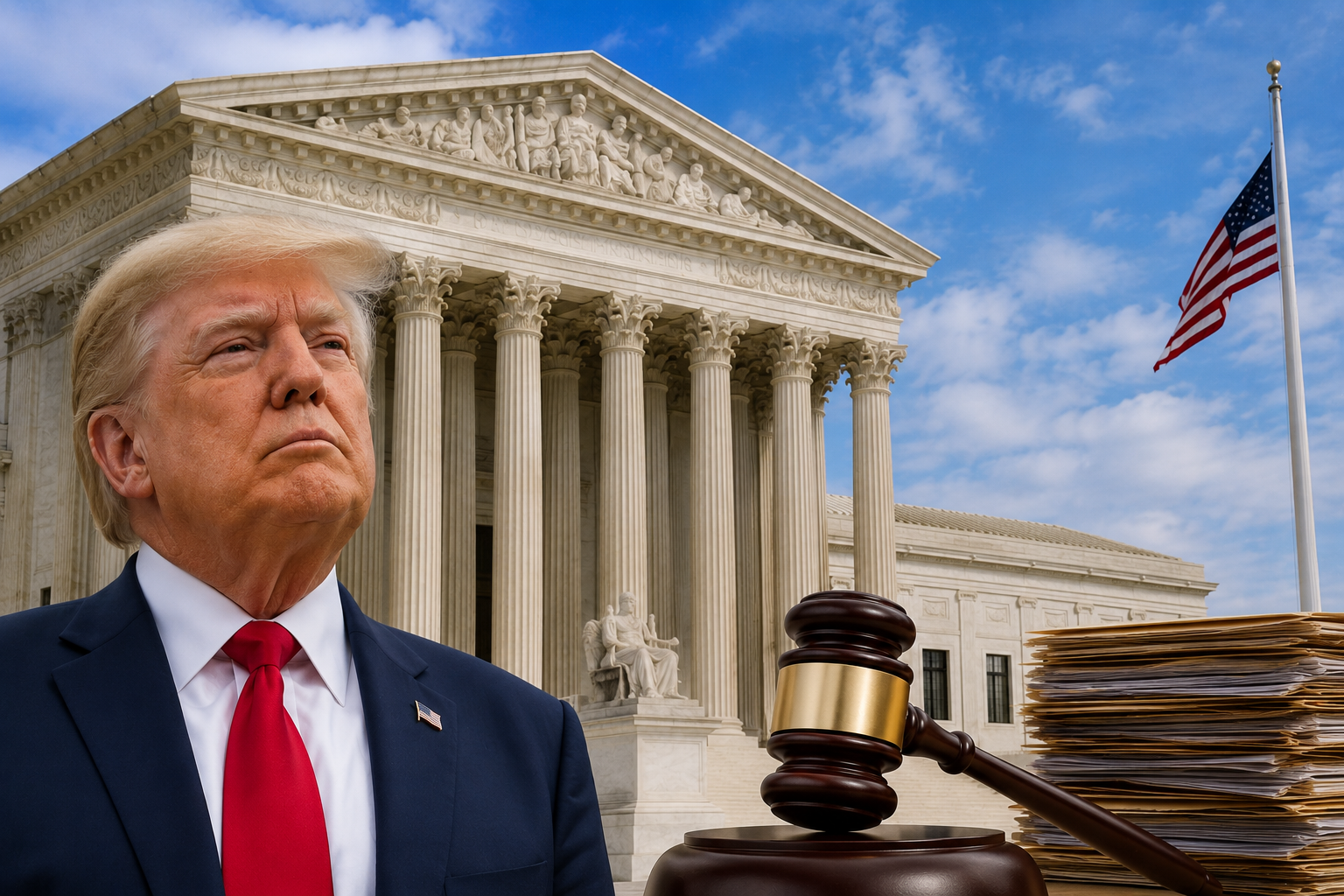
The U.S. Supreme Court on Tuesday sided with the Trump administration in a dispute involving immigration judges’ free speech rights, marking another legal victory for President Donald Trump’s broader immigration agenda.
The case centered on a policy first introduced during Trump’s first term in 2017, requiring immigration judges to obtain prior approval before making public remarks related to immigration issues. The National Association of Immigration Judges argued that the policy violated First Amendment protections and challenged the restrictions in federal court, according to Reuters.
In an unsigned ruling, the Supreme Court overturned a decision by the 4th U.S. Circuit Court of Appeals that had allowed further examination of the case. Reuters reported that the justices concluded the appeals court improperly relied on arguments not directly raised by the judges’ association.
READ: Texas GOP runoff tests Trump’s grip on Republicans (May 26, 2026)
The ruling did not determine whether the speech restrictions themselves are constitutional. Instead, the court focused on procedural questions over whether the dispute should first move through the federal employee complaint system overseen by the Merit Systems Protection Board before reaching federal courts. The Trump administration argued that federal workers challenging employment-related restrictions must pursue administrative remedies before filing constitutional claims in court.
Alex Abdo of the Knight First Amendment Institute, representing the judges’ association, criticized the decision. “Forcing public employees to wade through cumbersome and potentially futile administrative proceedings before challenging prior restraints allows unconstitutional censorship to persist,” he said, according to Reuters.
READ: President Trump undergoes annual physical ahead of 80th birthday (May 26, 2026)
The ruling comes as the Trump administration continues reshaping the immigration court system during Trump’s second term. Reuters recently reported that the Justice Department swore in the largest class of immigration judges in agency history, adding 77 permanent judges and five temporary judges.
The Supreme Court has issued several immigration-related rulings favorable to Trump recently, including decisions allowing deportations to third countries and permitting the administration to revoke temporary legal protections for certain migrant groups. Additional immigration cases involving deportation powers and birthright citizenship are expected before the Supreme Court’s current term concludes in June.