



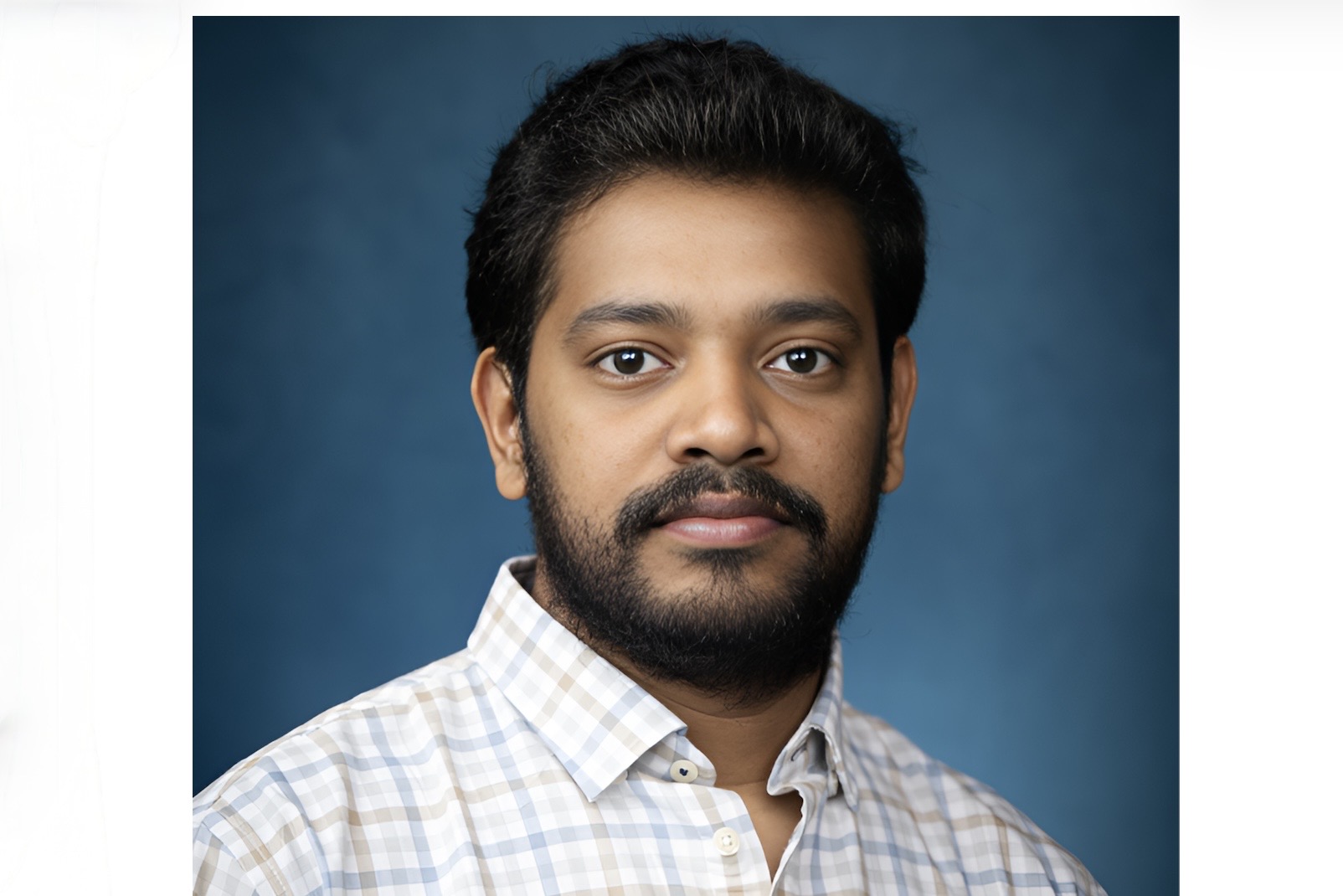
Manikandan Pandiyan, an Indian American University of Michigan Mechanical Engineering PhD candidate, has been awarded a Global Biofuel Champion Fellowship for clean energy research with agricultural waste management and sustainable resource use.
The Global Biofuels Alliance Global Biofuel Champion Fellowship program (GBCF) aims to nurture young leaders in the biofuels sector and support meaningful research that addresses critical industry challenges.
Pandiyan is one of 15 fellows selected from institutions around the world for his proposal, “ReACT-HTL: Demonstrating the Value of Areca catechu Biomass Waste for Biofuel Production via Hydrothermal Liquefaction,” according to a university release.
Receiving the Global Biofuel Champion Fellowship is an important milestone for me, both personally and professionally,” he said. “Coming from a farming background in rural India, I have closely seen the challenges associated with agricultural waste management and sustainable resource use. This fellowship provides an opportunity to connect my personal experiences with my engineering and research goals.”
Pandiyan’s proposal focuses on converting agricultural waste from the cultivation of Areca catechu, a species of palm native to the Philippines, into renewable fuels and carbon-rich products using hydrothermal liquefaction (HTL). His research aims to support cleaner energy systems and sustainable agricultural waste management practices.
“Areca nut is widely cultivated across South and Southeast Asia, especially in India, generating large amounts of agricultural residues such as husks, leaf sheaths, rachis, and leaflets,” he explained. “Much of this waste is currently burned or discarded, contributing to environmental pollution and greenhouse gas emissions.”
Read: Genesis AI names Indian American Pally Kumar as operations chief (June 1, 2026)
HTL is a thermo-chemical process that uses water as a medium at high temperature and pressure to process wet biomass without energy-intensive drying. Through HTL, areca biomass is broken down into biocrude, an oil-like liquid with potential as a renewable transportation fuel, and hydrochar, a carbon-rich solid with promising agricultural and environmental uses. HTL mimics the natural processing of fossil fuels beneath earth’s surface, but occurs in a much shorter timeframe, taking just minutes to hours to complete.
By generating experimental data, Pandiyan’s research will help build a better understanding of HTL operating conditions and the feasibility of converting agricultural waste into energy resources. In areas where biomass is plentiful, the project could also result in rural and economic benefits by offering more effective methods for managing agricultural waste.
Through the one-year fellowship, Pandiyan will receive $15,000 in funding, collaborate with industry experts, and build a global network within the biofuels sector.
He previously earned dual master’s degrees in mechanical engineering and electrical and computer engineering at U-M.