



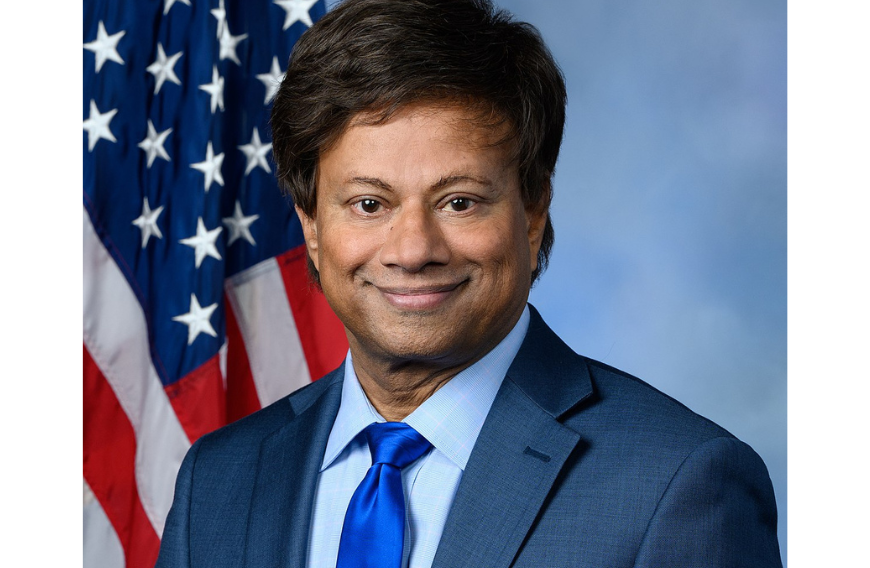
A congressional hearing on immigration and homeland security turned contentious this week as Rep. Shri Thanedar, D-Mich., accused the Department of Homeland Security of promoting divisive content on its social media platforms, prompting a sharp rebuke from DHS Secretary Markwayne Mullin.
The exchange, which was widely circulated on social media, unfolded during a hearing focused on border security and the department’s public communications strategy. Thanedar questioned whether DHS would stop using official social media accounts to spread what he described as “bigoted and racist words and imagery” and accused the agency of amplifying narratives associated with the so-called “Great Replacement Theory.”
READ: ICE continues to terrorize Minnesota citizens after murder of Renee Good (
“When will you stop DHS from using its social media accounts to spread bigoted and racist words and imagery?” Thanedar asked during the hearing. Mullin rejected the accusation and challenged the congressman to provide evidence supporting the claim.
“It’s interesting how you make those claims and give no facts,” Mullin responded. “Yet your party is the one that’s supporting the guy that’s got a Nazi tattoo on his chest. I have the facts.”
The secretary continued to criticize what he described as the routine use of inflammatory labels in political debate. “You throw out nationalism, Nazism. And that’s exactly what causes the hatred and the violence that happens to our officers every single day. And you should be ashamed of using that word,” Mullin said.
The confrontation reflected the increasingly polarized debate surrounding immigration enforcement, border security, and the role of government communications. Republicans have generally defended DHS efforts to highlight illegal immigration and border-related crime, while Democrats have argued that some official messaging risks stigmatizing immigrant communities and fueling social division.
Neither Thanedar nor Mullin provided detailed evidence during the exchange to support their competing allegations, and the hearing quickly moved to other topics. However, clips of the confrontation gained traction online, drawing reactions from supporters on both sides of the political spectrum.
The dispute also underscores broader tensions between congressional Democrats and the Trump administration over immigration policy, deportation practices, and the messaging used to justify enforcement actions.
READ: Jail or deportation: Viral account on Infosys employee’s ordeal shakes Indian tech community (
Thanedar, who represents a Michigan district with a large immigrant population, has frequently criticized what he describes as anti-immigrant rhetoric. The administration, meanwhile, has argued that strong public messaging is necessary to deter illegal immigration and support law enforcement personnel working along the border.
The hearing ended without resolution on the issue, but the exchange highlighted the sharp divisions that continue to shape Washington’s debate over immigration and homeland security.