



WASHINGTON, D.C. — Few individuals have done more to shape the Indian American entrepreneurial story than Kanwal Rekhi.
An immigrant who arrived in the United States in the late 1960s, Rekhi went on to co-found one of the first Indian American-led technology companies to go public on NASDAQ, became a pioneering Silicon Valley investor, and helped establish what would grow into one of the world’s largest entrepreneurial networks through The Indus Entrepreneurs (TiE).
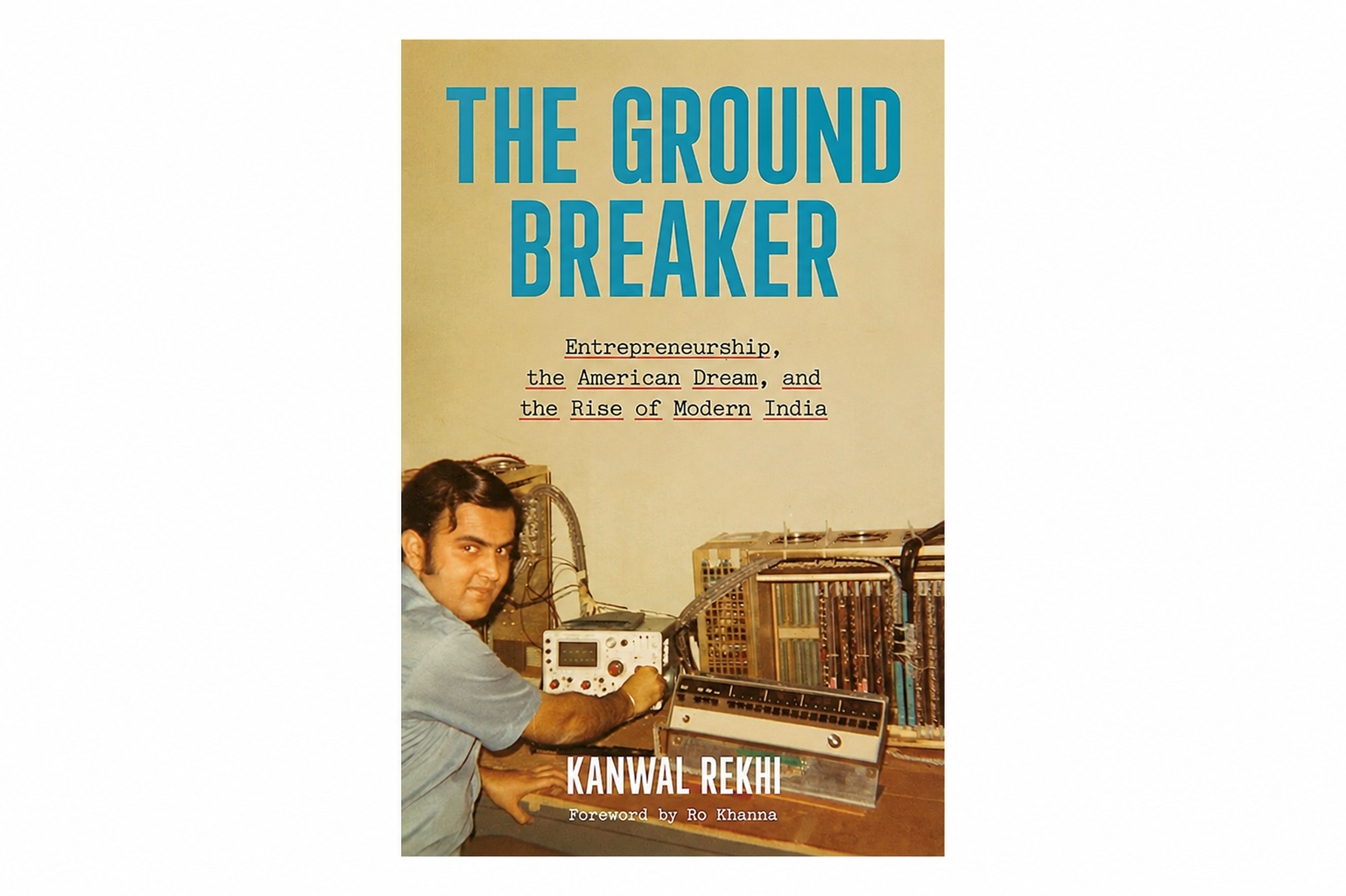
Rekhi recently recounted that journey in his memoir, “The Groundbreaker: Entrepreneurship, the American Dream, and the Rise of Modern India,” released in February.
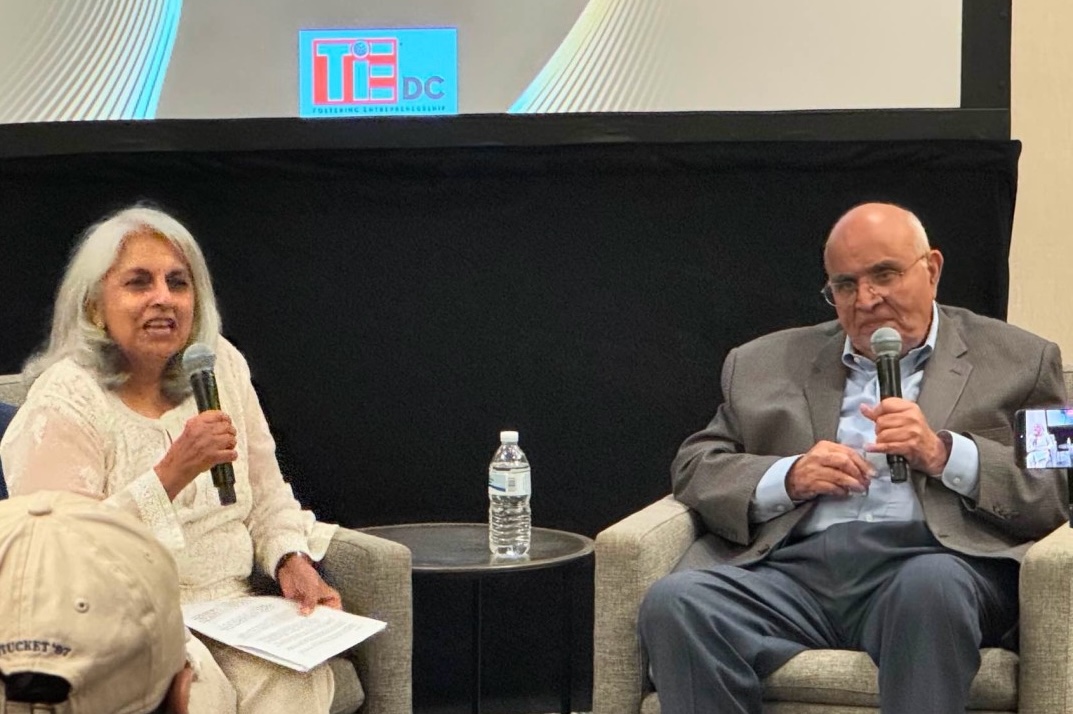
Many of those themes came alive on June 4, when entrepreneurs, investors, professionals, and members of the Indian American community gathered at the Georgetown Marriott in Washington, D.C., for a conversation with Rekhi hosted by TiE DC.
Moderated by journalist and author Meena Ahmed, the discussion explored his experiences as an immigrant entrepreneur, the challenges of building a company in Silicon Valley, the importance of risk-taking and mentorship, and the opportunities and disruptions created by artificial intelligence.
The evening centered on Rekhi’s remarkable journey from a modest upbringing in India to becoming one of Silicon Valley’s most influential figures.
Ahmed, who profiled Rekhi in her book “Indian Genius,” described him as one of the most transformative Indian Americans in the technology industry. She noted that Rekhi’s career unfolded at a time when Indian immigrants faced significant skepticism in corporate America and Silicon Valley.
That skepticism, Rekhi recalled, was rooted partly in perceptions of India when he first arrived in the United States.
 At the time, America viewed itself at the height of its global influence, while India was often associated with poverty and underdevelopment. As a result, many Americans simply could not imagine Indians leading major businesses, building successful companies, or serving as chief executives.
Rather than dwelling on discrimination, however, Rekhi framed those experiences as a challenge to overcome.
“We just had to prove it to them,” he said.
That determination became especially important when Rekhi and his partners sought venture capital funding for their startup, Excelan, in the early 1980s.
Although the company had a working product and paying customers, investors often questioned whether Indian founders could serve as CEOs, lead sales organizations, or manage growing businesses. Investors were willing to acknowledge their technical skills but remained skeptical about their ability to build and lead companies.
Eventually, one venture capitalist decided it was time to take a chance.
The investment proved historic. Excelan would become one of the first Indian American-founded companies to go public on NASDAQ, helping pave the way for generations of entrepreneurs who followed.
Looking back, Rekhi said he was less concerned about valuation and financial terms than he was about gaining an opportunity to prove that Indian founders could succeed.
READ: Kanwal Rekhi’s next mission: 10 million entrepreneurs by India at 100 (March 3, 2026)
“I just wanted a chance,” he said. “I just wanted a chance to prove it to them.”
The success of entrepreneurs such as Rekhi helped transform perceptions of Indians in business and technology.
Today, Indian-origin executives lead some of the world’s largest corporations, including Microsoft, Google, IBM, Adobe, and many others. Ahmed observed that attitudes have changed so dramatically that one board member reportedly asked during a difficult period at IBM, “Where is our Indian CEO right now?”—a reflection of how strongly Indian executives are now associated with corporate leadership.
Throughout the discussion, Rekhi repeatedly returned to the importance of risk-taking.
Referencing a quote from India’s first Prime Minister, Jawaharlal Nehru, that appears on the cover of his book, Ahmed asked Rekhi how important risk had been in his success.
For Rekhi, risk is not something to be feared but embraced.
“The only way to move forward is to take risk,” he said.
While acknowledging that many people prefer stable careers, he argued that those who aspire to build companies or create significant change must be willing to venture into uncertainty.
Interestingly, Rekhi suggested that risk often depends on perspective.
Because he believed deeply in his own abilities, he never viewed entrepreneurship as recklessly dangerous. Instead, he saw each opportunity as a chance to prove himself and advance.
“The notion of risk is in the eye of the beholder,” he said.
That mindset helped him navigate setbacks that might have discouraged others.
One of the evening’s most compelling segments focused on Rekhi’s childhood.
Born in India, he described himself as a shy and awkward child who often felt underestimated. His father, a military veteran, struggled to see his potential and initially failed to understand the significance of his admission to the prestigious Indian Institutes of Technology (IIT).
At the time, IITs had not yet acquired the global reputation they enjoy today.
His father questioned why anyone would pay tuition for four years without a guaranteed government job at the end. Only after speaking with senior officials did he begin to appreciate the achievement.
Yet while his father doubted him, Rekhi said his mother never did.
READ: Nvidia worth as much as India’s entire market? Kanwal Rekhi questions AI hype (November 2, 2025)
“My mother was very sure that I was going to make it,” he recalled.
Her encouragement provided a vital counterbalance during his formative years.
Rekhi also spoke about assuming adult responsibilities at an unusually young age. While his father was frequently stationed away from home, he helped manage household finances and family responsibilities.
Those experiences, he suggested, taught him accountability, discipline, and financial awareness long before he entered business.
Ahmed also explored a more personal aspect of Rekhi’s life: his marriage to his late wife, Anne.
Rekhi spoke candidly about her struggles with depression and the challenges the family faced over many years.
He described Anne as a loving and supportive partner who believed deeply in his abilities. At the same time, he acknowledged the emotional difficulties she endured as a result of traumatic experiences earlier in life.
Over time, Rekhi educated himself about mental health and sought professional treatment and support for her. Their marriage lasted 54 years until her passing last year.
The discussion revealed a side of Rekhi rarely visible in conversations focused solely on entrepreneurship and investing.
Toward the end of the evening, Ahmed turned to a subject that dominates much of today’s technology landscape: artificial intelligence.
As public concern grows over AI’s impact on jobs and society, Rekhi offered a notably optimistic perspective.
He argued that technological disruptions have occurred throughout history and that fears surrounding AI resemble concerns raised during previous waves of innovation.
While acknowledging that AI will eliminate certain jobs, he believes it will ultimately create far more opportunities.
“This wave is a bigger wave than any other wave we have seen,” he said.
According to Rekhi, productivity gains have historically led to greater prosperity, not less. Advances in agriculture, manufacturing, and computing all displaced workers initially but ultimately created entirely new industries and professions.
He expects AI to follow a similar trajectory.
Not only will AI improve productivity, he argued, but it will also empower individuals to accomplish tasks that previously required large teams and specialized expertise.
For entrepreneurs, that could dramatically lower barriers to entry and accelerate innovation.
The conversation concluded with a discussion of Rekhi’s investment philosophy.
READ: Inventus Capital Partners raises $106 million in second round of funding (January 21, 2014)
Over the years, he has mentored and funded numerous entrepreneurs, earning a reputation for identifying talented founders before others recognize their potential.
His approach, however, is surprisingly simple.
Rather than focusing primarily on technology or market trends, he concentrates on people.
“I never bet on technology or the market,” he said. “The bet has to be on the person.”
He looks for entrepreneurs who adapt to changing conditions, accept responsibility for failures, remain humble, and possess the energy to inspire others.
One of the strongest warning signs, he said, is when founders blame others for their setbacks.
By contrast, entrepreneurs who take ownership of mistakes are more likely to learn, improve, and ultimately succeed.
For Rekhi, leadership begins with accountability.
“The guy who owns that is the guy who will do it right next time,” he said.
As the audience applauded at the conclusion of the event, the themes that emerged from Rekhi’s life story were clear: resilience in the face of doubt, willingness to take risks, confidence without bitterness, and an enduring belief in the power of entrepreneurship.
More than four decades after helping break barriers for Indian Americans in Silicon Valley, Rekhi remains focused on the same mission that defined much of his career—helping others find their opportunity and proving that talent, determination, and character matter more than assumptions or stereotypes.
Earlier in the evening, Sundi Natarajan, cofounder of Sparksoft Corporation and a member of the TiE Global Board of Trustees, introduced Rekhi and reflected on his contributions to entrepreneurship and the Indian American community.