



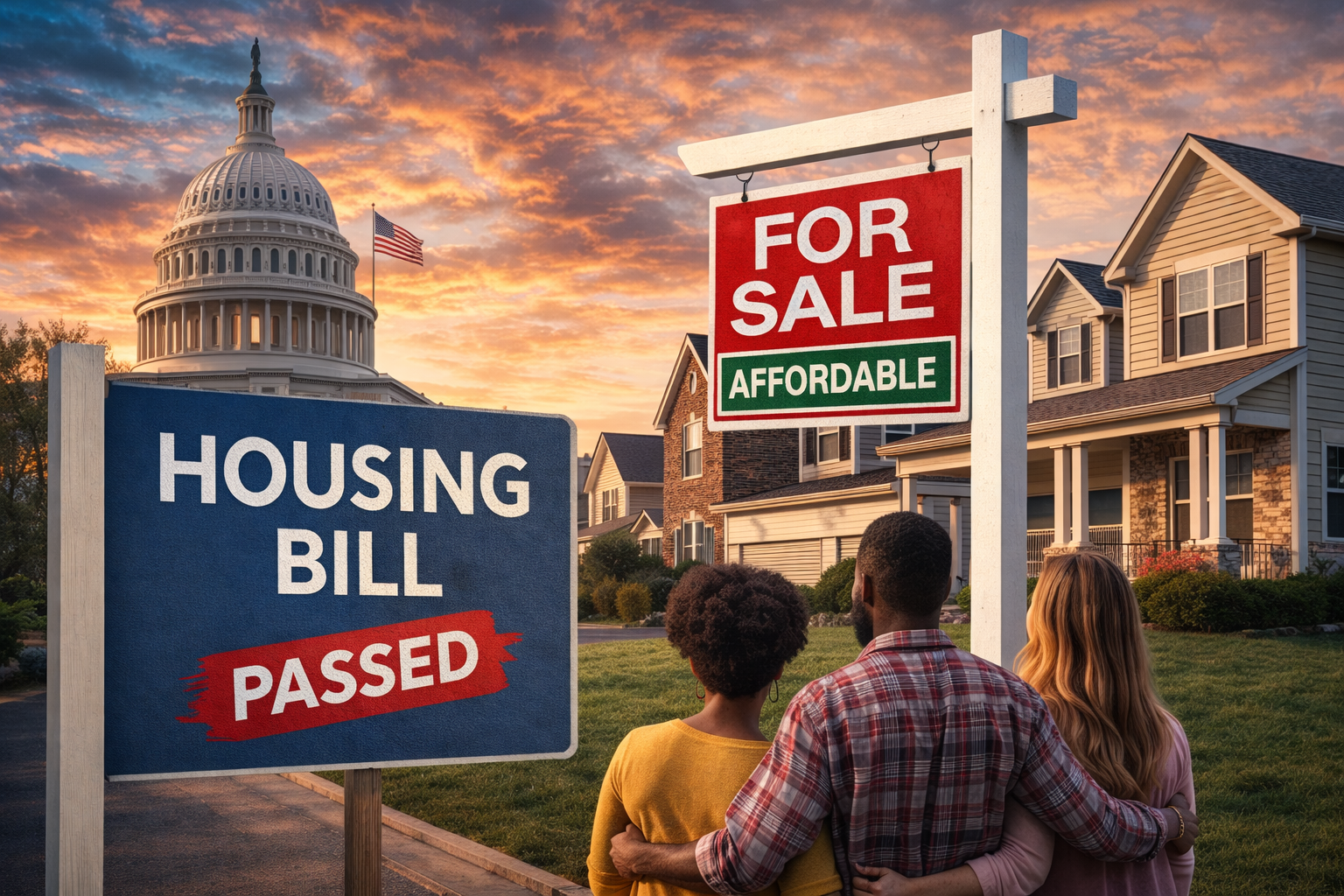
Congress on Tuesday passed a bipartisan bill aimed at making homeownership more affordable, as lawmakers from both parties came together in a rare display of agreement on housing policy. The measure, called the 21st Century Road to Housing Act, passed the House by a 358–32 vote after the Senate approved it Monday with similarly strong bipartisan support.
As it headed to President Donald Trump’s desk for his signature, the president canceled the signing of a bipartisan housing bill on Wednesday, saying he would not sign the legislation until the Senate passes the Safeguard American Voter Eligibility (SAVE America) Act.
“Today’s Housing News Conference and Signing is hereby cancelled until such time as we pass the desperately needed SAVE AMERICA ACT, which I consider to be a National Emergency,” Trump wrote in a Truth Social post.
Sen. Elizabeth Warren, D-Mass., a co-sponsor of the bill told NPR that housing affordability has become a priority for Congress.
“Every time every member of Congress goes back home they hear how urgent it is to bring down home prices. And that’s what the bill does,” she said.
READ: U.S. Senate passes bipartisan housing bill aimed at improving affordability (March 13, 2026)
According to the real estate broker Redfin, a family needs an income of about $117,000 a year to afford the typical home on the market, almost $30,000 more than what most U.S. households earn. Mortgage rates have also risen over the past few years, boosting monthly cost of ownership. While rates had gone down earlier, the war in Iran raised the cost of borrowing, and the nationwide average is now about 6.5%. Families also have less purchasing power, due to inflation surpassing wages.
According to NPR, the main issue the bill tries to address is that the U.S. does not have enough houses to keep up with demand. Realtor.com estimated that last year the U.S. was short by more than 4 million housing units.
“Supply is the key problem here,” said Jeanna Kenney, assistant professor of economics, finance and real estate at Villanova University. “Anything you can do to make supply easier is going to be helpful in the long term.”
Rather than making a single change, the bill provides various provisions to either encourage housing construction or make it easier for home seekers to buy. It also includes a ban that prevents corporate investors from buying up more single-family homes to rent out. If one of those groups already owns at least 350 houses, it won’t be able to buy others.
READ: Donald Trump to privatize mortgage firms Fannie Mae and Freddie Mac (January 3, 2025)
The bill also streamlines some of the regulations homebuilders must follow to get existing federal financing. For instance, it allows builders to skip the environmental review when a housing project is going up between two buildings that have already gone through the process. It also creates a grant program for communities to develop “pattern books” of preapproved housing designs, so builders won’t need as many approvals to get up to code.
Washington lawmakers have a limited role when it comes to homebuilding, nor can do they do much about mortgage rates. Nevertheless, it is still the largest housing affordability bill to come out of Congress in decades, and researchers and those in the housing industry say it could help make homeownership more accessible.
Democratic Rep. Maxine Waters of California, who helped negotiate the bill, said the median age of a first-time homebuyer is now 40 and rents have soared some 47% since the Covid-19 pandemic.
“Our country must do better and today we will,” she said.
House Financial Services Chairman French Hill, an Arkansas Republican who worked with Waters and the Senate on the bill, said it is the first time in years that Congress has come together to make “measurable, accountable changes” to the nation’s housing laws. The bill will “help build more homes to meet that growing demand and keep the American dream within reach,” he said.