



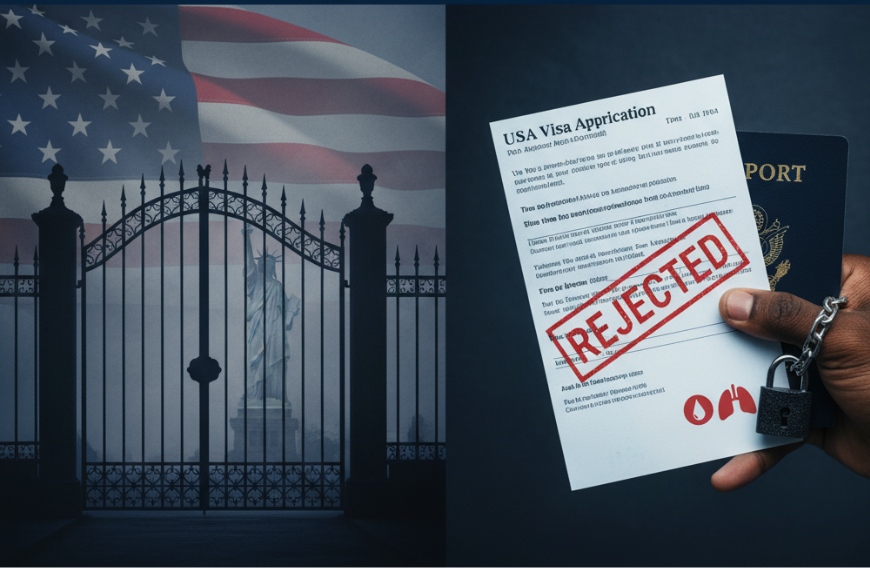
An Indian software engineer has sparked discussion on Reddit after sharing details of a brief U.S. student visa interview that ended in an F-1 visa refusal under Section 214(b), leaving the applicant unsure about what went wrong.Reddit post
In a , the user said the interview lasted “barely a minute or two” and that the consular officer did not ask about finances, family ties, employment, or post-graduation plans before issuing the refusal.
“I was refused an F-1 visa under 214(b) today, and I’m genuinely struggling to understand why,” the user wrote.
The applicant said they had been admitted to the University of Maryland, College Park, for a Master of Science in Computer Science program beginning on August 31. According to the post, the student’s father was sponsoring the education, backed by a sanctioned education loan of approximately $58,800 (or ₹50 lakhs).
The user also said they currently work remotely from India as a software engineer for a San Francisco-headquartered company. They added that their employment would end on July 17, before the master’s program begins, and that they had an employer letter stating there was “no intent to employ me during or after my studies.”
READ: Two F-1 visa rejections couldn’t stop this India professional from chasing the American Dream (June 26, 2026)
Recalling the interview, the applicant said the visa officer first asked a standard question about whether they were unwilling or afraid to return to India.
The applicant responded, “No.”
The officer then asked, “Why UMD?”
The student replied, “I chose UMD because it aligns closely with my research interests in computer vision. The program offers specialized electives in AI and computer vision, and its research labs match the areas I want to explore during my master’s.”
According to the post, that was the only academic question asked before the interview ended.
“The officer then asked me to place one hand for fingerprints, typed for a few seconds, handed me the 214(b) refusal sheet, and said my visa was refused. That was the entire interview,” the user wrote.
The applicant, who said they are an only child with both parents living in India, added that they were trying to understand what may have led to the decision.
“I’m not looking for sympathy. I genuinely want to understand what may have raised concerns. Since the interview was so short, I’m finding it difficult to identify what I should improve before reapplying,” the post said.
The user concluded by asking whether others had experienced similar refusals.
“Has anyone experienced a similar 214(b) refusal after such a brief interview? If you were able to get approved on a subsequent attempt, what did you change?” they asked.
READ: Indian student denied flight to US after learning F-1 visa was revoked (June 24, 2026)
The post drew numerous responses, with several Reddit users suggesting the applicant’s remote employment with a U.S.-based company may have influenced the visa officer’s assessment.
One commenter wrote, “Look, your remote work arrangement with a US employer is a red flag for the consulate. It shows two things: one, that you have contacts in the US who can offer you employment with the right skills; and two, that you’re still working for them and only started recently.”
The user also questioned whether the applicant could have continued working remotely while studying, adding, “As others have said here, what if you continued working for them while receiving your salary in an Indian account? It also comes across as a way to bypass $100k fee by your US company.”
“The consular officer just needs reasonable belief one way or another. Honestly, I don’t see your profile getting approved. If I were you, I would simply get a master’s degree in India and keep the job I have,” the commenter added.
Another Reddit user echoed similar concerns, arguing that the applicant’s ties to a U.S. employer may have shaped the officer’s assessment before the interview even began.
“Your remote employment for a San Francisco tech company was a massive red flag that likely triggered an immediate assumption of immigrant intent on your DS-160 before you even spoke,” the commenter wrote.
“To a visa officer, a software engineer with active, direct ties to a U.S. employer has an incredibly high capability and incentive to transition seamlessly into the domestic job market.”
READ: F-1 visa approved on second attempt? Reddit users question Indian student’s immigration process (June 4, 2026)
The commenter argued that the employer’s letter stating there was no future employment intent may not have been enough to address those concerns.
“Even with your employer letter, the system presumes you could easily continue working remotely or use that network to bypass standard employment visa channels,” the user wrote.
The Redditor also suggested the applicant’s explanation for choosing the university may not have sufficiently addressed their plans after graduation.
“Furthermore, your highly portable specialisation in Computer Vision and AI combined with a generic, textbook answer about UMD did nothing to establish a mandatory return to India.”
Offering advice for a future application, the commenter added, “For your next attempt, you must rewrite your DS-160 to emphasise local career anchors and shift your interview narrative to articulate precise, high-value corporate opportunities waiting for you back home.”
The comments reflect the opinions of Reddit users and have not been independently verified. U.S. consular officers assess visa applications on a case-by-case basis, and refusals under Section 214(b) can result from a range of factors related to an applicant’s eligibility and perceived nonimmigrant intent.