



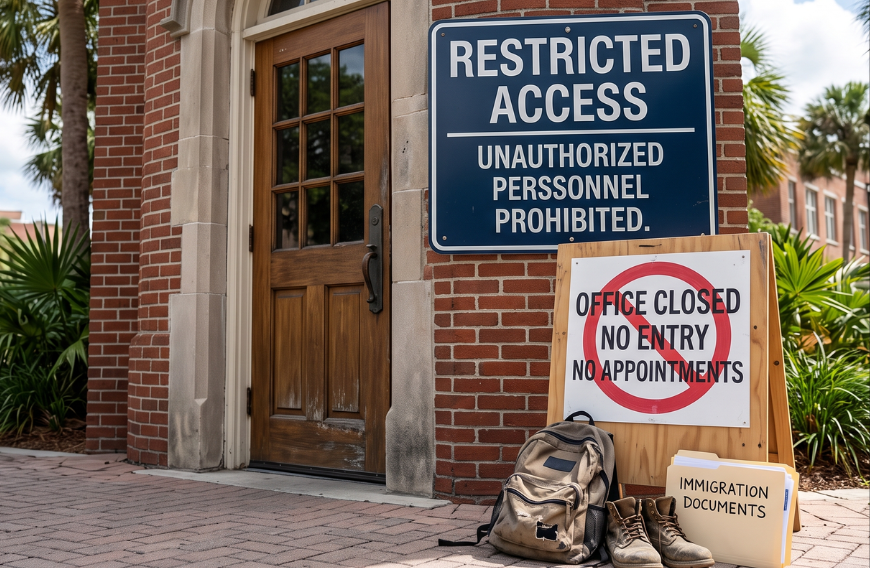
Thousands of undocumented students in Florida could lose access to higher education after the Florida State Board of Education approved a policy on Tuesday that bars them from enrolling in the state’s public college system.
The newly approved policy requires all 28 institutions within the Florida College System to admit only students who are U.S. citizens or those who are “lawfully present” in the country. Prospective students will also be required to provide documentation proving their citizenship or lawful immigration status before they can enroll.
The decision is expected to have a significant impact on immigrant communities across the state. According to an analysis by the American Immigration Council, about 50,000 students in Florida were undocumented in 2023. Many of them could now find their pathway to higher education effectively closed.
READ: ‘Leading the way’: Supporters cheer DeSantis’ crackdown on H-1B in Florida colleges (October 30, 2025)
The policy is also expected to carry financial consequences for the state’s college system. Before Tuesday’s vote, the Florida Policy Institute estimated that preventing undocumented students from enrolling could result in approximately $15 million in lost tuition and fee revenue.
The move comes as Florida expands restrictions on undocumented students beyond its state colleges. The state’s separate public university system is also moving toward a similar policy. Last week, its governing board voted to advance a measure that would prevent its 12 public universities from enrolling anyone who is “present in the United States unlawfully.”
The university system’s governing board is expected to hold a final vote after completing a mandatory 14-day public comment period.
READ: Four Indian American researchers win 2026 Florida University honors (May 1, 2026)
The latest action builds on a broader shift in Florida’s immigration and higher education policies. Last year, Republican lawmakers repealed a law that had allowed certain undocumented students who met eligibility requirements to qualify for in-state tuition at Florida’s public colleges and universities, making higher education significantly more expensive for many immigrant students.
Florida’s actions also come amid a wider national debate over access to education for undocumented immigrants. The U.S. Department of Justice has challenged similar state laws through multiple lawsuits. In four cases, judges struck down the restrictions after state officials and the Justice Department jointly requested that the laws be invalidated.
Whether other Republican-led states adopt similar restrictions on undocumented students in their public higher education systems remains an open question, but Florida’s latest policy signals a continued push toward tighter enrollment rules tied to immigration status.