



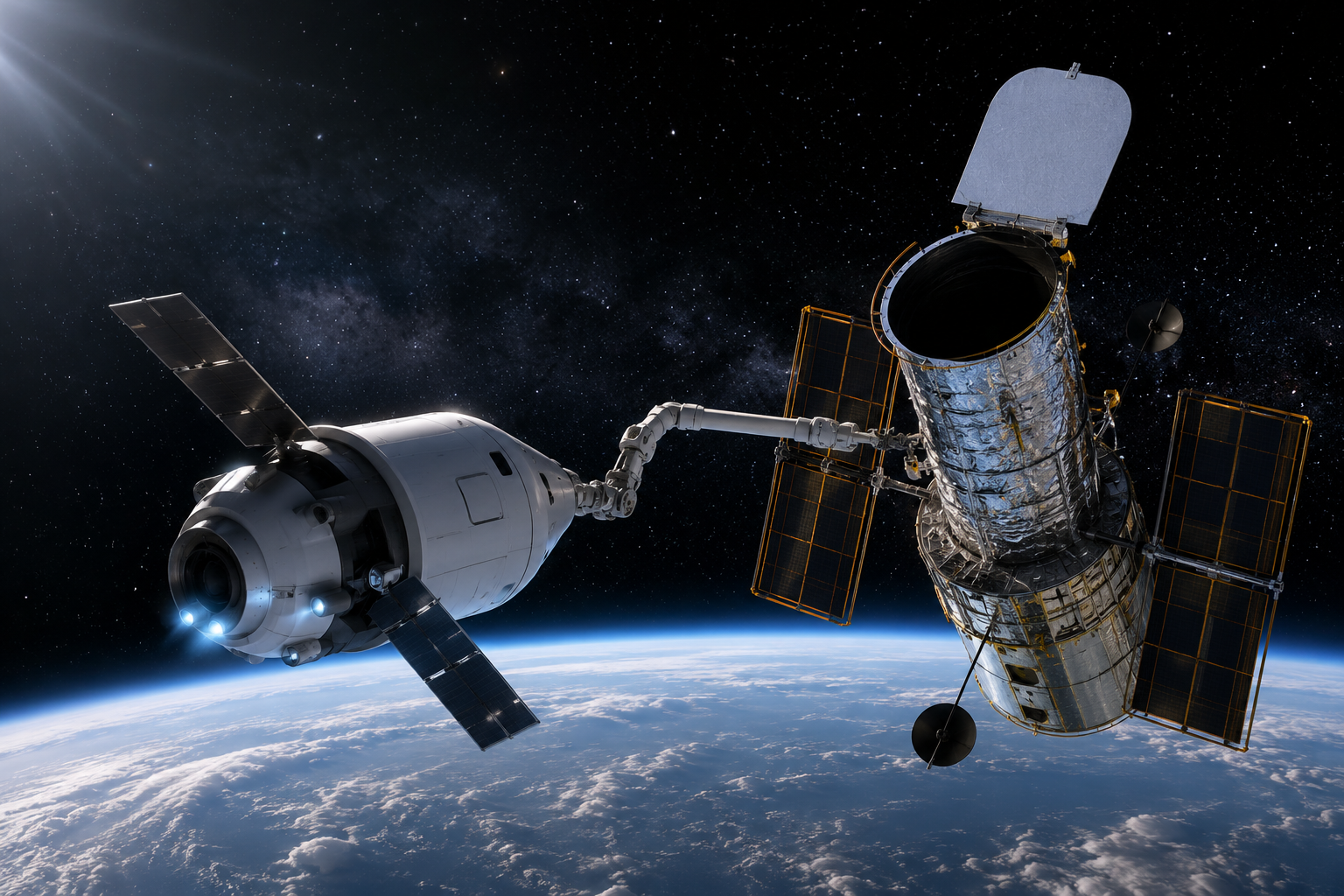
NASA and Space startup Katalyst launched a robotic spacecraft over the Pacific on Thursday on a mission to rescue an aging NASA satellite observatory. The spaceship called LINK was built specially to save the prized $500 million Neil Gehrels Swift Observatory by latching onto the satellite and taking into a more sustainable orbit, possibly extending its mission by years.
The observatory, also known as SWIFT, has no onboard propulsion capabilities and would otherwise drift naturally toward Earth and burn up in the atmosphere as soon as later this year.
Katalyst, which is based in Arizona, said it designed, constructed and tested the LINK vehicle on an unprecedented nine-month production schedule, under a $30 million NASA contract.
Katalyst said that it reached 40,000 feet (12,200 m) over the Pacific at 1:36 a.m. PDT (0836 GMT), a Northrop Grumman Pegasus rocket with LINK tucked into its cargo bay was released from the belly of a Lockheed TriStar jetliner and then soared into space.
READ: NASA selects Relativity Space for privately funded Mars science mission (
Initially there were delays due to weather conditions. The launch plane had taken off headed east from a U.S. air base on the tiny Kwajalein Atoll in the Marshall Islands.
It is expected that spacecraft would jettison from the rocket as it reaches low-Earth orbit, heading off on a month-long voyage to the vicinity of NASA’s orbiting observatory. The observatory had jettisoned from the rocket as it reached low-Earth orbit, heading off on a month-long voyage to the vicinity of NASA’s orbiting observatory, which has been studying distant galaxies and black holes since 2004.
If everything goes according to plans, by late July, LINK will fly to within roughly 6 miles (9.6 km) of the observatory LINK will fly to within roughly 6 miles (9.6 km). Once LINK has firmly grasped the observatory, it should take another 60 days to tow it to its target altitude about 373 miles (600 km) above Earth, double the height it will have fallen to just before rescue, according to Katalyst. Since SWIFT has no onboard propulsion of its own, it faced a 90% chance of falling completely out of orbit later this year due to the mounting drag of atmospheric friction.
“The U.S. Space Command cares a lot about this, because ultimately this is a core element of space superiority,” Katalyst CEO Ghonhee Lee told Reuters in a recent interview, referring to the ongoing competition with China over space technology–which may also have military applications.