



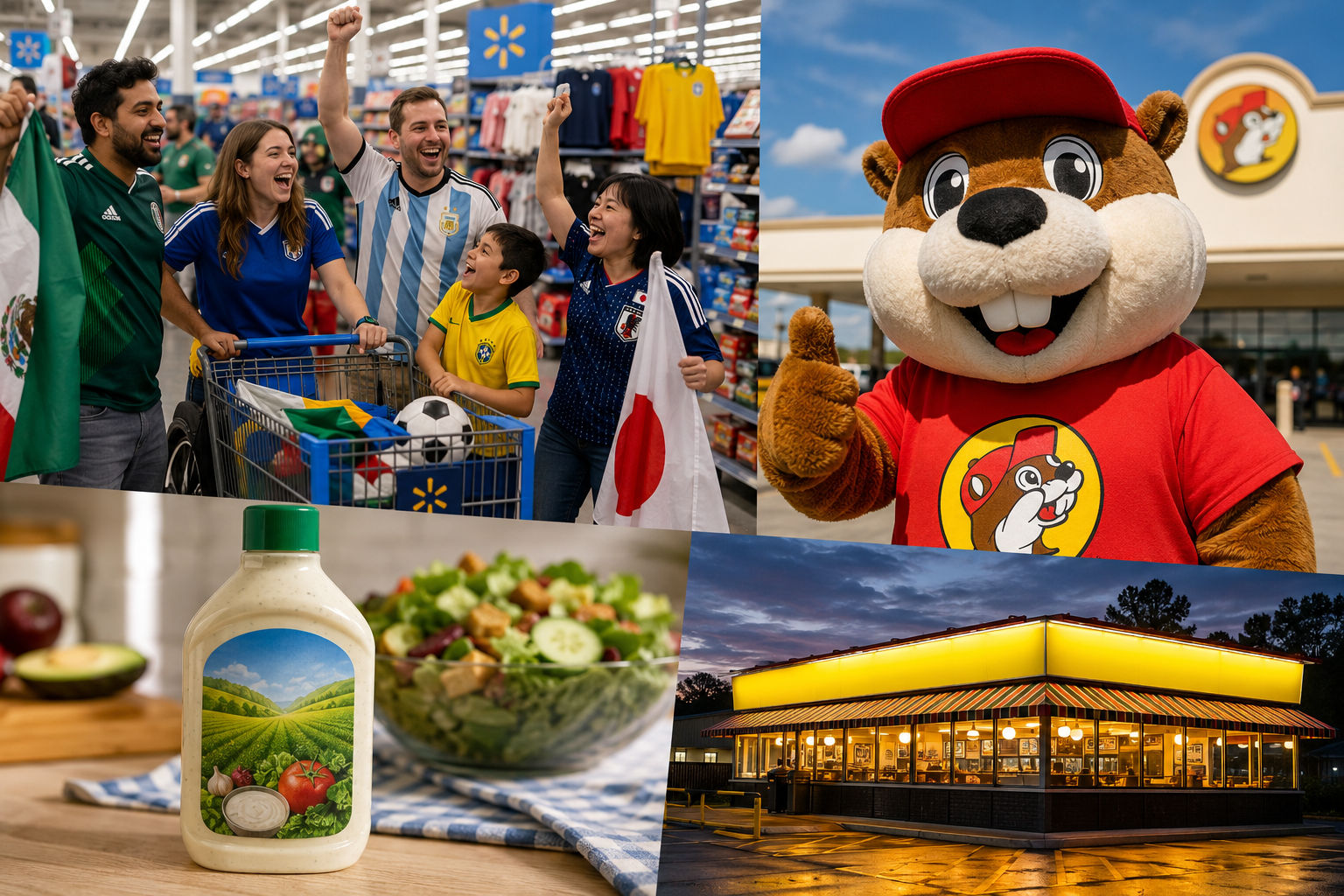
The United States may no longer be in contention for the 2026 FIFA World Cup title, but American brands are emerging as unexpected winners. International fans embrace everyday U.S. experiences ranging from Walmart shopping trips to Buc-ee’s travel centers and bottles of ranch dressing.
Millions of visitors have traveled across the United States for the tournament, which the U.S., Canada and Mexico are co-hosting. While matches remain the main attraction, many fans have turned routine American retail and dining experiences into viral social media moments, showcasing the country’s consumer culture to audiences worldwide.
READ: How Levi’s outsmarted FIFA’s World Cup branding rules (June 15, 2026)
One of the biggest surprises has been Walmart.
Ahead of Australia’s group-stage match in Arlington, Texas, dozens of Australian supporters marched into a Walmart while chanting, treating the retail giant as a tourist destination rather than simply a supermarket. Videos of the visit quickly spread across social media, highlighting visitors’ fascination with the chain’s massive stores and extensive product selection.
Ranch dressing has also become an unlikely World Cup phenomenon.
Hidden Valley Ranch has emerged as one of the most sought-after American souvenirs after international visitors began filling their luggage with bottles of the condiment. The trend became so widespread that the Transportation Security Administration reminded travelers that large bottles of ranch must be packed in checked baggage rather than carry-on luggage.
To meet demand, several U.S. airports, including Philadelphia International Airport and Houston’s George Bush Airport, began selling full-size bottles of Hidden Valley Ranch after security checkpoints, allowing departing travelers to purchase the condiment without violating TSA liquid restrictions. Travel retailer Paradies Lagardère expanded sales after noticing the product’s popularity among World Cup visitors. Texas-based Buc-ee’s has become another unexpected attraction.
Known for its sprawling travel centers, barbecue sandwiches, Beaver Nuggets snacks and extensive merchandise, Buc-ee’s has drawn visitors eager to experience one of America’s most recognizable roadside brands. A Japanese tourist’s TikTok video documenting his first Buc-ee’s visit attracted tens of thousands of likes, adding to the chain’s growing international visibility.
READ: 2026 FIFA World Cup could generate billions for North America, Oxford economist says (June 9, 2026)
Late-night stops at Waffle House have similarly become part of the World Cup travel experience.
Supporters driving between host cities have documented visits to the iconic diner chain, with one German fan describing the experience as “great food, great prices, and friendly staff.” Waffle House has embraced the tournament by opening a World Cup-themed pop-up location in downtown Atlanta featuring soccer-themed merchandise.
The tournament has also fostered broader cultural connections beyond shopping and dining. Lawrence, Kansas, adopted Algeria as its hometown team after the squad established its training base there. At the same time, Boston formed a sister-city partnership with Glasgow following the arrival of thousands of Scottish supporters.
While political controversies and visa challenges have occasionally overshadowed the competition, the tournament has largely served as a showcase for American hospitality and consumer culture. Everyday brands that many Americans take for granted have become memorable experiences for visitors, illustrating the soft power of U.S. retail and food culture alongside the world’s biggest sporting event.