



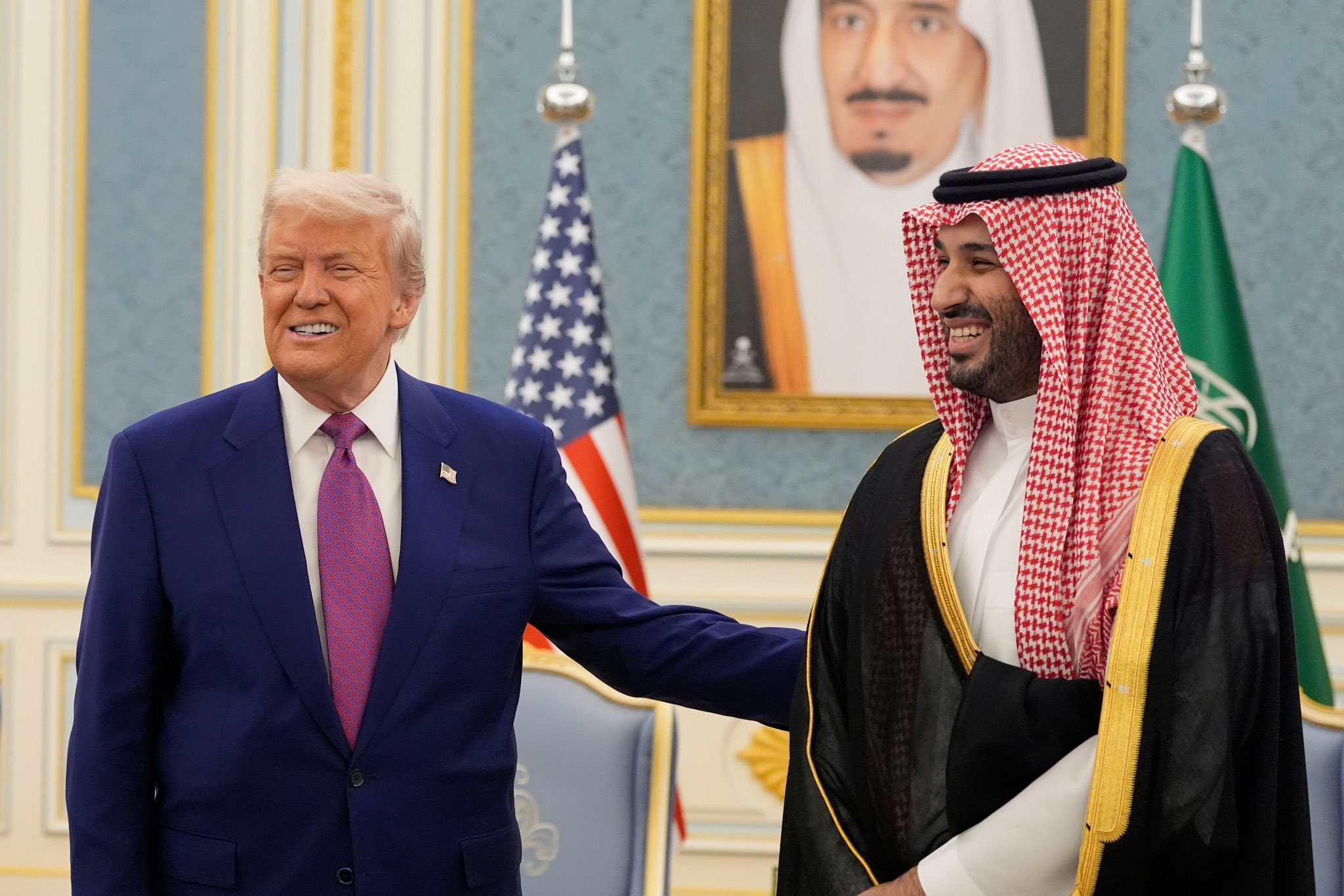
President Donald Trump has stated that a U.S. agreement to help Saudi Arabia develop civilian nuclear energy will depend on the Gulf kingdom joining the Abraham Accords and recognizing Israel, adding a new condition to a deal that has already raised concerns over nuclear proliferation.
“The Civil Nuclear Deal (There will be no enrichment of material!)… which pertains only to non-military use… will be approved, but is totally subject to Saudi Arabia joining the very respected and successful Abraham Accords,” Trump wrote in a post on Truth Social.
It was not clear whether Saudi Arabia’s participation in the Abraham Accords was included as a formal condition in the nuclear agreement, the details of which have not been publicly released, or whether Riyadh had agreed to Trump’s stated requirement.
READ: Amish Shah wins Arizona Democratic primary for US House seat (July 22, 2026)
White House Press Secretary Karoline Leavitt said Thursday that Trump had repeatedly raised the issue with Saudi leaders.
“He has said if they don’t join the Abraham Accords, the deal is off,” Leavitt said. “So we’ll continue to have those conversations with our Saudi counterparts moving forward.”
The comments came a day after the United States and Saudi Arabia announced an agreement on civilian nuclear cooperation. The deal has faced scrutiny from experts and lawmakers who fear that nuclear technology could increase proliferation risks in an already volatile Middle East.
Some Republican and Democratic lawmakers have also expressed concerns about the agreement. Trump’s Republican Party controls both chambers of Congress, however, and opponents of the deal do not appear to have enough votes to block it.
The U.S. Department of Energy said the agreement includes a “peaceful nuclear co-operation agreement” and a “bilateral safeguards agreement.” Together, the agreements establish the legal framework for a long-term partnership that could involve billions of dollars in investment and provide opportunities for US companies to participate in Saudi Arabia’s nuclear energy programme.
The agreement is expected to be submitted to Congress for review.
The International Atomic Energy Agency said Thursday it was aware of plans by Washington and Riyadh for a bilateral civilian nuclear cooperation agreement and a request for the IAEA to implement verification measures.
“We look forward to receiving the request for such verification and to working with the U.S. and KSA [Kingdom of Saudi Arabia] in ensuring the implementation of those measures,” the agency said.
READ: Mamdani taps Lina Khan for key NYC economic development post (July 22, 2026)
The nuclear agreement is closely tied to broader U.S. efforts to reshape diplomatic relations in the Middle East. During Trump’s first term, the United Arab Emirates and Bahrain established diplomatic relations with Israel under the Abraham Accords. Morocco and Sudan later joined the agreements, while Kazakhstan has also signed on.
Saudi Arabia, however, has previously said it would not establish formal relations with Israel without the creation of a Palestinian state.
Israel welcomed Trump’s latest comments. Prime Minister Benjamin Netanyahu’s office said Saudi Arabia joining the Abraham Accords would represent “an historic leap forward for peace in the Middle East.”
The statement did not directly address the nuclear agreement.
The issue of Saudi Arabia’s nuclear ambitions has also drawn attention because of regional tensions with Iran. Saudi Crown Prince Mohammed bin Salman said in 2018 that Riyadh did not intend to develop nuclear weapons but warned that the kingdom would pursue them if Iran acquired one.
Rosemary Kelanic, director of the Middle East programme at the Defense Priorities think tank, said it would be “quite shocking” if Washington allowed Saudi Arabia to develop uranium enrichment facilities, arguing that domestic production of nuclear fuel could increase the risk of weapons development.
The deal comes as the United States and Israel continue to focus heavily on Iran’s nuclear programme, which Tehran has repeatedly said is peaceful.