



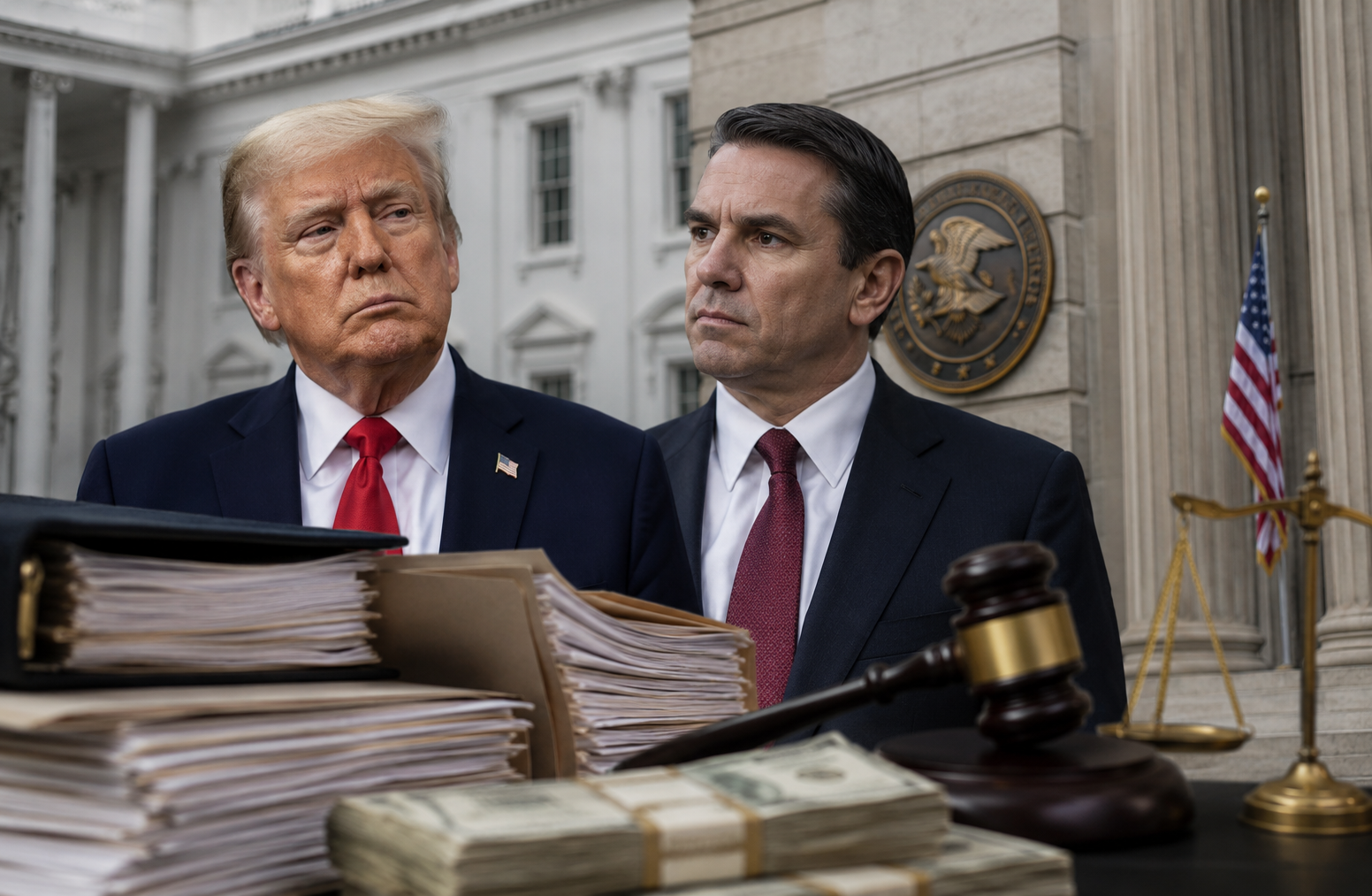
President Donald Trump’s proposed $1.776 billion “anti-weaponization fund” was designed to compensate people who claimed they had been targeted by government “weaponization” or politically motivated prosecutions. The fund became the center of a political and legal controversy before Acting Attorney General Todd Blanche formally rescinded the order establishing it.
The fund was created as part of a settlement involving Trump and the Internal Revenue Service. Trump had sued the IRS over the disclosure of his tax records and sought billions of dollars in damages. Rather than receiving a direct payment, the settlement included an agreement to establish a taxpayer-funded mechanism to compensate people who claimed they had been victims of government “lawfare” or “weaponization.”
Under the original plan, the Justice Department would establish the fund using money from the federal government’s Judgment Fund. A five-member commission selected by the attorney general would determine who received compensation.
READ: Trump warns of ‘invasion’ if Democrats return to power (August 2, 2026)
The plan drew criticism because of the broad potential eligibility criteria. Blanche told lawmakers that almost anyone alleging government “weaponization” or “lawfare” could potentially apply. The fund was also controversial because the decisions of the commission would not be subject to conventional court challenges or appeals, according to Axios’ earlier explanation of the arrangement. The settlement also did not require public disclosure of individual payouts.
The proposed fund raised particular concern because it could potentially benefit people who argued they had been unfairly targeted by the government, including defendants connected to the Jan. 6, 2021, Capitol attack.
Critics characterized the proposal as an unprecedented taxpayer-backed mechanism that could effectively compensate people who claimed the federal government had improperly pursued them for political reasons.
The controversy also became entangled with Trump’s own tax dispute.
The settlement involving the IRS ended pending audits of Trump’s previously filed tax returns, while the broader agreement also included provisions involving Trump, members of his family and his businesses. The arrangement attracted scrutiny because Trump was settling a lawsuit against an agency overseen by his administration.
A federal judge later blocked the administration from moving forward with the fund. The legal challenge added to pressure on the Justice Department and raised questions about whether the administration could establish the program under the terms of the settlement.
The fund also became a political problem for Blanche as he sought confirmation as attorney general.
Republican Sens. John Cornyn of Texas and Thom Tillis of North Carolina had raised concerns about the fund and threatened to withhold their support for Blanche’s nomination. The senators wanted written assurances that the controversial program would be permanently abandoned. Blanche subsequently issued an order rescinding the May order that had established the fund. The move helped resolve the immediate Republican opposition to his nomination, with Cornyn and Tillis indicating they would support moving his nomination forward.
READ: Trump administration creates $1.8 billion ‘weaponization fund’ to settle IRS lawsuit (May 19, 2026)
The development effectively ended the fund as the Justice Department had formally established. However, the underlying settlement and its legal implications have continued to draw scrutiny. The episode illustrates the unusual path by which the fund came into existence. It was not created through a conventional act of Congress establishing a new federal program. Instead, it emerged from the settlement of Trump’s lawsuit against the IRS and an order by the attorney general implementing the settlement’s terms. The fund’s supporters argued that people who were wrongfully targeted by the government should have a way to seek compensation. Trump has continued to defend the concept, describing it as a means of addressing what he considers government misconduct against his political allies and others.
Critics, however, questioned whether taxpayer money should be used to compensate individuals based on broad allegations of government “weaponization,” particularly when the decisions could be shielded from judicial review.
The dispute also highlighted divisions among Republicans over the scope of Trump’s authority and the Justice Department’s role.
For now, Blanche’s decision has removed the immediate threat posed by the $1.776 billion fund. But the controversy surrounding the settlement, Trump’s tax protections and the government’s ability to compensate alleged victims of political “weaponization” is likely to remain part of the broader debate over the Justice Department and the limits of presidential power.