



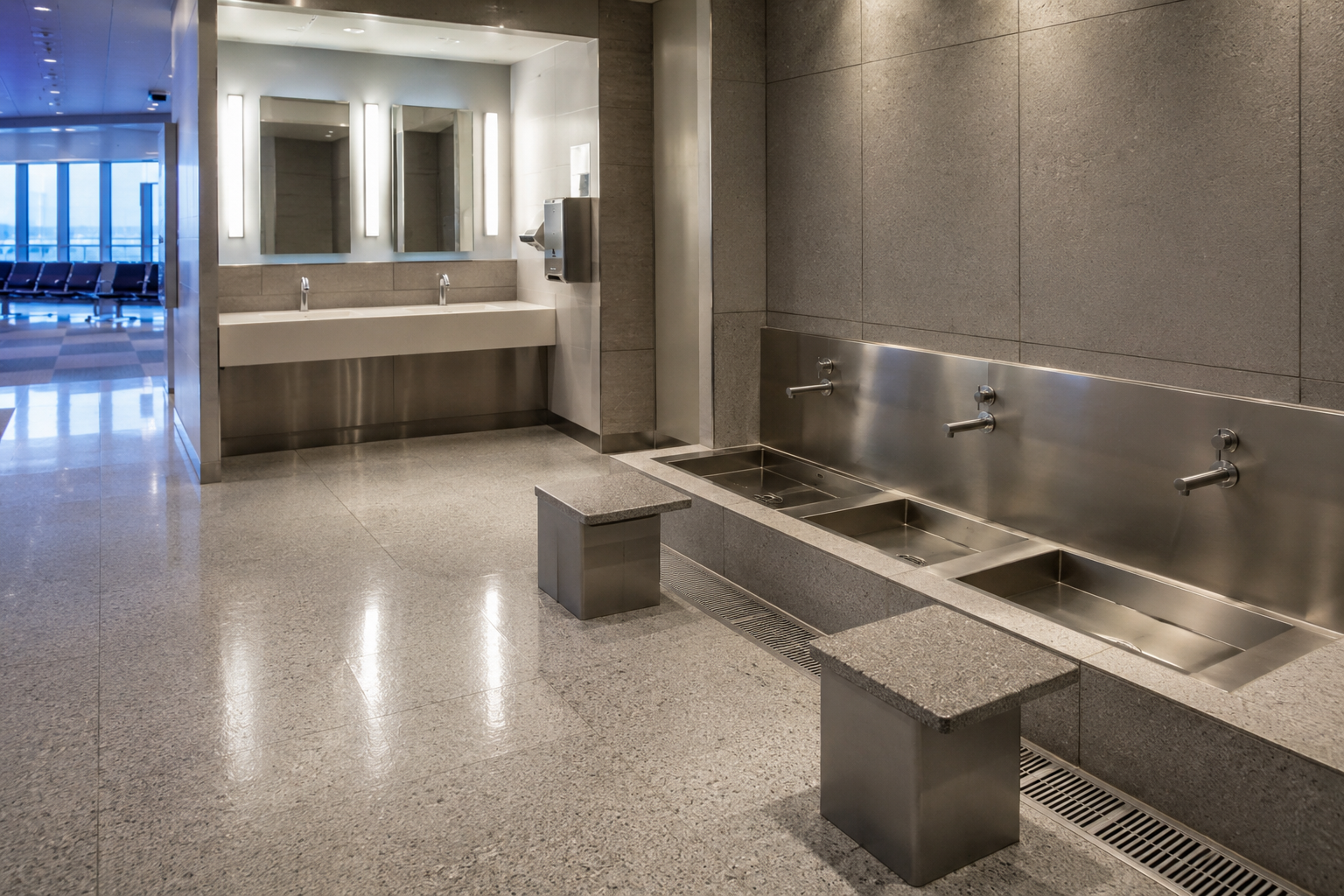
Texas Gov. Greg Abbott called Dallas Fort Worth International Airport’s proposed Islamic foot-washing facilities “illegal” and threatened to review state funding for the airport, prompting DFW to abandon the plan and leaving Muslim travelers without an easier place to perform a routine religious practice.
“Government-owned airports cannot favor one religion over all others,” Abbott wrote on X. “DFW plans to install Islamic wudu washing facilities are illegal.” He said he had directed a review of state grants to DFW and Houston’s George W. Bush Intercontinental Airport and referred both airports to the U.S. Department of Transportation for investigation.
Abbott also argued that the proposed facilities would amount to religious discrimination.
“These ablution facilities appear designed to single out one subset of the population for special treatment based on religion. That is illegal,” Abbott said in a letter to Transportation Secretary Sean Duffy. He argued that government-owned airports cannot favor one religious view over another.
READ: DFW Airport to install Islamic foot-washing stations (August 13, 2026)
The dispute centers on wudu, the ritual washing Muslims perform before prayer. DFW had been evaluating a proposal to add dedicated ablution stations to restrooms on the pre-security side of Terminal D, the airport’s international terminal. The airport said Friday that it accelerated its review because of the public attention and decided not to proceed, saying the project would not provide the operational benefits originally anticipated.
For Muslim passengers, however, the loss of the proposed stations is more than the loss of another airport amenity.
Wudu involves washing the feet as part of the purification process before prayer. Dedicated ablution stations are designed with low taps and seating so travelers can wash their feet without struggling over a conventional sink. Tourism guidance on Muslim-friendly facilities notes that washing feet in high public sinks can be difficult and that specialized foot-washing areas are commonly provided alongside prayer rooms.
Without a dedicated facility, Muslim travelers who need to perform wudu may have to use conventional restroom sinks or find another place to wash their feet. That can be awkward in a crowded airport, particularly when travelers are carrying luggage or wearing shoes that must be removed. Using ordinary sinks can also leave water around the sink area and create an inconvenience for other passengers.
The practical issue is especially relevant at a major international airport such as DFW, where travelers can spend hours in transit and may need to perform prayers during their journey.
DFW is not starting from zero. The airport already has two ablution stations next to the Terminal D Interfaith Chapel, which opened in 2019. The airport said those facilities have served passengers, military members and employees alongside the chapel’s broader interfaith mission.
The canceled proposal would have expanded access by putting ablution facilities in the pre-security portion of Terminal D. That distinction matters for passengers who have not yet gone through security or who need to perform wudu before entering the secure area.
DFW initially faced confusion over the project’s cost and funding. A state filing listed the project at $300,000 and as privately funded, but the airport later said those details were errors and that the project would have been funded through airport revenue, with the expected cost closer to $120,000. DFW said it does not use taxpayer dollars for airport operations.
READ: Texas voters reject anti-muslim candidate for mayor (June 17, 2026)
The controversy has also put Houston’s George W. Bush Intercontinental Airport under scrutiny. Abbott’s office said IAH already has an ablution facility and adjoining prayer room, and the governor asked federal officials to examine religious facilities and accommodations at both airports.
For DFW, the immediate question is no longer whether the new stations will be built. They will not.
The larger question is whether providing a practical facility that helps passengers observe their faith should be viewed as religious favoritism or simply as an accommodation in an international airport serving people from many backgrounds.
For Muslim travelers, the decision means continuing to rely on existing facilities, conventional sinks or other arrangements to complete wudu, even as airports across the country increasingly seek to accommodate the practical needs of diverse passengers.
1 Comment
Is there anything in this world that does not offend the sensitivities of the white supremacists running the show at the Republican Party ?