



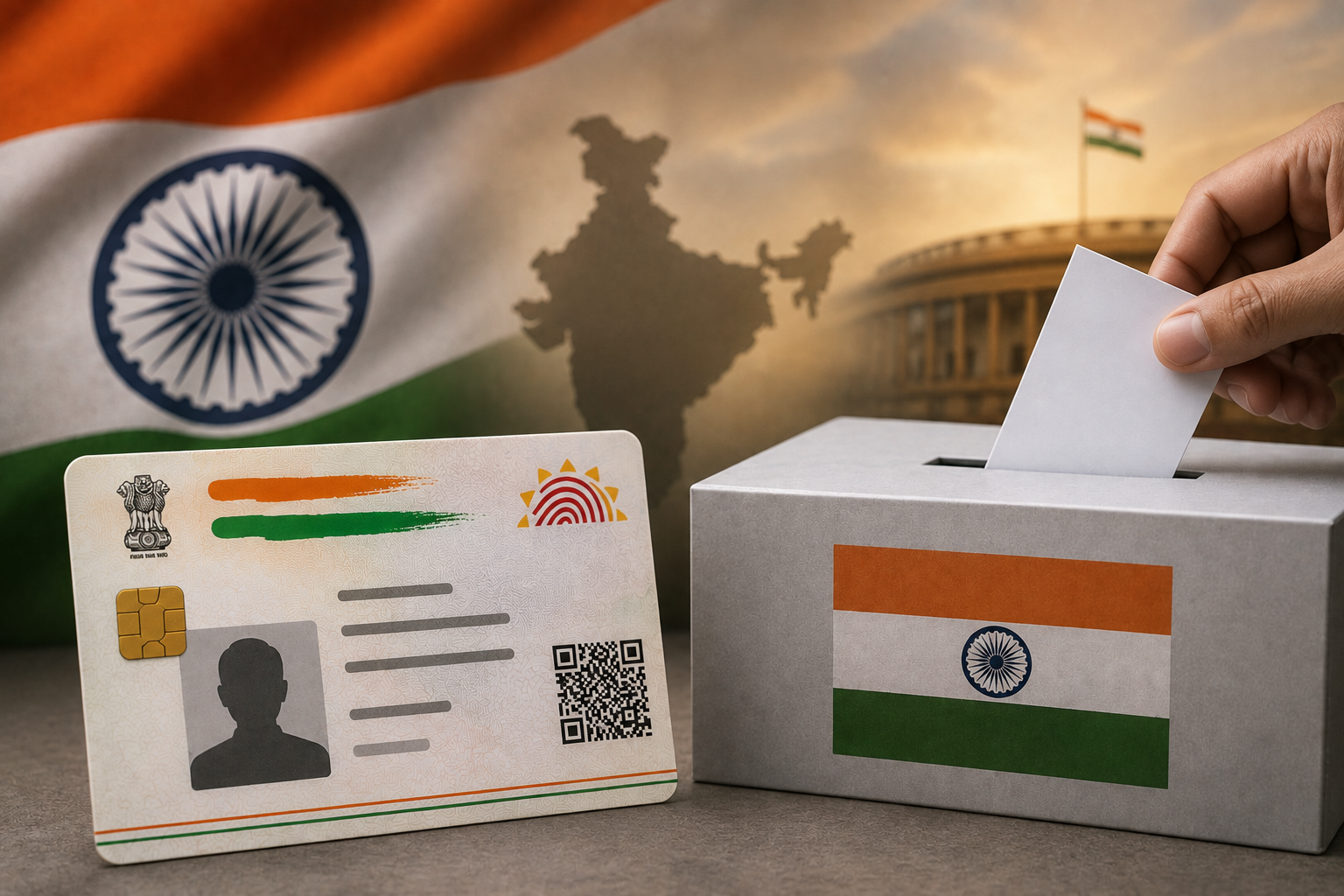
President Donald Trump is pointing to India’s voter identification system as he renews his push for stricter voter ID and citizenship verification requirements in U.S. elections.
In a post on Truth Social, Trump referenced a recent exchange involving India’s Chief Election Commissioner Gyanesh Kumar, who had questioned how elections in the United States could be conducted without mandatory photo identification.
READ: Meet Saritha Komatireddy, Indian American lawyer running for New York Attorney General (May 17, 2026)
Trump also mentioned India’s 2024 Lok Sabha election, in which about 646 million people voted, using the figure to argue that voter identification requirements can be implemented on a large scale.
“646 MILLION voters, every single one required an ID in India’s last election,” U.S. Ambassador to India Sergio Gor wrote on X on Tuesday, backing Trump’s argument and urging Congress to pass the SAVE America Act.
The comments come as the Trump administration continues to make the Safeguard American Voter Eligibility, or SAVE America Act, a major priority.
The legislation would require documentary proof of U.S. citizenship for federal voter registration and introduce photo identification requirements at polling places. It would also place tighter restrictions on absentee voting.
Trump’s comments followed a meeting last week between Kumar and Ambassador Sergio Gor.
The two officials agreed to work closely on election management and staff training, according to the U.S. Embassy in India.
READ: Zohran Mamdani attends India Day Parade as New York City’s first Indian American Mayor (August 16, 2026)
The SAVE America Act has already cleared the House of Representatives earlier this year but has faced repeated hurdles in the Senate.
Trump’s reference to India adds an international dimension to an increasingly heated U.S. debate over voter identification and election rules. India’s election system, which relies on voter identification for its massive electorate, is now being cited by the Trump administration as an example in its argument for tighter voting requirements in the United States.