



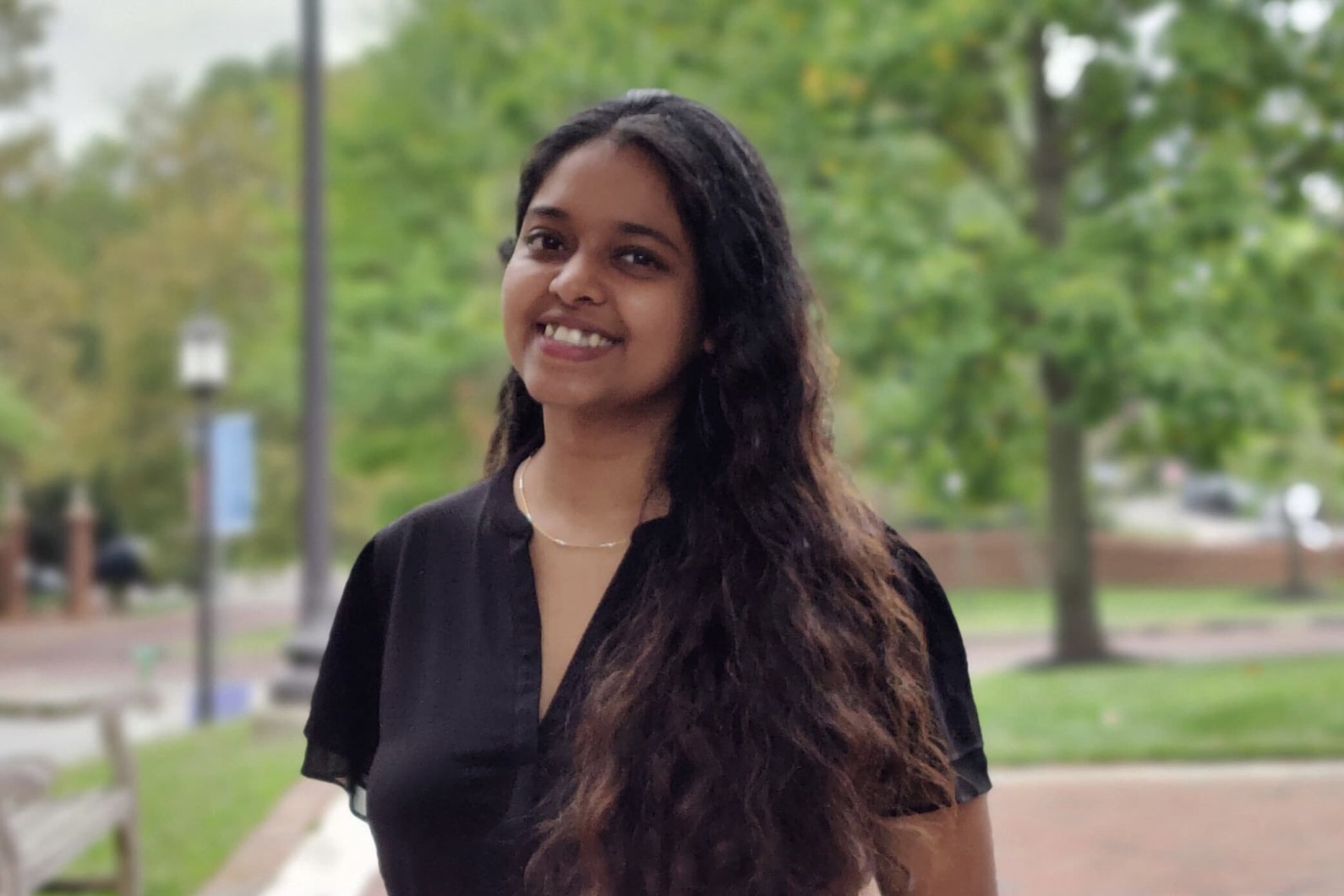
Meenakshi Pillai, an Indian American postdoctoral fellow in the Biochemistry and Molecular Biology Department in Johns Hopkins Bloomberg School of Public Health, has received a 2026 Samuel Jordan Graham Postdoctoral Fellowship.
Her work explores how a protein modification system that tags cellular proteins with molecular tags impact the progression of Amyotrophic lateral sclerosis (ALS), a rare terminal neurodegenerative disease that progressively destroys the motor neurons that control voluntary muscles, according to a university release.
The fellowship is awarded by the Bloomberg School’s Office of Research to postdoctoral fellows who are leading foundational or translational research projects that incorporate both public health and medicine.
Pillai works in the Leung Lab which investigates ADP-ribosylation, a protein modification involved in many cellular processes and can impact diseases such as cancer and neurodegeneration. Pillai’s interest in the relationship between the structure and function of a protein emerged during her doctoral studies.
READ: Biswas fellowship program to accelerate innovation in health care (July 11, 2025)
“I spent my time trying to understand why some proteins aggregate under stress while others don’t,” she said. “That experience gave me a deep appreciation for how subtle structural changes can have profound functional consequences.”
This fascination drew Pillai to the Leung Lab, joining a team of researchers studying ADP-ribosylation, the process which adds ADP-ribose molecular tags to a protein as a single unit or as a poly (ADP-ribose) (PAR) chain. The addition (or removal) of PAR to a protein can alter the protein’s structure and function.
“PAR is a remarkably simple polymer that can fundamentally reshape the behavior of an entire protein network, pushing cellular systems between functional and pathological states,” Pillai explained.
Pillai’s research focuses on the role of PAR in ALS and how hyperactivation of ADP-ribosylation and dysregulation of PAR contributes to the progression of the disease.
READ: Indian American journalist Keerti Gopal wins investigative reporting fellowship (February 23, 2026)
With the support of the Graham Fellowship, she aims to translate the molecular insights uncovered in the lab to understanding how PAR dysregulation affects disease progression, using patient-derived samples and clinical data from cohort research studies of ALS patients.
“By bridging the bench and the bedside in this way, I hope to establish PAR’s role not merely as a signaling molecule, but as a clinically meaningful parameter with real implications for how we understand and ultimately intervene in ALS progression,” said Pillai. “Getting the opportunity through this fellowship to study PAR in the context of real patient disease models feels like a natural and exciting next step.”
With a BSc degree in biotechnology from the University of Mumbai and an MSc from Amity University, Greater Noida Campus, Pillai has also received training at CSIR National Chemical Laboratory, Pune.