



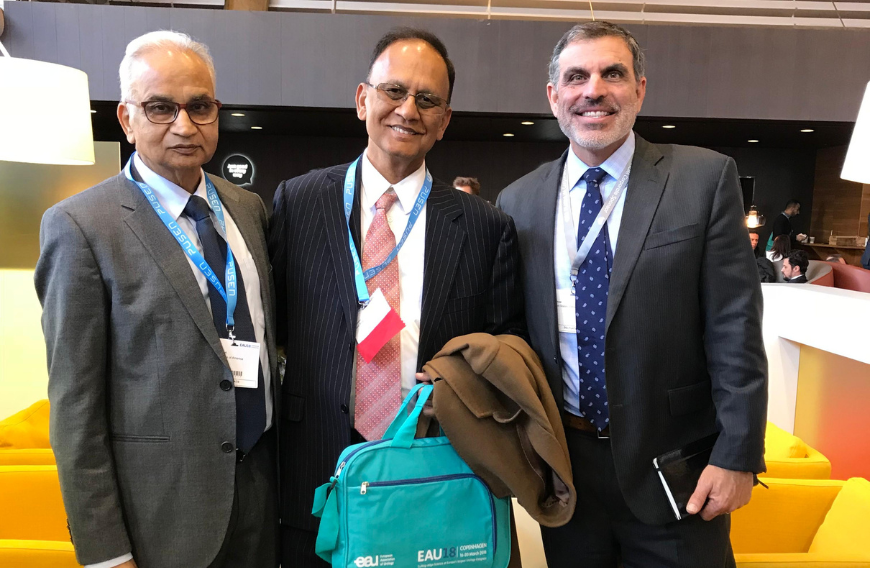
“There was always anguish that we would see things in conferences, startling, exciting new tools, but it would take ages before they reached our hospitals.”
For Dr. Mahendra Bhandari, that frustration became a professional question: Could India shorten the time between proven medical innovation and its availability to patients?
Robotic surgery offered an especially difficult test.
The technology was expensive, while Indian surgeons were already highly skilled in conventional and laparoscopic procedures. Hospitals therefore had to be convinced that buying a robotic system would provide enough clinical and economic value to justify the investment.
Bhandari, who spent decades working in India before joining the Vattikuti Urology Institute at Henry Ford Health System in Detroit in 2006, later helped develop an approach to robotic surgery adoption tailored to India’s healthcare system.
His experience, together with co-author Siddharth Siva’s research, forms part of the story in “The Surgeon’s Machine,” which examines how robotic surgery moved from an emerging technology to mainstream medicine.
More insights from Siddharth Siva and Dr. Mahendra Bhandari: ‘The Surgeon’s Machine’ authors envision AI-powered future with doctors in control (September 1, 2026)
India had a different problem
Siva said the economics made India particularly challenging. Robotic systems were expensive, while surgeons already had alternatives that worked.

“You were asking hospitals to spend a lot of money to solve a problem that many surgeons did not believe they had,” Siva said. The challenge was therefore not simply introducing a new machine. Hospitals had to develop a sustainable model around it.
Bhandari and his team spent nine days visiting hospitals across India as part of an executive MBA project. They found institutions capable of investing in advanced technology and, importantly, a healthcare system with large patient volumes.
“There were good institutions which could afford technology and had an appetite for it,” Bhandari said. He and his team realized that India’s large patient volumes could make advanced technology more cost-effective. They developed a high-volume, multispecialty model in which hospitals shared the technology to maximize its use.
Rather than dedicating a robotic system to one specialty, hospitals could use it across multiple departments, allowing more procedures to be performed on the same capital investment.
Bhandari described the approach more simply as a high-volume, low-margin model. By his account, while the manufacturer, Intuitive Surgical, had sold six robots in India over 10 years before the foundation’s intervention, the model helped expand the technology to about 75 systems installed or in the pipeline by 2018.
The CFO problem
The business case was not easy to make. “The biggest challenge in India was to deal with CFOs,” Bhandari said. “When the cost comes in India, it is a blackout, no further communication,” he recalled.
The solution was to look beyond the purchase price. Hospitals had to consider utilization, training, procedure volume and the broader economics of a robotic surgery program.
That approach also required an unusual institutional structure.
Combining social enterprise and business
Siva said the model combined a nonprofit foundation with a commercial operation.
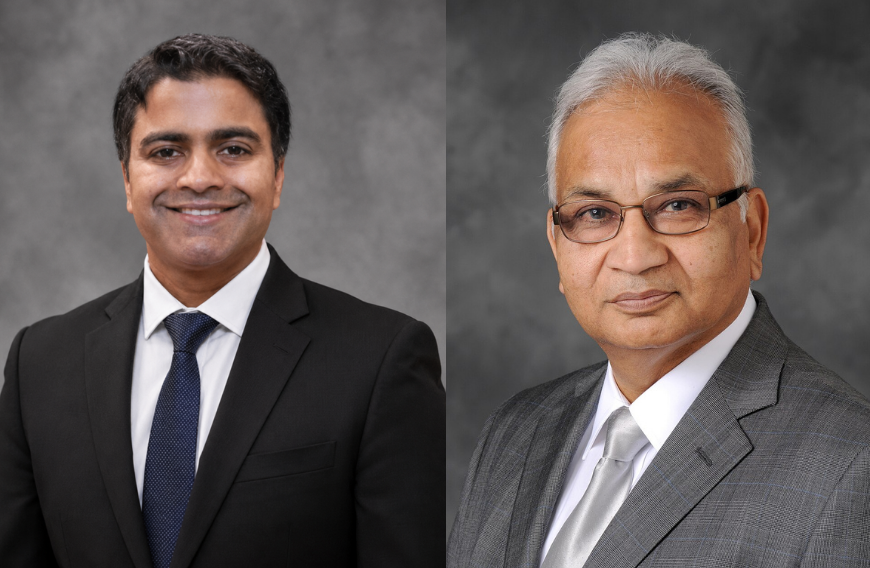
The foundation handled training, education, fellowships and bringing experienced surgeons to India. The commercial side handled the practical process of making the technology available to hospitals.
“The foundation had to run training,” Siva said. “The foundation had to do a lot of education on site.” At the same time, he said, “the supply chain logistics” worked better through a commercial enterprise. That combination helped create both supply and demand.
It was not enough to place robots in hospitals. Surgeons needed to know how to use them, and hospitals needed confidence that the investment could work.
Training became critical
Bhandari said early training infrastructure in India was limited.
“We brought about 200 experts to India to teach people in their own operating rooms,” he said. The strategy was to work with surgeons who were already proficient in laparoscopy and demonstrate how robotic technology could extend their capabilities.
That approach reflected a broader principle: technology adoption depends on people as much as equipment.
READ: A 15-minute call changed everything: Indian immigrant’s US layoff inspired debut novel ‘Rerouted’ (August 17, 2026)
The Indian American connection
Siva sees the Indian American role in robotic surgery as part of that larger human story. He said the technology itself was not created by one community, but Indian American figures shaped its most decisive chapters.
Dr. Mani Menon pioneered robotic surgery for prostate cancer and built the field’s first dedicated program. Entrepreneur Raj Vattikuti provided early financial backing, while Bhandari helped build infrastructure that supported adoption in India and other markets.
For Siva, their contribution was also about risk. “They could have taken comfortable paths and coasted for the rest of their careers if they wanted to,” he said.
Instead, he said, they took risks with their careers, capital and time because they believed the technology could improve patient care. That cross-border element is central to the India story.
Bhandari had spent much of his career in Indian medicine before working in the United States. He then helped carry knowledge and institutional experience back into India’s healthcare system. The result was not simply an American technology being imported into India. It was a process of adaptation.
India’s large patient volumes, private hospital infrastructure and concentration of advanced medical expertise created conditions in which robotic surgery could develop its own economic model.
The long-term question is whether that model can continue to make expensive surgical technology accessible while maintaining clinical value. For Bhandari and Siva, India’s experience suggests that adoption is not simply about having the latest machine. It is about building the training, economics and institutional infrastructure that allow the machine to become useful.
“The Surgeon’s Machine” is available to order on Amazon in the United States, India, and UK.