



Maitreyi Ramakrishnan has a message for anyone wondering how deeply she identifies with her Tamil roots: “I am Tamil as fuck.”
The Never Have I Ever star did not hold back while talking about her Tamil identity, family and cultural history during a conversation with Hasan Minhaj alongside her Best of the Best co-star Priyanka Kedia.
For Ramakrishnan, being Tamil is not about checking every traditional box. It is about knowing where she comes from, embracing her family and carrying that history with her, even while growing up thousands of miles away from Sri Lanka.
“I love who I am as a Tamil Eelam woman,” Ramakrishnan said on Minhaj’s show, Hasan Minhaj Does Not Know.
She went on to explain that her career has actually made her appreciate her identity even more. Her Tamilness, she said, is part of what makes her who she is.
And she was equally clear about something else: she does not believe she needs to perfectly fit a cultural stereotype to claim that identity.
Ramakrishnan admitted that she does not do everything traditionally associated with Tamil culture and is still trying to become more fluent in Tamil. But for her, that does not make her any less Tamil.
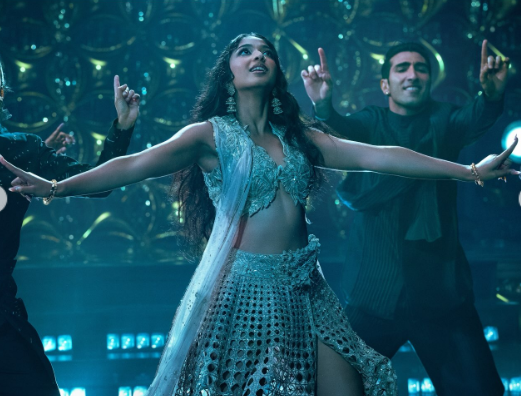
That unapologetic attitude takes on even greater significance in Best of the Best, where Tamil culture is not simply mentioned in passing. It becomes part of the film’s visual and emotional language.
One of the moments that particularly affected Ramakrishnan was performing kuthu, the energetic folk and street dance style associated with Tamil culture.
She told Minhaj that she cried on set.
The reason was not simply the emotion of performing. Ramakrishnan understood that the moment would eventually be watched by Tamil audiences who might see something familiar and deeply personal on screen.
She imagined young Tamil viewers and older generations watching the scene and recognizing themselves in it.
For Ramakrishnan, that recognition matters because she knows exactly what it feels like to experience it for the first time.
Before Never Have I Ever made her a household name, Ramakrishnan was simply a high school student doing her homework and watching Minhaj’s Patriot Act.
READ: Maitreyi Ramakrishnan’s Best of the Best puts South Asian American life on the dance floor (
She noticed the name of Prashanth Venkataramanujam, one of the people behind the show, and realized he was Tamil.
Her reaction was immediate.
She had just seen someone from her own cultural background working behind the scenes on a major show she was watching.
That moment stayed with her.
It was representation, but not in the broad sense of simply seeing a South Asian person on television. It was something much more specific. She saw a Tamil person occupying a creative space that felt significant to her.
Now, years later, Ramakrishnan is on the other side of that experience.
She is no longer the teenager watching someone else’s name appear in the credits. She is the actor helping put Tamil culture in front of a much larger audience.
That is why the kuthu sequence in Best of the Best appears to carry a different kind of weight for her.
It is not just a dance number.
It is the kind of scene that can make someone watching from the other side of the screen stop and think: “That’s me.”
Ramakrishnan’s own connection to that identity is shaped by the Tamil diaspora. She was born and raised in Canada, while her parents came to Canada as refugees from Sri Lanka during the country’s civil war.
She has spoken about herself as Tamil-Canadian, reflecting the two worlds that shaped her. Canada is home, while Tamil culture, language, family history and heritage remain central to how she understands herself.
And she does not appear interested in choosing between those identities.
Her message is that cultural identity does not have to be perfect to be real.
You can be born in Canada. You can struggle with your heritage language. You can grow up surrounded by a different culture. You can learn and reconnect with traditions as an adult.
And you can still be Tamil.
With Best of the Best, Ramakrishnan is not just representing South Asians on screen. She is putting a very specific part of that identity in the spotlight and hoping someone watching recognizes themselves in it.