



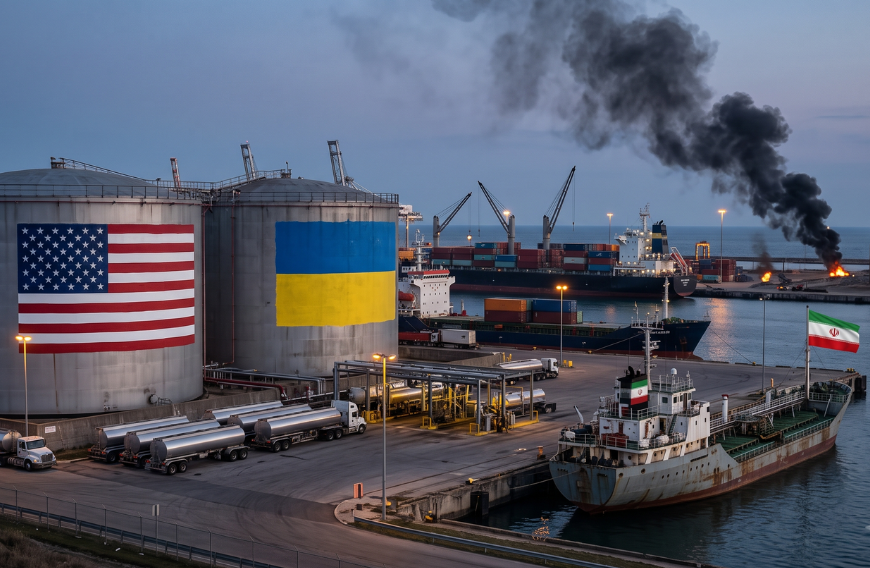
President Donald Trump said Tuesday that he backed the idea of a ban on diesel exports, which some U.S. politicians have proposed as a way to curb soaring energy costs.
Diesel prices have reached record highs in the U.S. and Europe as the wars in Iran and Ukraine have sharply reduced exports from some of the world’s biggest producers, including Russia, Saudi Arabia and the United Arab Emirates.
“I’ve said let’s not send out the diesel. We make a lot of diesel … I’ve called for it. I’ve called for it within my people,” Trump told reporters ahead of a meeting with Ukrainian President Volodymyr Zelenskyy.
Meanwhile, U.S. Treasury Secretary Scott Bessent, speaking at the same meeting, said, “We’re examining whether it’s feasible in terms of the overall refining capacity and whether a full or partial ban would work.”
READ: Trump to address UNGA as Iran war, Gaza and Ukraine tensions dominate agenda (September 22, 2026)
On Sunday, Trump urged Zelenskyy to pause strikes on Russian oil refineries over concerns that they could further push up prices, according to the Financial Times. Trump wrote on social media that Russia had “unfortunately lost control of its Diesel Oil Industry.”
“It is a serious hit on the Russians. It’s also a serious hit on the price of diesel,” Trump said. He also told reporters that he and Zelenskyy would discuss working toward a solution to end Russia’s war in Ukraine.
Several Republican candidates have also called for the administration to implement an export ban ahead of the November midterms.
“Iowans are being squeezed and shouldn’t have to foot the bill at the pump or the checkout line for the war in Iran,” U.S. Rep. Ashley Hinson, R-Iowa, wrote on X. “We need to use every option at our disposal to provide some relief from high prices.”
READ: Chinese satellite intel linked to Iranian strikes that killed three American soldiers (September 14, 2026)
In a statement, the American Fuel and Petrochemical Manufacturers trade group said an export ban would “backfire,” arguing that domestic refiners would have to reduce production and that “producing less diesel also means producing less gasoline.”
U.S. Interior Secretary Doug Burgum said a ban would be unlikely to lower petroleum prices and could lead to retaliatory measures by energy-exporting countries, on which states such as California rely for some of their energy.
While a diesel export ban could, in theory, temporarily lower prices on the U.S. Gulf Coast, it could further tighten supplies in Europe, which is structurally short of diesel and relies heavily on U.S. exports.
“That would seem pretty damaging to some key U.S. allies,” said Jim Mitchell, director of oil trading analytics at consultancy Wood Mackenzie.