



By Roshini Arora
For Indian Americans, grocery shopping can involve much more than stocking up on everyday staples. Finding a particular brand of atta, regional spices, curry leaves, sweets or snacks can also be a way of maintaining food traditions and connections to home.
As South Asian communities grow across the United States and online grocery shopping becomes more common, companies are seeking to bring those specialty products into the digital marketplace.

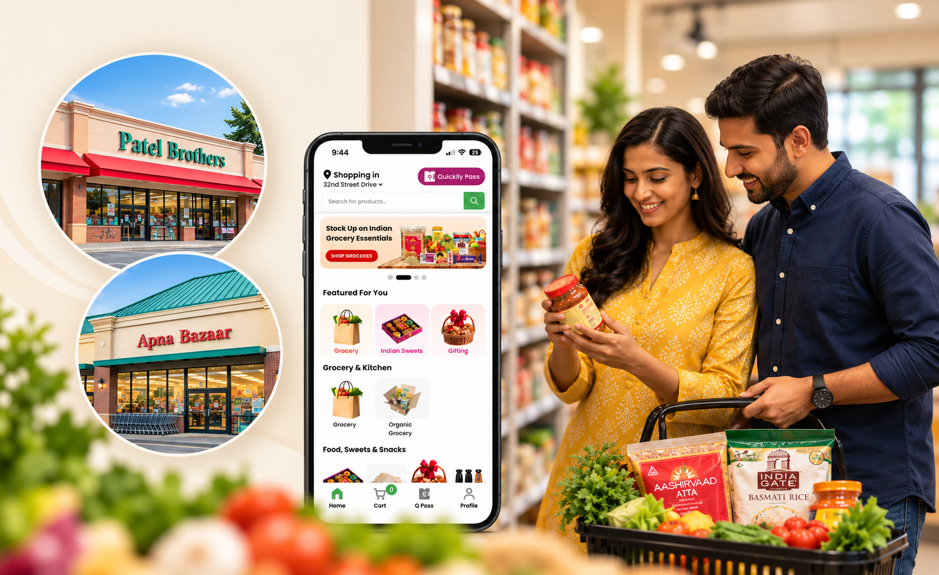
Chicago-based Quicklly is one such platform, connecting shoppers with Indian and South Asian grocery stores, food businesses and prepared-food providers. The company offers online ordering through its marketplace and, through its Quicklly Go service, says some participating locations can provide delivery within three hours.
The platform’s focus reflects the diversity of Indian grocery shopping in the U.S. A family’s regular order could include basmati rice, atta, dal, spices and frozen foods, while shoppers from different regions may look for products specific to their culinary traditions.
A South Indian household, for example, may look for dosa batter, sambar powder, coconut and regional snacks. A Bengali family may search for mustard oil, sweets and other regional ingredients, while a Gujarati household may look for farsan, thepla ingredients and pickles.
That variety can make online grocery shopping more complicated than simply searching for an “Indian grocery store.” Consumers may be looking for a particular brand, regional product or specialty ingredient that is not widely available at mainstream supermarkets.
Bringing local Indian grocery stores online
Quicklly’s model is built around local grocery stores rather than replacing them with a standalone inventory.
The company says its marketplace gives participating retailers an online channel through which customers can discover and order their products. It also connects stores with delivery services, allowing them to reach customers beyond traditional walk-in traffic.
READ: McDonald’s plans $8.5 billion investment in restaurants, chicken and AI through 2036 (September 23, 2026)
Quicklly began in Chicago in 2020 with a focus on making South Asian food and groceries more accessible. The company says it built its e-commerce network between 2021 and 2023 and partnered with more than 400 multicultural grocery stores across the U.S.
In 2023, the company expanded into consumer packaged goods through Just By Quicklly. Between 2024 and 2026, it also integrated with major delivery platforms including Instacart, DoorDash, Uber Eats and Grubhub, according to the company.
Quicklly introduced Quicklly Go in 2026, offering delivery within three hours or less in participating U.S. locations.
The service is designed to connect online ordering with local store inventory, giving customers another option for buying Indian and South Asian groceries without visiting a physical store.
From everyday staples to regional specialties
The Indian grocery market in the U.S. has also become increasingly diverse as communities from different parts of India and South Asia establish themselves across the country.
A typical order could include basmati rice, atta, toor or moong dal, cooking oils, spices, pickles, frozen parathas, namkeen and Indian sweets.
Consumers may also have established preferences for brands such as Aashirvaad, India Gate, MDH, Everest, Haldiram’s, Shan and MTR.
Beyond those staples, however, shoppers often want products tied to their particular regional and cultural backgrounds.
Quicklly says its marketplace includes both everyday and regional groceries, as well as Indian sweets, snacks, meal kits, roti kits, tea and coffee products, gifting options, catering and prepared foods.
That range reflects a broader challenge for online Indian grocery businesses: convenience alone may not be enough. Consumers also expect the selection they find at a local Indian store, including products that cater to specific regional cuisines.
READ: Bill Clinton’s CGI backs initiative to train 10,000 Indian street food vendors on healthier cooking (September 22, 2026)
Online grocery shopping and the Indian American market
The growth of online grocery platforms does not necessarily mean physical Indian grocery stores are becoming less important.
Neighborhood stores continue to offer regional products, local knowledge and established relationships with customers. Digital marketplaces, meanwhile, can provide another route for those stores to reach consumers and make their inventory available online.
Quicklly describes its marketplace as technology infrastructure for local South Asian grocery businesses. The company says its platform allows participating retailers to reach customers through online ordering and multiple delivery channels.
For Indian American consumers, the shift means specialty groceries that once required a trip to a neighborhood store can increasingly be searched for and ordered online.
The trend also reflects the changing needs of Indian American communities. Families are spread across more U.S. cities, while regional food traditions continue to be maintained across generations.
As a result, the future of Indian grocery e-commerce may not necessarily be about replacing the neighborhood store. Instead, digital marketplaces could give those stores another way to remain connected to customers while making regional Indian and South Asian products easier to discover and access.
(Roshni Arora is a content writer who believes that the best moments are often found in the little things: a thoughtful gift, a favorite dish, a family tradition, or an easier way to get things done. Through her work, she shares practical ideas, festive inspiration, food, gifting, and everyday tips that make life simpler and celebrations a little more special.)