



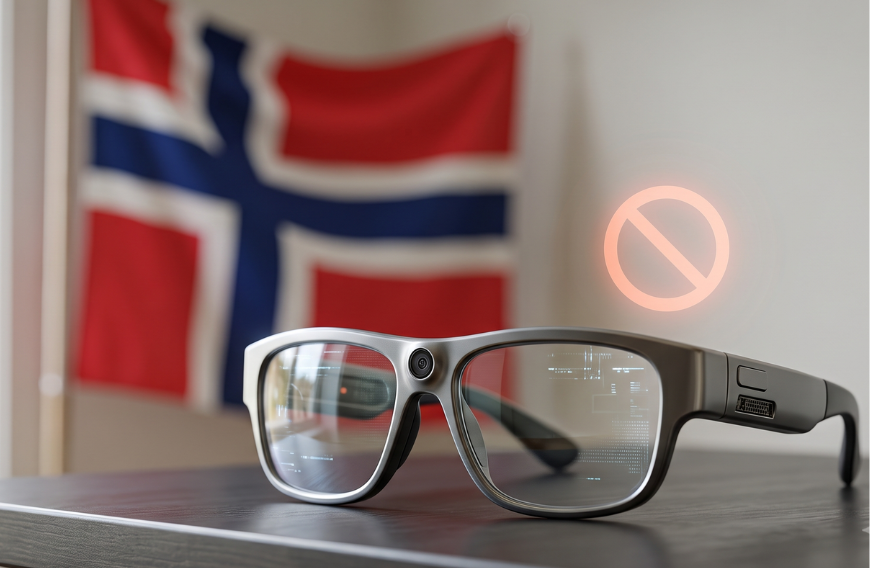
Norwegian authorities are seeking a temporary ban on AI glasses over concerns that the technology could violate people’s privacy. The Norwegian government said the proposal would be presented to Parliament, the Storting, “as soon as possible.”
The ban could apply to places where privacy is particularly important, including health care facilities and fitness centers with changing rooms and showers. A major focus would be places where children congregate, such as schools, kindergartens, playgrounds and youth clubs. It could also extend to public concerts and sporting events, as well as parks, beaches, museums and shopping centers.
A temporary ban would give authorities time to determine which types of devices could be affected and consider whether permanent regulations are needed. The government said it is not proposing a total ban and that such devices should remain permitted in some places and for private use. It is also considering exceptions for vulnerable groups so that “socially beneficial uses” of smart glasses could be permitted in certain circumstances.
READ: Meta plans camera-free AI glasses amid privacy and harassment concerns (September 17, 2026)
The proposal was welcomed by privacy advocates.
Adam Smith, a technology advocacy officer at Britain-based Privacy International, said Norway’s move was “a welcome protection against big tech’s greedy attempts to extract ever more data, often in absence of any thought for the privacy or rights of others.”
“No reality exists in which people expect to be secretly surveilled going about their daily lives,” he said.
Meta, which has rolled out AI glasses with eyewear company Ray-Ban, said on its website, “Respect people’s preferences. Not everyone loves being photographed. Stop recording if anyone expresses that they would rather you not.”
READ: Meta launches Muse AI in US: What the new personal agent can do for users (September 9, 2026)
The tech giant also said a light on the glasses indicates when recording is underway. If the glasses detect that the light has been blocked or physically tampered with, the camera is automatically disabled. Meta is also reportedly developing a camera-free version of its smart glasses amid concerns over privacy and harassment.
Despite such measures, privacy concerns remain. Hans Anders, a prominent eyewear retailer in the Netherlands, has suspended sales of Ray-Ban Meta glasses amid the broader debate over privacy and the use of camera-enabled smart glasses.
In Britain, the UK Cinema Association said in August that it was introducing policies to prohibit or restrict the wearing of camera-enabled smart glasses, citing concerns about privacy and film piracy.