



By Rajwa Quasim
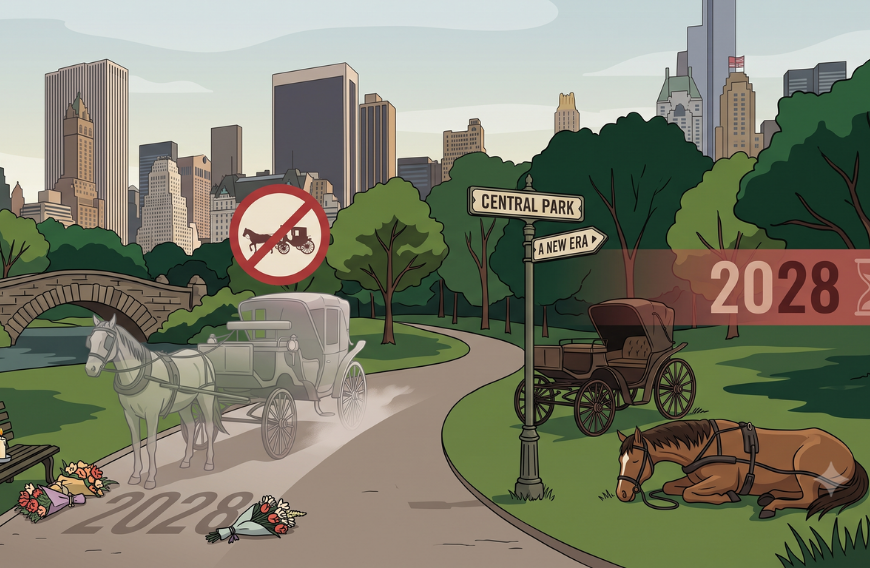
New York City could soon end horse-drawn carriage rides in Central Park, a longstanding tourist attraction. Mayor Zohran Mamdani and City Council Speaker Julie Menin have reached an agreement to phase out the industry, which has faced years of criticism over animal welfare and public safety concerns.
The proposed ban is set to take effect June 1, 2028. The City Council is expected to vote on “Romanch’s Law” on Oct. 22. More than half of the council’s 51 members have formally expressed support for the bill.
The plan follows renewed public attention after an incident involving a horse and Romanch Mahajan, an 18-year-old Indian tourist, during the summer. Mahajan died after jumping from a carriage in an attempt to save his mother, who had been thrown from the buggy when the horse suddenly galloped. The incident intensified calls from animal welfare advocates and other campaigners to end the practice.
READ: Mamdani urges New Yorkers to report subscription traps (October 11, 2026)
Horse-drawn carriages have operated in Central Park for generations. However, animal rights groups have long argued that the work exposes horses to exhaustion, citing their exposure to traffic, extreme weather and the physical demands of pulling carriages. Reports of horses collapsing or running loose have also raised concerns about risks to pedestrians.
“Horse-drawn carriages have long been part of New York City’s history, but in an increasingly busy Central Park, this tradition has become a growing public safety liability. Next week, the Council will take decisive action by voting on this bill to protect New Yorkers, visitors, and the horses themselves,” Menin said in a statement.
The proposed law would establish a transition period before the ban takes effect in 2028. To support workers who would lose their jobs, the updated bill requires the city to create a workforce transition program. The program would provide carriage drivers with career counseling and referrals to employment opportunities in the public and private sectors, including positions with the Metropolitan Transportation Authority, the Port Authority of New York and New Jersey, local sightseeing bus companies and pedicab operators.
The bill also calls on the city to consider compensating carriage owners for their businesses, horses, equipment and operating licenses. This provision marks a significant change from previous bills that sought to end the industry.
READ: Mamdani called ‘traitor,’ heckled by pro-Palestinian protesters at Oct. 7 vigil (October 8, 2026)
“We have been working closely with the City Council, union partners, carriage drivers, animal welfare advocates, and community leaders to deliver a just transition that protects workers while ending horse-drawn carriages in Central Park once and for all,” said Mamdani spokesperson Sneha Choudhary.
The bill would prohibit owners from selling or transferring licensed carriage horses for slaughter or for use in another horse-drawn carriage business. Owners would be required to certify compliance with the restrictions by March 1, 2027.
Steve Nislick, co-founding president of New Yorkers for Clean, Livable and Safe Streets, welcomed the decision.
Meanwhile, the Transport Workers Union (TWU), which represents carriage drivers, opposes the ban and has argued that stricter safety regulations would be a better way to preserve the industry.
TWU International President John Samuelsen criticized the agreement, saying it offered “no meaningful economic relief for workers” and would ultimately threaten the livelihoods of immigrant families.