



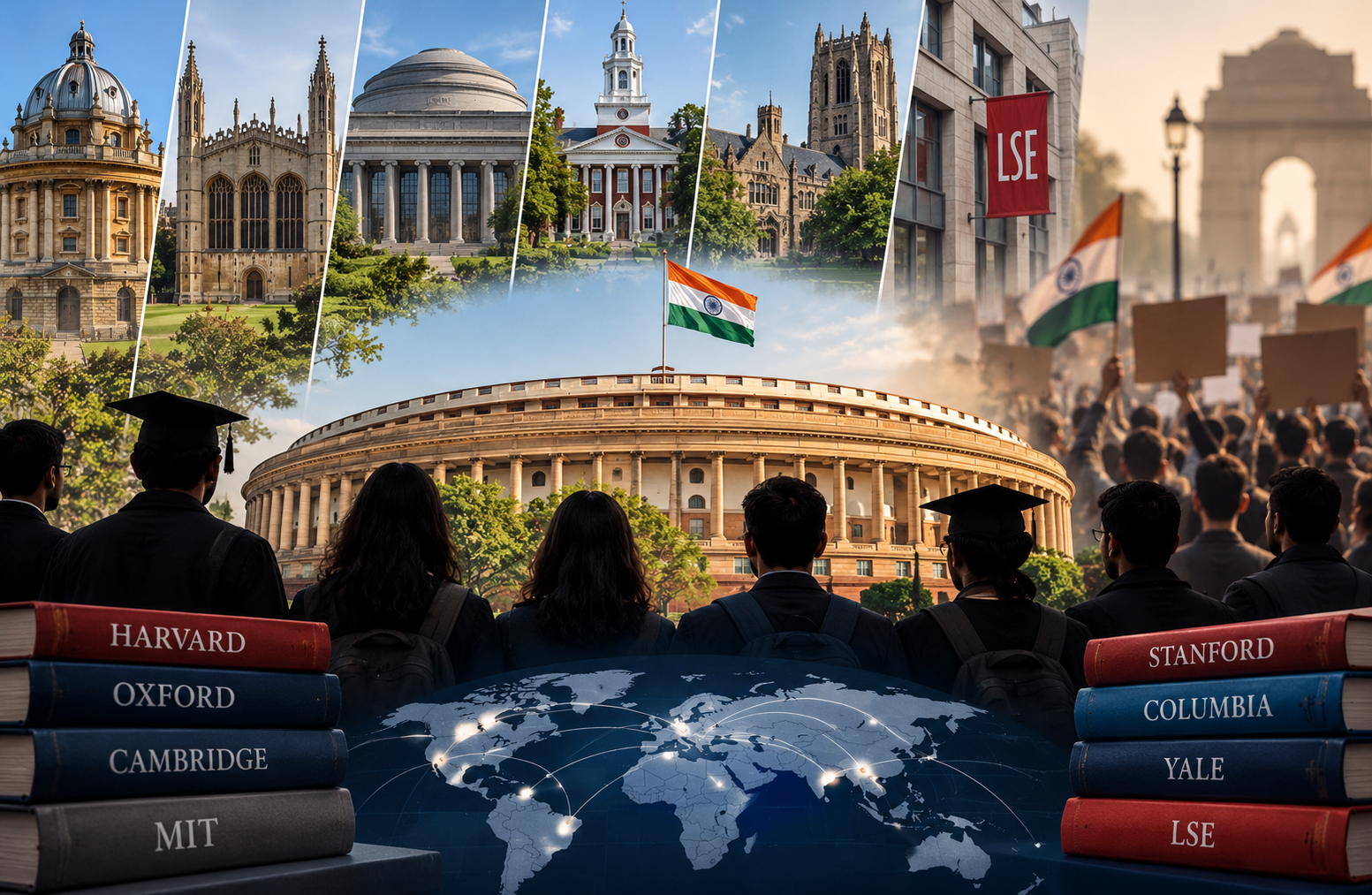
More than 400 students, researchers, academics and alumni of Indian descent affiliated with universities across 27 countries have signed a joint statement titled “Spare India From Anarchy.” The signatories expressed concern over what they described as a growing trend of rejecting electoral outcomes, questioning constitutional institutions and prioritizing “the street over Parliament”.
“In the seven decades since independence, Indian democracy has proved its resilience repeatedly. Institutions have flourished, checks and balances have functioned admirably, and peaceful transition of power has remained an enduring hallmark,” the statement said.
Read: Yogesh Vohra named interim dean of Alabama college (July 28, 2026)
According to the statement, unfavorable election results are increasingly followed by allegations questioning the fairness of the electoral process. The signatories also expressed concern over reactions to court verdicts, claiming that such comments undermine judicial independence. The statement further alleges that the armed forces are being unfairly drawn into political controversies.
The signatories also claimed that distrust in Indian democracy is being fueled by the politicization of matters that are sub judice. They alleged that these issues are subsequently amplified through street protests by elements they described as anarchic and opposed to constitutional governance. The statement described such actions being carried out in the name of democracy as “contradictory and troubling.”
The signatories also cited Dr. B.R. Ambedkar’s warning that, for India to survive as a constitutional republic, citizens must remain committed to constitutional methods and abandon violent methods of revolution, which he called “the grammar of anarchy”.
The signatories are reportedly affiliated with institutions including the Massachusetts Institute of Technology (MIT), the University of Oxford, the University of Cambridge, Princeton University, Harvard University, Yale University, Stanford University, Columbia University, the London School of Economics (LSE), the National University of Singapore, Seoul National University, the University of Manchester and the University of Toronto, among others.
Read: Indian American economist Bhaven Sampat joins Johns Hopkins faculty (July 28, 2026)
“In the seven decades since independence, Indian democracy has proved its resilience repeatedly. Institutions have flourished, checks and balances have functioned admirably, and peaceful transition of power has remained an enduring hallmark,” the statement said.
The statement did not specify what prompted these concerns. However, reports have linked it to the protests in India against the Election Commission’s Special Intensive Revision (SIR) of electoral rolls.