



By Palak Devpura
A founder once described due diligence to me as the investor checking whether we lied in the pitch deck. That is funny, but incomplete.
Good diligence is less about catching founders out and more about answering a basic question: is the company legally, financially and operationally what the investor believes it is buying into?
The first stop is usually corporate history and the cap table. Were the company’s shares issued correctly? Do the statutory records match the spreadsheet the founder sends around? Are there old angel rights, convertible instruments, ESOP promises or side letters that change the fully diluted ownership? A cap table that cannot be reconciled can delay a round very quickly.
READ: SAFE vs Convertible Note vs CCPS: Which funding instrument should a startup use? (October 19, 2026)
Then comes intellectual property. For a technology startup, this is often existential. Did the founders assign the original code and product IP to the company? Do employee agreements contain appropriate IP provisions? Were freelancers and agencies properly contracted? A startup can have a brilliant product and still face a serious diligence issue if the company cannot clearly establish ownership of what it sells.
Material contracts matter too. Investors will want to understand major customer agreements, vendor dependencies, revenue concentration, change of control clauses, exclusivity commitments and unusual termination rights. These tell investors how durable the business really is.
The diligence exercise then widens: employment records, tax filings, litigation, regulatory approvals, licences, data privacy, cybersecurity, related party transactions and previous fundraising documents. Not every issue kills a deal. Many simply become conditions precedent, special indemnities, disclosure items or post closing obligations.
What worries investors most is often not the existence of a problem, but the discovery that management did not know about it.
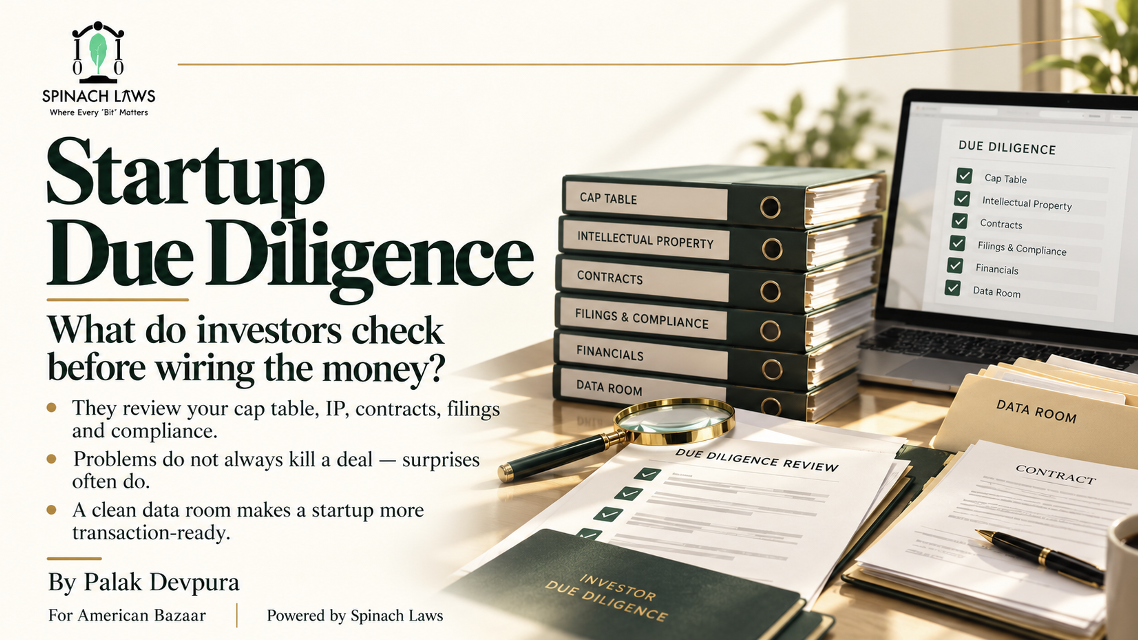
That is why founders should not wait for a data room request before getting organised. Build a basic diligence folder early: incorporation documents, cap table, board and shareholder approvals, material contracts, IP assignments, employee documents, tax and regulatory filings, licences, litigation records and financing documents. Update it periodically.
READ: What happens after a startup receives a term sheet? (October 13, 2026)
You do not need a perfect company to raise capital. Very few startups are perfect. You need a company whose risks can be understood, disclosed and fixed.
The pitch gets an investor interested. Due diligence decides whether the investor can become comfortable enough to wire the money.
(Palak Devpura is co-founder of Spinach Laws, a startup-focused legal services firm advising founders on incorporation, brand protection and cross-border transactions. This column is part of the ongoing Spinach Laws × The American Bazaar series on law for founders.)