



When Tejas Gupta moved from Delhi to the United States at 18 to study computer science at Arizona State University, he had to learn a lesson that would later prove useful in entrepreneurship: how to figure things out on his own.
Growing up in Delhi, Gupta said he was accustomed to a close-knit environment where his parents supported him and rarely said no to what he wanted. Moving to Arizona changed that dynamic. Suddenly, he was responsible for navigating life in a new country, building relationships and finding his own way.
“When I came to ASU, I realized that I have to work for everything and I have to get everything with my own hands,” Gupta told The American Bazaar in an exclusive interview.
“That was the hardest lesson: nobody here would be my support, so I had to learn to do everything on my own.”
That experience of independence would become part of a much larger journey, taking Gupta from university hackathons to the startup ecosystem in San Francisco. At 21, he is the co-founder of Clean, an AI-powered sales intelligence company that helps business-to-business (B2B) sales teams identify companies that are likely to buy their products or services.
“For a manufacturer, Clean watches everything about each plant online: who it’s hiring, who it’s letting go, and where it’s putting its money. Those signals tell us who’s about to buy, months before they do.”
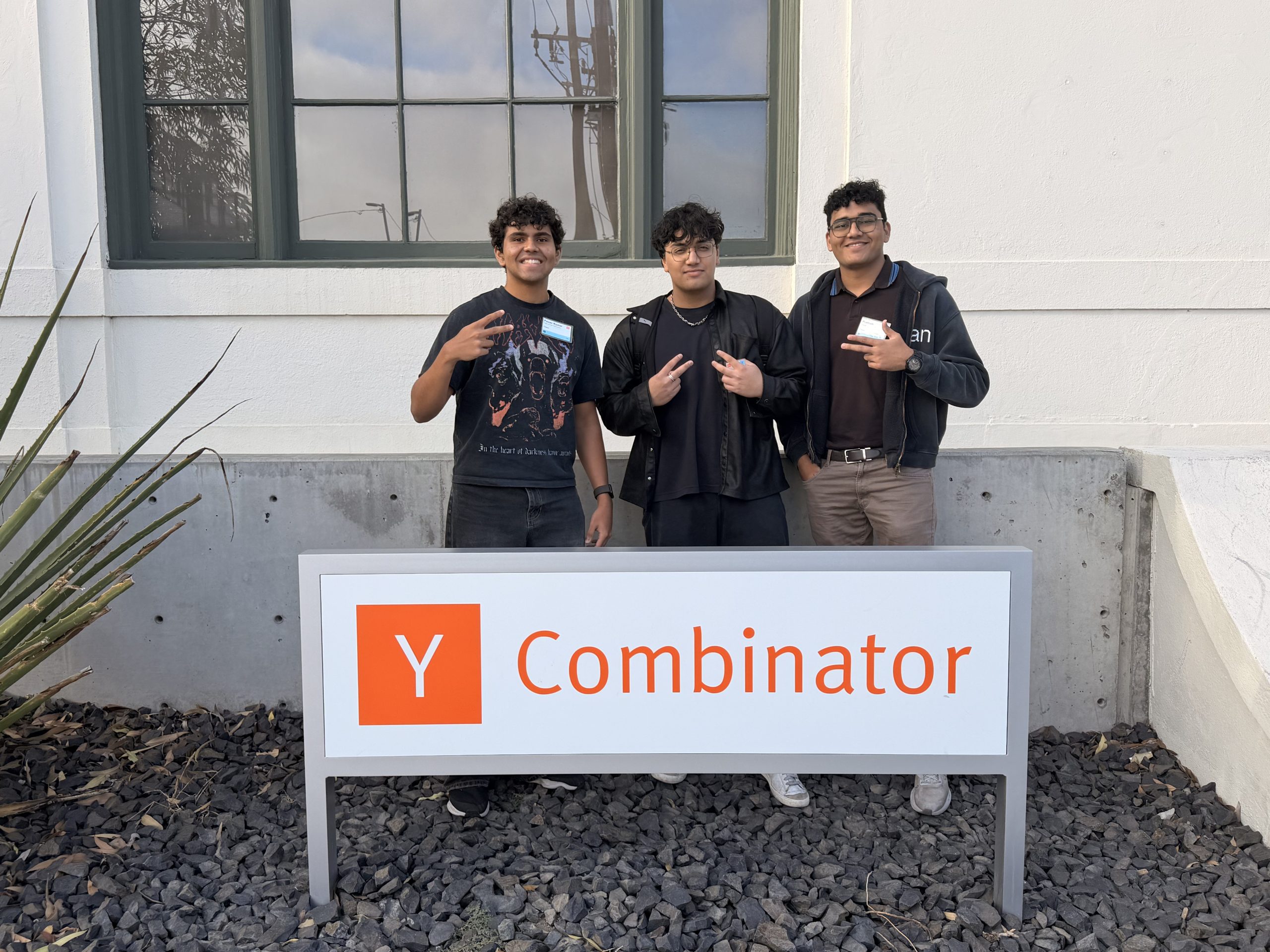
Clean has surpassed $200,000 in annual recurring revenue, and its customers have closed more than $500,000 in deals through the platform, according to information provided by the company. In September 2026, the startup was accepted into Y Combinator’s Fall 2026 batch, giving Gupta and his co-founders an opportunity to scale their business through one of Silicon Valley’s best-known startup accelerators.
The milestone came after an uncertain beginning. The company’s bank account had dwindled to just $2.50 in March, and Gupta had faced two rejections from Y Combinator’s Startup School before Clean eventually secured its place in the accelerator’s Fall 2026 cohort.
For Gupta, the journey has involved learning when to persist with an idea and when to change direction.
His entry into entrepreneurship began at hackathons, where students and developers work intensively to build products, often over a weekend. He participated in several events before winning Hack Harvard in 2025 alongside two friends from Arizona State University.
READ: ‘Now is the time’: Harvard students launch Boston Square Ventures to back student entrepreneurs (October 8, 2026)
The experience changed how he viewed the technology industry and the people building companies within it.
“First of all, I learned that there’s a bigger world out there,” he said, recalling how startup founders, investors and people from major companies mingled with participants at the event.
He also learned something about his own ambitions. Before attending Hack Harvard, he had assumed that Harvard’s reputation meant its students were fundamentally different from everyone else.
“But I kind of realized that they’re also normal people with normal lives,” he said. “That made me feel like this is something I can achieve too at some point.”
The hackathon also gave him a glimpse of what building a company would demand. Brainstorming with teammates through the night, with limited resources and a tight deadline, offered an early lesson in committing to an idea and finding a way to make it work.
Gupta met one of his future co-founders through Hack Harvard, although they were on different teams at the time. The group came together later at NexHacks, a hackathon held at Carnegie Mellon University.
Their first idea was a tool that could translate Hindi songs into English. The team soon realized it was not a viable product and began exploring a different problem: the high cost of using advanced AI models.
They built a tool designed to reduce token costs by 30% for companies using frontier AI models. The product used a Model Context Protocol (MCP) to index codebases, helping developers work more efficiently with AI tools.
The idea received positive feedback from founders, investors and technology professionals at the hackathon. Encouraged by that response, the team decided to continue partnering together beyond the event.
Initially, Clean was a developer-focused product. But the founders soon began questioning whether they were solving the most important problem for their customers.
The team had accumulated approximately 4,000 to 5,000 users for its earlier product and spoke with many of them to understand their needs. Those conversations revealed a gap that was bigger than the cost of building software.
Companies were increasingly able to develop products using AI. The harder question was identifying who would buy those products and when they might be ready to make a purchase.
That insight prompted Clean to move away from developer tools and toward sales intelligence, a decision that reshaped the company’s business.
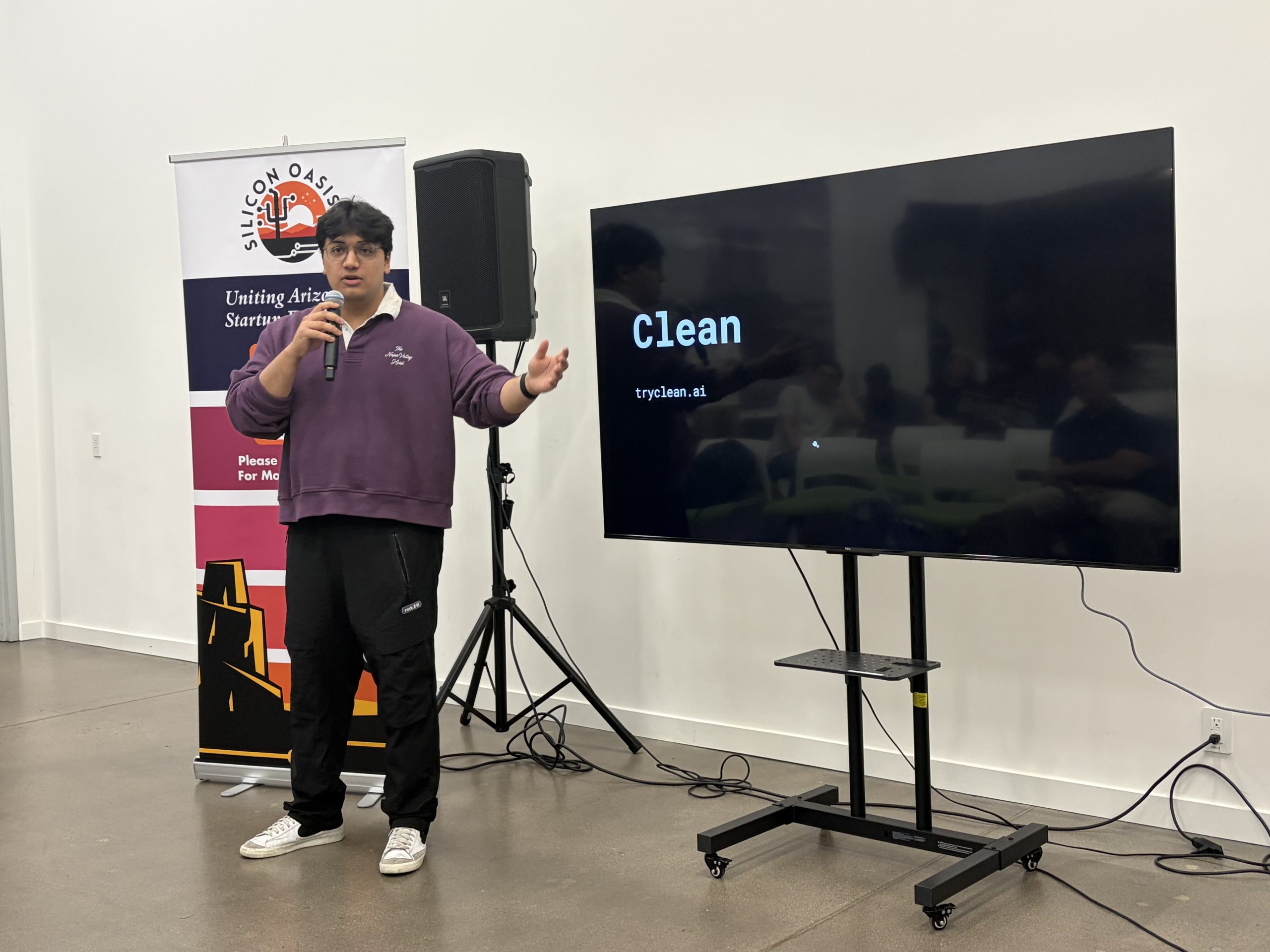
Today, Clean helps B2B sales teams identify potential customers by analyzing signals that indicate a business may need a particular product or service. Instead of relying solely on traditional prospect lists or cold outreach, sales teams can use those signals to prioritize companies that may be approaching a buying decision.
“The core idea of Clean was always helping companies scale,” he told The American Bazaar. “And because we are helping with that specific thing now, it’s way more efficient for companies to use and people like it way more.”
The change also helped the founders understand the importance of building for a specific customer rather than trying to serve everyone.
In a crowded AI market, Gupta believes startups have a better chance of succeeding when they focus on a defined problem and become particularly good at solving it.
“First of all, if you are the business and you are solving a problem in a specific space, pick a niche,” he said.
“For us, instead of being a sales tool for everyone, we are a sales tool for only manufacturing or insurance.”
He also stressed the importance of speaking regularly with customers and understanding their businesses in detail. For B2B companies, he argued, pricing should reflect the value a product delivers rather than an attempt to make the service as inexpensive as possible.
“Don’t have a cheap service. Show that this is an expensive product with an expensive value,” Gupta said.
The advice comes from a period when Clean was struggling to sustain itself financially.
In March, the startup’s bank account had just a few dollars left. The founders had been providing access to their earlier developer tool without charging users, even as the costs of operating the business continued to accumulate.
The team wanted developers to benefit from the product and was reluctant to introduce charges. Gupta said the founders were prepared to put their own money into the company if necessary.
“We were like, ‘oh, if our company runs out of money, we will just put our own money in,’” he said.
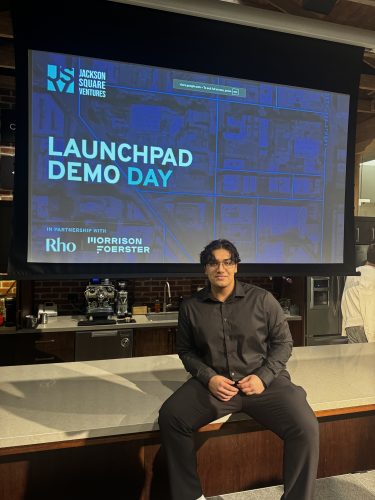
The situation began to change when Jackson Square Ventures offered the company its first check. The investment also gave Clean a place in the venture firm’s launchpad program — one of 12 companies chosen from more than 300 applicants — through which the team spent summer 2026 building Clean from San Francisco.
Gupta described the experience as valuable not only for the financial support but also for the access to experienced investors and personalized guidance.
With a cohort of just 12 companies, he said, the program allowed the founders to develop close relationships with the investors, receive advice and make useful connections.
“We still follow their advice every day. I still talk to them,” he said.
READ: Indian American founded Aiseptor joins Cornell Tech’s Runway Startup program (September 24, 2026)
The next major milestone came with Y Combinator, which had previously rejected the startup’s applications twice. The team then applied with the sales intelligence product, got an interview the next day, and received an offer within days.
The earlier applications had focused on the company’s previous product, which was designed to help developers reduce their AI costs. By the time the founders applied again, they had moved toward the sales intelligence business.
The response was unexpectedly quick. They received an interview invitation the following day, and went through several days of follow-up conversations before receiving an offer.
After securing Y Combinator’s offer, they decided to move forward with the accelerator.
For an Indian student building a company in the United States, the experience offers a reminder that rejection does not necessarily determine a startup’s prospects. In Clean’s case, the business had changed substantially between applications, and the founders were pitching a different solution to a more clearly defined problem.
Gupta’s experience at Arizona State University also shaped his approach to building a network. He said the university exposed him to people from different countries and backgrounds, including friends from Yemen, Japan and South Korea. He attended events, met professors and connected with people working in technology.
That openness to new experiences is something he sees among other Indian founders he has encountered in the United States.
“One thing I’ve learned from them is that they’re very […] spontaneous,” he said, before explaining that the ability to try different things can help young entrepreneurs discover where they can make a difference.
He described meeting an Indian technology enthusiast who had worked on a trading algorithm, participated in a trading competition, attended a technology hackathon and then spent six months at a startup.
For Gupta, those varied experiences can help founders develop the knowledge needed to recognize gaps in a market.
“People who are very fast in trying out new things and just experiencing and working hard in different categories and learning as much as they can by a very young age, once they do that, they get enough experience to decide what is wrong in a space and what’s not,” he said.
His advice to aspiring student founders is to remain open to opportunities, learn quickly and develop enough expertise to solve a problem that customers genuinely care about.
As Clean enters Y Combinator’s Fall 2026 batch, Gupta is looking beyond the startup’s own revenue. His stated goal for the next three years is to help the company’s customers generate $1 billion in revenue.
“Our goal is for […] a good KPI we want to do is my clients to close a billion dollars in revenue,” he said.
The ambition extends to building Clean into a major player in sales technology. Gupta said he ultimately wants the company to become one of the biggest businesses in the sector, with the possibility of taking it public in the future.
Beyond the startup, he’s keen to explore Wall Street, work with major companies and dive into mergers and acquisitions.
He has also begun judging hackathons and hopes to do more to support the founder community, particularly by sharing what he has learned with others.
Gupta was recently invited to judge the Cerebral Valley and MongoDB AI hackathon in San Francisco, where 404 builders were selected from 487 applicants to compete for $18,000 in prizes. Cerebral Valley, which produces launch hackathons for OpenAI, Anthropic, Meta and Google DeepMind, does not accept self-nominated judges and invites each one directly. A team his panel advanced won first place out of 93 projects.
“I’m in a position to help people. I want to do that more,” he said, adding that he could eventually see himself becoming an investor and starting his own fund.
For now, his focus remains on building Clean and helping its customers find opportunities they might otherwise miss.
His journey from Delhi to Arizona, from hackathon experiments to a startup accepted into Y Combinator, has not followed a straight line. The company’s early product changed, the product changed, and the team rebuilt it around what customers needed.
What ultimately moved the business forward was the decision to listen to customers, rethink the problem and build a product around a need companies were willing to pay to solve.
For Gupta, that may be the most important lesson of starting a business at 21: the ability to keep experimenting matters, but recognizing when an idea needs to change can matter just as much.