



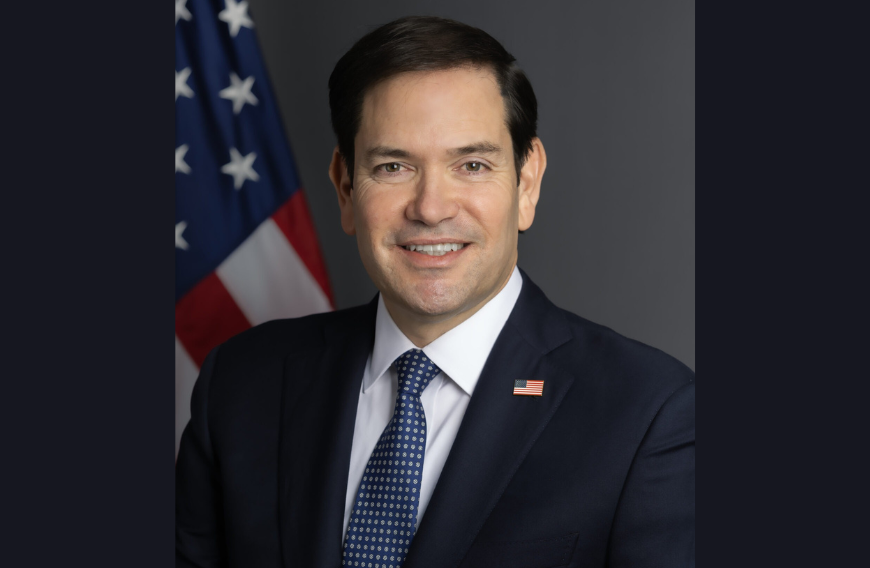
U.S. Secretary of State Marco Rubio has pushed back against anti-India sentiment and concerns over Washington’s growing ties with Pakistan and China, assuring New Delhi that America’s relationship with any other country would never come at India’s expense.
In an interview with Network18 Editor-in-Chief Rahul Joshi on Tuesday, Rubio was asked about concerns raised by the Indian government over anti-India sentiment in the U.S. and an alleged plot to attack a Hindu temple in Illinois. Rubio said such sentiments were neither widespread nor deeply rooted in the U.S., while acknowledging that incidents of racism, hatred and hostility do occur.
READ: US Secretary of State Marco Rubio arrives in Mumbai for three-day India visit (October 20, 2026)
“I do not believe, nor have I perceived, that anti-Indian sentiment in the U.S. is widespread or deep. There are individuals within our country, sadly, who are stupid, who are dumb, or who are ignorant or hateful. And what I am very proud of is the way these communities react when it happens,” Rubio said.
Rubio also recalled an earlier attack involving the Sikh community in Wisconsin, citing the widespread support the community received. He pointed to rising antisemitism in the U.S. as another example of the broader problem of targeted hatred against religious communities.
Addressing questions about President Donald Trump’s H-1B visa policies, Rubio said the reforms were not specifically directed at India but were part of broader efforts to address problems within the U.S. immigration system. His remarks drew online criticism from those who argued that he had dismissed concerns about visa holders and their impact on American workers.
Asked about the progress of a U.S.-India trade deal, Rubio said the agreement was “incredibly close,” with only technical details remaining to be worked out. He said he hoped the two countries would reach a sustainable, long-term agreement that benefited both sides.
Rubio also sought to reassure India about Washington’s growing engagement with Pakistan and China.
“Our relationship with no country in the world, in any way, comes at the expense of our relationship with India. We don’t view it that way in our relationship with India,” Rubio said in an interview with The Indian Express.
“I hope my visits here, our commitment to doing the trade deal, all of the engagements that we have done, and all the work that we do together, is evidence of that,” he added.
In a separate interview with The Indian Express, Rubio rejected comparisons between Trump’s approach to South Asia and the Nixon-Kissinger era of the 1970s, emphasizing that the international order had changed significantly since then.
While addressing reporters, Rubio declined to comment on India’s handling of recent protests. Responding to criticism from UN human rights experts over the protests, he said domestic political matters should be decided by the country’s own people.
“Domestic political matter, this is a democracy, they have elections here, won’t opine on their domestic political matter. We have protests in the U.S. every day,” Rubio said.
READ: DOL Inspector General intensifies H-1B fraud probe (September 17, 2026)
Meanwhile, more than 20 UN human rights experts on Tuesday called for an independent investigation into the handling of recent protests in New Delhi and elsewhere in India. They alleged excessive force against peaceful protesters, arbitrary detentions and restrictions on public gatherings.
The protests, led by young people and opposition parties, concerned voter roll revisions affecting 130 million people and issues related to education.
Rubio’s three-day visit to India also includes discussions on energy. He described India as a refining “superpower” capable of processing additional Venezuelan crude oil. On Oct. 21, he traveled to Jamnagar, Gujarat, to visit the refinery complex operated by Reliance Industries, owned by Mukesh Ambani.
The bilateral talks focus on a long-pending trade agreement, energy, security and defense cooperation, among other issues.