




Minhaj’s little malapropism may have been unwitting, but the netizens made sure he was fried as hot as the tadka on a desi dal.
Hasan Minhaj’s mix-up of “dharka” and “tadka” has sparked a wave of memes, food debates and desi-parenting jokes, with Indian food enthusiasts correcting the comedian and brands such as Kissan India turning the viral moment into marketing material.
If you grew up in an Indian household, chances are you have watched your mother prepare dal, the humble lentil dish, by finishing it with a sizzling mixture of spices and aromatics in hot oil or ghee. Often made with cumin or mustard seeds, garlic, onions, tomatoes and red chilies, this final flourish, known as tadka or tarka, gives the dish its distinctive aroma, flavor and heat.
From everyday home kitchens to Michelin-starred restaurants and roadside dhabas, dal tadka remains a staple of Indian cuisine. So when Minhaj, the Indian American comedian, used the word “dharka” instead of “tarka” during a recent interview with Food & Wine, his explanation of the supposed culinary term quickly became a source of online amusement.
READ: Hasan Minhaj no longer in contention for The Daily Show hosting job: Report (October 21, 2023)
“If you go to a South Asian restaurant, and even in India, there’s this idea that when you sometimes order dal, you’ll say extra dharka ‘dharka’ is the fried onions that you put on the top,” Minhaj said.
He continued: “Hey, hey, don’t, don’t, don’t, don’t be cheap with it. Like, I want extra dharka. Put the onions on that. I don’t want to be able to, you know, I want you to kiss my beloved after this meal, like, do not shortchange me with the dharka.”
The confident explanation gave social media users plenty of material for jokes, with some correcting the terminology and others questioning the comedian’s description of how the dish is ordered in Indian restaurants.
Uzair Quaraishi offered a culinary explanation on Instagram, writing: “Tarka, also known as tadka, chhonk, baghaar or phoron is a core cooking technique in South Asian cuisine where whole or ground spices, herbs and aromatics are bloomed in hot fat such as ghee, butter or oil to release fat-soluble flavors and aroma.”
Others were more interested in Minhaj’s confidence than the culinary distinction. Indian chef Dimple Senani, who works to revive Sindhi food traditions, wrote: “All I need in life is this man’s confidence. And some extra Dharka, whatever it means.”
Another user, @naviscotia, joked about the likely reaction in an Indian household: “Imagine asking your mummy for dharka; there will be a chappal flying your way.”
The jokes have since moved beyond social media comments, with brands joining the conversation.
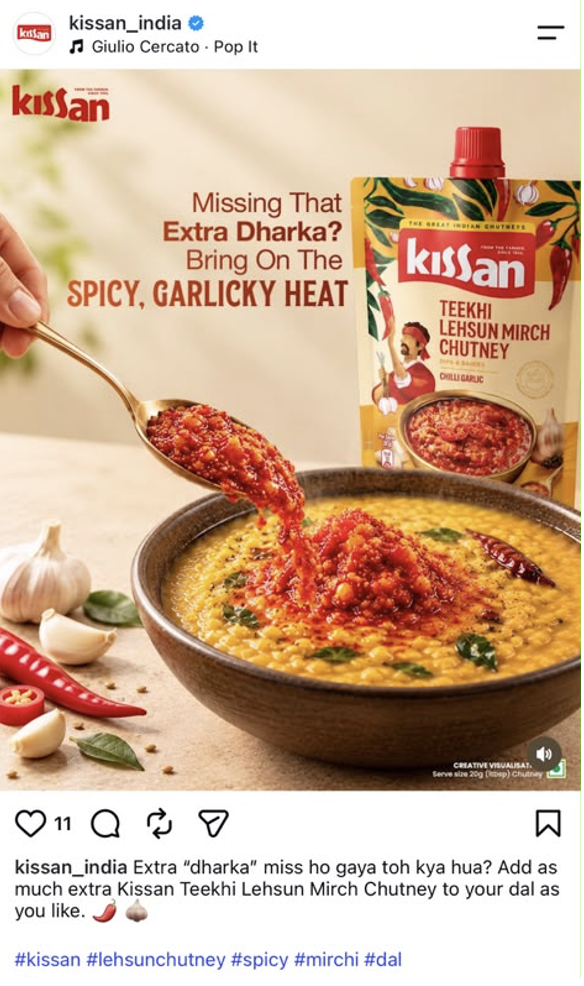
Kissan India, the condiment brand, used the viral moment to promote its Teekhi Lehsun Mirch Chutney. In an Instagram post, the company showed its spicy garlic chutney being added to a bowl of dal, with the text: “Missing That Extra Dharka? Bring On The SPICY, GARLICKY HEAT.”
“Extra ‘dharka’ miss ho gaya toh kya hua? Add as much extra Kissan Teekhi Lehsun Mirch Chutney to your dal as you like,” the brand wrote in the caption.
The episode also prompted reactions from people who saw the humor in the moment while reflecting on how familiar Indian food terms can be misrepresented.
Monica Saigal, a food author who has written several books, including “The Everything Indian Cookbook” and “Papa’s Butter Chicken,” told The American Bazaar that Minhaj’s confidence initially sent her searching for an explanation.
“To be honest, he was so confident I went down a rabbit hole trying to see if dharka was a regional Indian term that I had never heard of or a different regional name for fried onions. I always feel like I’m learning so I thought that maybe it’s something that I’ve never heard of from some remote part of India and I’ll learn something new,” Saigal said.
She summed up the difference between the two words with a playful reference to Bollywood romance and Indian food: “Dharka is my dil after watching SRK in any romance. Tadka is my Dal being topped with hot seasoned oil or ghee!”
Toronto-based actor Tejas Sona also joined the conversation with a video inspired by Minhaj’s remark. Sona told The American Bazaar that the clip was intended as lighthearted fun.
“I love Hasan’s confidence when he says that! I made that video because it’s just a fun video, and honestly, an excuse for me to dance a little too!” Sona said.
Minhaj’s status as an Emmy and Peabody Award-winning comedian added another layer to the reaction. Known for drawing on his experiences growing up as a South Asian American, he has often explored the expectations and contradictions of life in a traditional Indian household. For some online critics, his apparent unfamiliarity with a widely used culinary term made the exchange especially amusing.
The comments ranged from affectionate wordplay to sharper criticism. Instagram user Aishwaryagan wrote: “My dal dharka and my dil tadka.”
Another user, Wakeupswap, suggested: “I get the impression he was thinking of tadka and Madhuri Dixit at the same time.”
Madhurima007 took a broader view of the debate, writing: “Call me a puritan, but the NRI hot take on Indian culture and food has run its course. We can all go home now.”
Hari Adivarekar, a New York-based photographer, also questioned how the terminology had gone unchallenged, writing: “Even worse is Food and Wine being the culinary expert and not having anyone who knows this basic stuff about Indian food.”
Others challenged Minhaj’s account of how the term is used in restaurants. “Which Indian asks for extra ‘dharka’? This guy is so delulu. It’s unreal,” wrote Sam Kashyap.
Hasan Minhaj’s NBA playoff finale a big hit with desis (June 14, 2022)
Beyond the mispronunciation, the episode has reopened a familiar debate about how Indian words and food traditions are presented to Western audiences. Terms such as “chai tea” and “ghee butter” have long drawn criticism for repeating or altering meanings in ways that can sound unfamiliar to people who grew up with the original terms.
Anum Yousaf connected the discussion to another recurring example involving Indian flatbread. “Give me the confidence of a diaspora desi man. Just today I was fuming about the tired joke about naan bread meaning bread bread. Nan in Farsi is bread. Naan in Urdu/Hindi is a specific kind of flatbread. So, Naan is naan,” Yousaf wrote.
For all the online roasting, Minhaj’s dharka moment has become more than a debate over one word. It has offered a fresh serving of internet humor, a marketing opportunity for food brands and a reminder that, in Indian kitchens, the difference between a familiar term and a made-up one can be enough to set off a whole new round of tadka.