



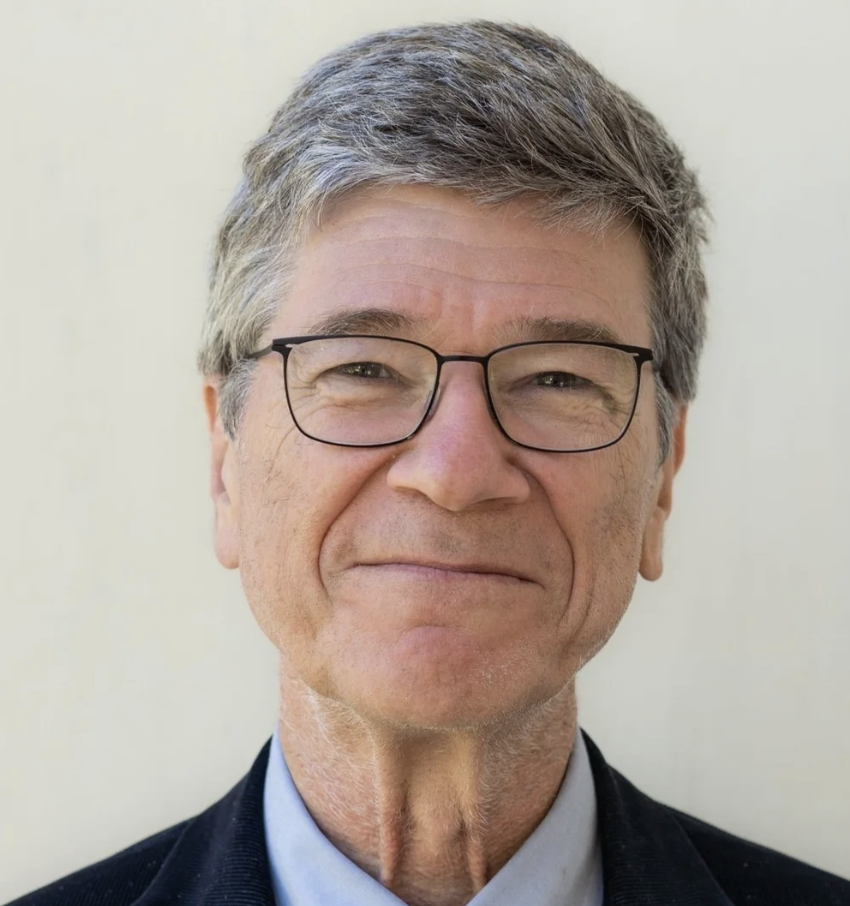
Renowned economist Jeffrey D. Sachs has predicted that India will become the world’s largest economy by the end of the century, with a population potentially twice the size of China’s.
Speaking at the World Symposium on “Ancient Wisdom for Modern Challenges” in Varanasi, Sachs described India’s demographic growth and economic expansion as significant factors in the changing global economic landscape.
“By the end of the century, India will have twice the population of China, most likely, which is quite astounding, and India will be the single largest economy in the world,” Sachs said.
He also emphasized India’s infrastructure development, identifying it as an important contributor to the country’s economic growth.
READ: Economy will sacrifice elections (September 15, 2026)
He credited the Adani Group with playing a significant role in expanding the infrastructure needed to support India’s development.
During a subsequent interaction, Sachs described the conglomerate as “one of the great progenitors of change and advance in India,” pointing to its contribution to the country’s infrastructure expansion.
“So when we look at India’s very rapid economic growth, the fastest growing large economy in the world, it is fueled in significant part by the advance of infrastructure, and the Group is playing a huge role in that,” he said.
Sachs is director of Columbia University’s Center for Sustainable Development and president of the United Nations Sustainable Development Solutions Network.
His remarks placed India’s growth within a broader shift in global economic influence, with population trends and infrastructure development emerging as central themes.
Sachs’ projection that India could have twice China’s population by 2100 underscores the demographic changes he believes will shape the country’s position in the global economy.
He also connected India’s economic expansion with the responsibilities of businesses involved in its development, particularly family-owned enterprises.
Discussing the Adani Group, Sachs argued that companies carrying a family’s name have obligations extending beyond commercial performance considering they represent family values, heritage and responsibilities toward the communities in which they operate.
Read: Economic Dystopia and Biology of true value creation (August 23, 2026)
He said businesses should consider what they give back to society rather than focus exclusively on financial returns.
His comments showcased the relationship between infrastructure investment, economic expansion and corporate responsibility as India continues to develop its position in the global economy.
Sachs’ assessment was a projection about India’s long-term economic future, rather than a certainty about its position by the end of the century.