



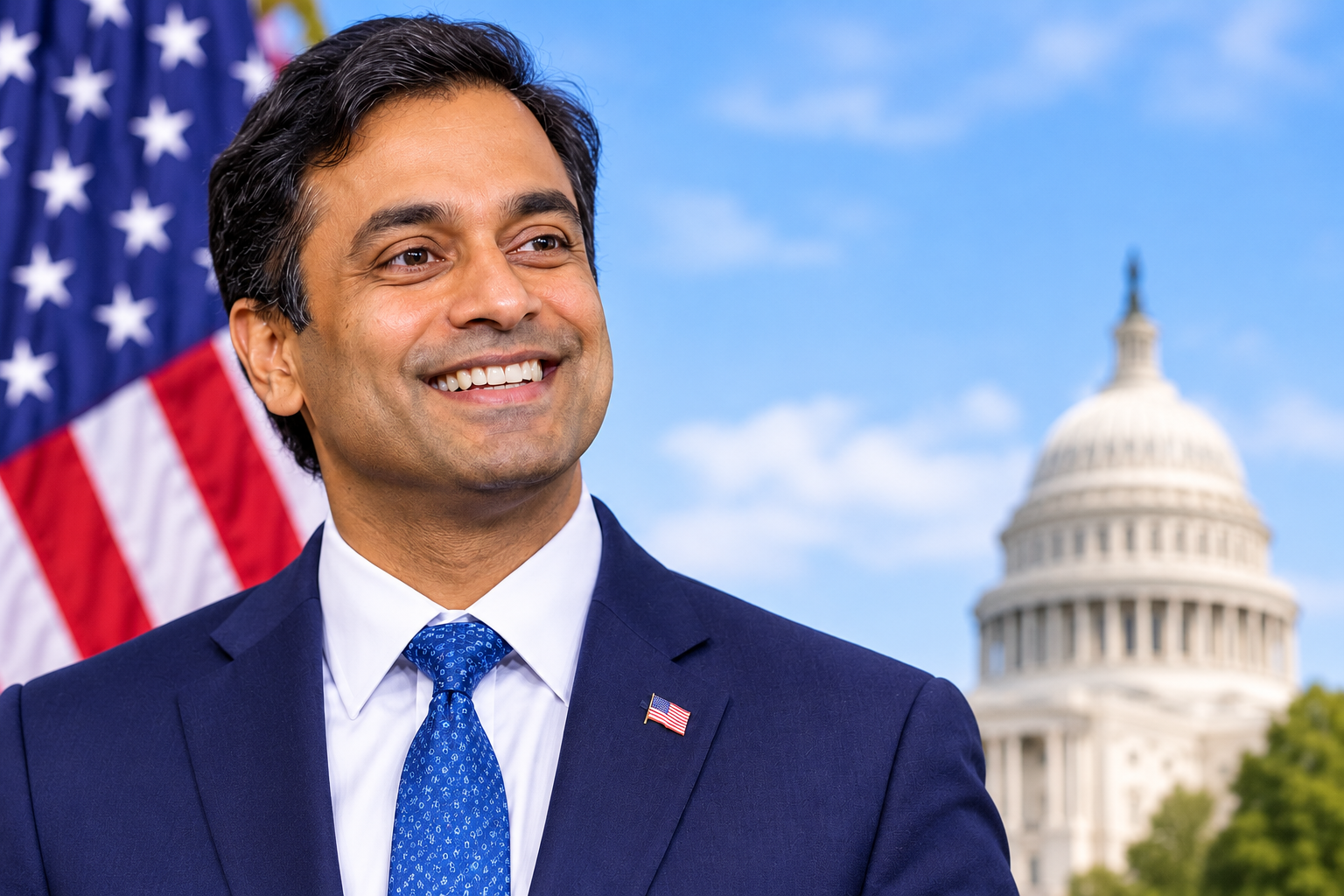
Indian American Democrat Jay Chaudhuri has won re-election to the North Carolina State Senate, defeating Republican challenger David Bankert with approximately 75.1 percent of the vote in the Nov. 3 midterm elections.
Chaudhuri received 61,375 votes against Bankert’s 20,368, according to results reported by the North Carolina election authorities. Bankert secured 24.9 percent of the vote, while Chaudhuri’s winning margin stood at 41,007 votes.
The victory allows Chaudhuri to continue representing Senate District 15, which covers parts of Wake County, including Raleigh, Cary and Garner. He serves as the Senate Democratic Whip, a senior leadership position in the Democratic caucus.
READ: Lisa Kaul defeats Rob Rolison, wins New York Senate seat (November 9, 2026)
The 2026 result follows Chaudhuri’s previous victories in 2016, 2018, 2020, 2022 and 2024. He was first appointed to the state Senate in April 2016 to fill a vacancy created by Josh Stein’s resignation. He subsequently won election in his own right in November that year.
A clarification on the term count: The North Carolina General Assembly lists him as having served five or more Senate terms before the 2026 election. His November victory is therefore his sixth election victory for the seat since 2016, and secures another two-year term. Calling it his fifth term without explaining the counting method would be misleading.
From the son of Indian immigrants to North Carolina politics
Chaudhuri was born in Chattanooga, Tennessee, to parents who immigrated from India. His family later settled in Fayetteville, North Carolina, where he grew up and attended public schools.
His father worked at a Veterans Affairs hospital, caring for veterans, and also maintained a private medical practice. According to Chaudhuri’s campaign biography, his parents’ experiences as immigrants and their commitment to public service influenced his understanding of the American Dream.
He attended Terry Sanford High School in Fayetteville before pursuing higher education at three institutions.
Davidson College: Bachelor of Arts degree.
Columbia University: Master of International Affairs from the School of International and Public Affairs. North Carolina Central University School of Law: Juris Doctor degree, earned with honors. His educational background in liberal arts, international affairs and law preceded a career in public service and government legal work.
Chaudhuri’s Indian American background has also been part of his public identity. His parents’ immigration from India and their settlement in North Carolina shaped his connection to the state, where he has spent most of his life and political career. In 2016, he became the first Indian American to serve in the North Carolina General Assembly, according to WRAL’s coverage of his entry into the state Senate.
Political journey: From Roy Cooper’s office to Senate Democratic leadership
Before entering electoral politics, Chaudhuri spent years working in North Carolina’s state government. He served as legislative counsel to then-state Senate Majority Leader Roy Cooper, later becoming special counsel to Cooper when he served as North Carolina attorney general.
In that role, Chaudhuri worked on a multistate investigation involving online safety and social networking companies Facebook and MySpace. The investigation resulted in agreements intended to strengthen protections for children against online predators. He subsequently worked as general counsel and senior policy adviser to Janet Cowell, who served as North Carolina state treasurer.
According to his campaign biography, his work in the treasurer’s office included helping recover nearly $100 million for the state’s pension fund and launching a $230 million Innovation Fund to invest in North Carolina startups.
READ: Saba Haider wins Illinois House seat with 71.2% of vote (November 8, 2026)
He also worked as an attorney and taught part-time as an adjunct law professor at North Carolina Central University. Chaudhuri entered the state Senate in April 2016 after being appointed to fill the vacancy left by Josh Stein, who resigned to run for attorney general.
He subsequently won the November 2016 election, defeating Republican Eric Weaver with 65.33 percent of the vote in the then-16th Senate District. The district was subsequently redrawn, and Chaudhuri ran in District 15 beginning in 2018.
In 2018, he defeated Republican Alan David Michael and Libertarian Brian Lewis, receiving 73.1 percent of the vote. In 2020, he defeated Republican Mario Lomuscio and Libertarian Kat McDonald with 58 percent. In 2022, he defeated Republican Emanuela Prister and Libertarian Sammie Brooks, receiving approximately 67.5 percent. In 2024, he defeated Republican David Bankert and Libertarian Kat McDonald with 65.9 percent.
His role in the North Carolina Senate
Chaudhuri has held a leadership position in the Senate Democratic caucus since 2019. He has served as Senate Democratic Whip, the second-highest leadership position in the caucus.
His legislative priorities have included:
- Education: Funding smaller class sizes from kindergarten through third grade.
- School safety: Measures to address gun violence and improve school security.
- Technology and employment: Bringing technology-sector jobs and investment to Wake County.
- Women’s reproductive rights: Opposing restrictions on abortion rights.
- Economic development: Supporting startup investment and business opportunities in North Carolina.
He has also served on committees dealing with education, appropriations, commerce, insurance, agriculture, energy and the environment.
Indian American representation in US politics
Chaudhuri’s latest victory adds to the political presence of Indian Americans in state legislatures across the country. His career is particularly notable because he became the first Indian American elected to the North Carolina General Assembly. Unlike politicians who entered public life through community organizations or local elected positions, Chaudhuri’s route included extensive experience in state government, legal advisory roles and public administration before he entered the legislature.
His parents’ immigration story, education at American universities and progression through North Carolina’s political institutions provide an example of the different routes through which Indian American professionals have entered US public service.
His continued presence in the Senate also gives Democrats an experienced legislative leader representing one of the state’s major urban and suburban population centers.