



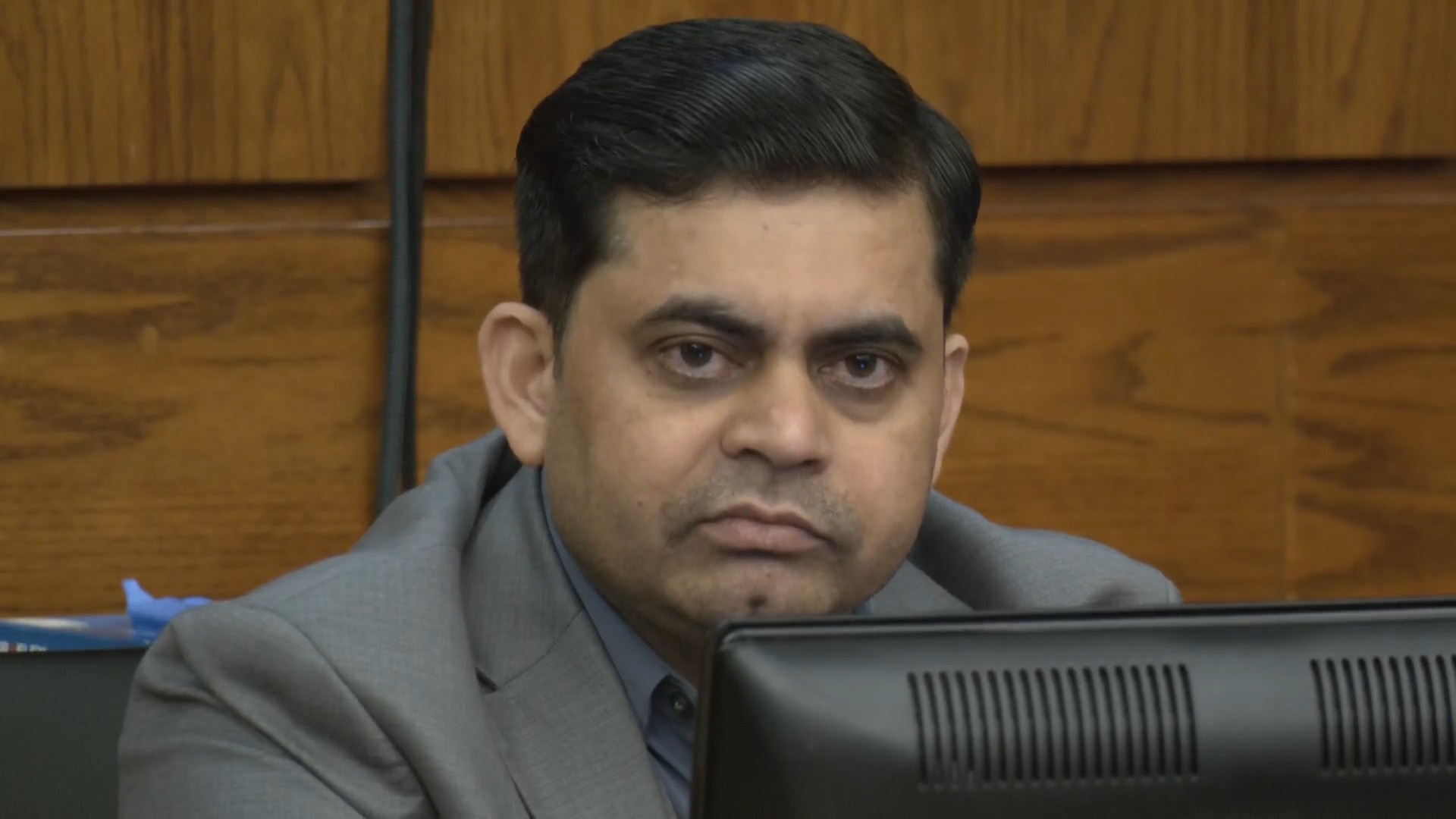
A Virginia jury has convicted Naresh Bhatt of murdering his wife, Mamta Kafle Bhatt, a Nepalese-born registered nurse whose disappearance from their home in Manassas Park, Virginia, in July 2024 triggered an extensive police investigation and a search that drew national attention.
The jury found Bhatt guilty of first-degree murder, concealing a dead body and physically defiling a dead body on Nov. 10, 2026, following a trial that lasted nearly six weeks. His conviction came after he admitted in court that he had dismembered his wife’s body and disposed of her remains, while maintaining that he had not killed her.
The case has drawn attention across the United States because of the victim’s disappearance, the prosecution’s effort to secure a murder conviction without recovering her remains, and the fate of the couple’s young daughter. According to WJLA, the jury reached its unanimous verdict after approximately four hours of deliberations in Prince William County Circuit Court. Judge Kimberly Irving revoked Bhatt’s bond following the verdict. Bhatt, 39, is scheduled to be sentenced on March 12, 2027. He faces a possible life sentence for first-degree murder, in addition to penalties for the two body-related offenses.
What happened to Mamta Kafle Bhatt?
Mamta Kafle Bhatt, 28, was a registered nurse at UVA Health Prince William Medical Center in Manassas, Virginia. She was last seen on July 27, 2024, according to police accounts cited by CNN. Her disappearance became a major concern when she failed to report to work. Friends and colleagues raised the alarm, while her family expressed concern about her sudden absence.
READ: Naresh Bhatt faces prosecutors’ accusations in murder trial (November 5, 2026)
Mamta and Naresh had an infant daughter, who was approximately 11 months old when her mother disappeared. Naresh initially told police and others that he did not know where his wife was. The investigation eventually led to his arrest in August 2024. Despite searches and an extensive investigation, authorities have not recovered Mamta’s remains.
Naresh Bhatt admitted dismembering his wife during trial
One of the most significant developments came during Bhatt’s testimony in November 2026. Taking the witness stand in his defense, Bhatt admitted that he had dismembered Mamta’s body using a saw and disposed of the remains in garbage bags. He testified that he found her unconscious in their bedroom, surrounded by blood and vomit, with an open packet of Celphos, a highly toxic agricultural pesticide, nearby.
Bhatt claimed that Mamta had died by suicide and that he panicked after failing to revive her. He said he feared being blamed for her death and decided to dispose of her body rather than immediately contact emergency services.
He also testified that he used a trash compactor at an apartment complex where he had previously lived to dispose of the remains. Furthermore, he acknowledged taking the couple’s young daughter with him on some of those trips.
Prosecutors rejected his account, arguing that he had deliberately killed Mamta and subsequently attempted to conceal the crime. The jury ultimately rejected his suicide explanation and convicted him of first-degree murder.
The prosecution also presented evidence concerning his actions before and after Mamta’s disappearance, including surveillance footage, purchases and digital searches.
Six-week trial brought attention to missing-person investigations
The case proceeded through the American criminal justice system without the recovery of the victim’s body. The prosecution relied on circumstantial evidence and testimony to establish its case. The trial included testimony from Mamta’s mother, Gita, and her brother, Mahesh, as well as friends and other witnesses.
The defense challenged the prosecution’s evidence and urged jurors to consider whether the state had proved the charges beyond a reasonable doubt. The jury’s decision demonstrates that the absence of recovered remains does not automatically prevent prosecutors from securing a murder conviction in the United States. However, each case depends on the evidence presented and whether the prosecution meets the applicable burden of proof.
The verdict also leaves Mamta’s family without the opportunity to recover her remains and provide her with a final resting place.
Virginia prosecutors and community react to verdict
Prince William County Commonwealth’s Attorney Amy Ashworth said the conviction represented an important measure of justice for Mamta and her family, who had endured more than two years of uncertainty.
The prosecution’s statement following the verdict said the family had experienced prolonged pain while seeking answers about her disappearance and death. Friends and former colleagues also expressed relief outside the courthouse. Holly Wirth, a close friend of Mamta, said the verdict followed more than two years of efforts to get answers. Sunita Basnetthapa, another supporter, described the emotional experience of waiting for the jury’s decision.
READ: Mamta Bhatt’s friend alleges abuse in murder trial (October 8, 2026)
The case also brought members of the Nepalese community, healthcare workers and local residents into the public discussion, with Mamta’s friends and supporters attending court proceedings.
What happens next?
Bhatt remains in custody following the revocation of his bond. His sentencing is scheduled for March 12, 2027. He faces a potential life sentence for first-degree murder, along with additional prison time for concealing and defiling a dead body. The prosecution’s conviction closes a major chapter in the criminal proceedings, but the search for Mamta’s remains remains unresolved.
For Mamta’s family, the verdict provides a legal conclusion to the murder case, but it does not resolve the question of where her remains were taken.